
 实景预览
实景预览
 分享
分享 分享
分享
 详情
详情 指南
指南

 下载作品
下载作品
 相似作品
相似作品 X射线
X射线 幻灯片播放
幻灯片播放 Q&A
Q&A 统计数据
统计数据Lute Player

- 105.0 x 77.0 cm


 展开全文
展开全文
艺术微喷/版画
博物馆级艺术微喷或帆布版画,制作高效,并提供多种饰面选择。 ( 订购纯手工绘制画作 切换至数字图像销售渠道)




P118B ¥10

P118H ¥10

P118W ¥10

P438Z ¥10

P508JH ¥12

P508YH ¥12

P805H ¥10

P805Z ¥10

P919BZ ¥10

P919G ¥10

P919XJ ¥10

P959ZH ¥10

P968JZ ¥12

W106C ¥8

W218G ¥10

W218JH ¥8

W218Y ¥10

W307PJ ¥10

W316G ¥10

W316PJ ¥8

W316Y ¥10

W398PJ ¥8

W4111J ¥10

W500HY ¥15

W500JH ¥15

W692G ¥12

W849H ¥8

W940BG ¥15

W953PJ ¥8




您可以从与原作比例一致的预设尺寸中进行选择。

请输入您所需的宽度和高度,以适配您的画框或墙面。由于印刷品只能进行裁剪,无法超出原图尺寸,因此若比例不一致,画面的一部分将会被裁切。在正式印刷之前,我们会为您发送一份数字效果图供您确认。本页面显示的图片并非最终裁剪后的效果——只有效果图才能展示真实的裁剪情况。


 玻璃选项仅适用于110厘米以下的尺寸。

Lute Player
艺术微喷/版画
复刻品尺寸
-


最终结算价
¥ 538
A Moment of Contemplation: Nicolas Tournier’s Lute Player
Nicolas Tournier's "Lute Player," painted around 1630-1635, is more than just a portrait; it’s a carefully constructed tableau brimming with quiet intensity and subtle symbolism. This work, rendered in the dramatic style of Tenebrism – a technique popularized by Caravaggio – immediately draws the eye into a scene steeped in atmosphere and suggestion. The painting depicts a young man, likely a musician, seated in a richly appointed interior, completely absorbed in his craft. He holds a lute, its curves echoing the gentle swell of his garments, while his gaze is fixed on an unseen point beyond the viewer, conveying a profound sense of introspection.
Tournier’s masterful use of light and shadow – the hallmark of Tenebrism – dominates the composition. Dark, almost impenetrable hues envelop most of the scene, punctuated by pools of brilliant illumination that highlight the lute player's face, hands, and clothing. This stark contrast creates a powerful sense of drama and draws attention to the central figure, imbuing him with an aura of both vulnerability and quiet dignity. The deep shadows suggest a private space, perhaps a study or chamber, adding to the painting’s intimate and contemplative mood.
The Artist and His Time
Nicolas Tournier was a significant figure in the French Baroque art scene, emerging from the artistic circles of Montbéliard and later finding his footing in Rome. His early training likely involved studying under Valentin de Boulogne, a key influence on his development as a painter. The period in which he worked – roughly 1626 to 1639 – was one of considerable social and political upheaval in France, marked by religious conflict and the rise of the Fronde. Tournier’s art reflects this era through its exploration of human emotion and its engagement with themes of spirituality and morality.
Born in 1590, Tournier's life was tragically cut short, leaving behind a relatively small but remarkably accomplished body of work. His style is often characterized by a dramatic realism, reminiscent of Caravaggio’s influence, combined with a distinctly French sensibility. He frequently depicted scenes from the Bible and classical mythology, imbuing them with psychological depth and emotional resonance.
Symbolism and Interpretation
Beyond its immediate visual appeal, “Lute Player” is rich in symbolic meaning. The lute itself represents harmony, beauty, and intellectual pursuit – a fitting emblem for a musician. The young man’s serious expression suggests not just musical skill but also a contemplative nature, perhaps even melancholy. The presence of the two figures in the background—one standing behind him, the other further back—adds layers of narrative complexity. They could represent companions, patrons, or simply elements of the setting, contributing to the painting's overall sense of mystery and invitation.
The red hat worn by the lute player is particularly noteworthy. Red was a color associated with passion, vitality, and even sacrifice in 17th-century France. It could symbolize the dedication required for artistic expression or perhaps allude to the young man’s religious beliefs. The careful arrangement of objects within the room—the draped fabrics, the partially visible furniture—further enhances the painting's symbolic richness.
A Legacy of Dramatic Portraiture
Restoration efforts in 2009 brought renewed attention to this captivating work, revealing the depth and subtlety of Tournier’s artistry. The meticulous detail evident in the lute’s construction, the folds of the fabric, and the texture of the skin speaks to the artist's considerable skill and his commitment to capturing the essence of his subject. “Lute Player” stands as a testament to Tournier’s ability to evoke emotion through light, shadow, and carefully considered composition – a timeless portrait that continues to resonate with viewers today.
Reproductions of this evocative piece offer an opportunity to bring its dramatic intensity into any space, serving as both a beautiful work of art and a poignant reminder of the power of music and contemplation.
常见问题与解答
“Lute Player”的创作技法是什么,尺寸又是多少?
尼古拉·图尔尼埃 的《Lute Player》 的材质为 Oil On Canvas,尺寸为 105 x 77 cm。
尼古拉·图尔尼埃 的《Lute Player》 传达了怎样的心境与情感?
在“Lute Player”中,Elegant 的氛围伴随着 Reflective 的情感。
"Lute Player" 的画幅比例是多少?
尼古拉·图尔尼埃 的《Lute Player》 采用 Portrait 格式。该格式描述了构图的比例。
艺术家简介
光影交织:尼古拉·图尔尼埃的巴洛克视觉盛宴
在十七世纪那充满戏剧性的艺术版图中,很少有艺术家能像尼古拉·图尔尼埃那样,如此深刻地捕捉到神圣之光与尘世阴影之间那股强烈的张力。图尔尼埃约于1590年出生于法国蒙贝利亚尔,他正值欧洲艺术脉搏向巴洛克式强烈情感主义转型的变革时代。他的作品宛如一座动人的桥梁,连接着他法兰西血统中的古典传统与当时席卷整个欧洲的、具有革命性的高对比度写实主义。凝视图尔尼埃的画布,仿佛步入了一个每一笔触都承载着精神重量的世界,每一处阴影都隐藏着等待被揭示的秘密。
图尔尼埃艺术生涯的风格核心,无可争议地深受卡拉瓦乔的影响。这位意大利大师所运用的“暗色调主义”(tenebrism)——即通过极端的明暗对比来营造戏剧感与体积感的技术——成为了图尔尼埃视觉语言的基石。透过这层透镜,艺术家不仅仅是在描绘场景,更是在黑暗中雕琢画面。他对光线的精湛掌控,使他能够照亮织物的纹理、圣徒脸上疲惫的皱纹,以及宗教殉道那令人震撼的真实感,从而将观者拉入一场与神圣事物之间亲密且近乎触手可及的邂逅之中。
对神性与人性的虔诚追求
图尔尼埃的创作题材深深植根于他那个时代的宗教狂热。作为一名活跃于法国巴洛克传统中的画家,他在基督教图像学深邃的叙事中找到了最伟大的灵感。他的构图往往围绕着牺牲、忏悔与神圣干预等主题展开,这在其杰作如'背负十字架' 中表现得最为显著。在这些作品中,艺术家避开了单纯的装饰性,转而选择一种粗犷且扎根于现实的写实主义,以此强调神圣斗争中蕴含的人类苦难。
图尔尼埃之所以能从同时代艺术家中脱颖而出,在于他能够将这种强烈的宗教庄严感,与源自罗马画派的精妙构图技巧完美融合。随着艺术造诣的提升,他不再仅仅满足于对意大利大师的简单模仿,而是创造出一种具有独特法兰西色彩的巴洛克戏剧性诠释。这种艺术演进的特征表现为:
- 情感共鸣: 专注于人物心理深度的刻画,使神圣的主题变得触手可及且充满人性温度。
- 明暗对照法的精妙运用: 光线不仅是照明的工具,更是一种叙事手段,引导观者的视线走向精神高潮的瞬间。
- 纹理写实主义: 对皮肤、布料和石材细节的惊人刻画,为他的宗教场景增添了一种真实不虚的质感。
传承与历史地位
尼古拉·图尔尼埃的历史意义在于他是法国巴洛克运动中不可或缺的贡献者。尽管在后来的“大世纪”(Grand Siècle)那更为华丽、装饰性更强的艺术浪潮中,他的光芒有时会被掩盖,但图尔尼埃为艺术奠定了必要的写实主义与强度之基。他帮助培育了一种珍视人类境遇中那份原始、不加修饰之真相的美学,为后世法国画家探索光影的复杂性铺平了道路。
时至今日,对于任何想要理解从文艺复兴晚期向巴洛克巅峰过渡时期的人来说,他的作品仍是必读的研究范本。他通过黑暗媒介唤起虔诚信仰的能力,确保了他的名字永远铭刻在艺术史册中——他不仅是卡拉瓦乔的追随者,更是一位驾驭阴影、以此照亮其时代灵魂的大师。

尼古拉·图尔尼埃
1590 - 1639 , 法国
艺术家简介
- Artistic Movement Or Style: 风格主义, 肖像画
- Artists Or Movements Influenced By This Artist:
- 卡拉瓦乔
- 风格主义
- Artists Who Influenced This Artist:
- 安德烈亚·曼特尼亚
- 列奥纳多·达·芬奇
- Date Of Birth: 1527年4月5日
- Date Of Death: 1593年7月11日
- Full Name: 朱塞佩·阿尔钦博尔多
- Nationality: 意大利
- Notable Artworks:
- 四季
- 阿克巴的凯旋式
- 巴克斯
- 朱迪斯与荷罗弗尼
- Place Of Birth: 意大利,米兰
相关文章

巴洛克艺术的戏剧性辉煌:历史背景、风格特征与持久影响
深入探索巴洛克艺术的辉煌历史、独特风格与持久影响。了解卡拉瓦乔、贝尼尼等大师的作品,洞悉反宗教改革运动下的艺术变革。OriginalUniqueArt.com为您提供专业的艺术解读与高清画作欣赏。

巴洛克艺术巅峰:十部巨作定义时代,点亮您的臻品格调
探索巴洛克艺术的辉煌!本文精选十部巨作,带您领略卡拉瓦乔、伦勃朗等大师的光影魔法与戏剧张力。从黄金时代到宗教绘画,感受奢华与精致。OriginalUniqueArt.com为您提供博物馆品质的艺术复制品和家居装饰灵感。尽在OriginalUniqueArt.com!

巴洛克戏剧性:将辉煌与情感融入当代室内设计
探索巴洛克艺术的辉煌与奢华!OriginalUniqueArt提供精湛的手工油画复制、定制服务和专业艺术咨询,助您将经典作品融入当代室内设计,提升家居品味。投资艺术,传承价值。
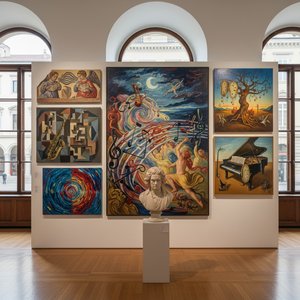
Harmonies on Canvas: Exploring the Visual Representation of Music in Art History
Explore the fascinating history of music's visual representation in art! From ancient symbolism to modern abstraction, discover how artists have captured sound and emotion on canvas. Expert insights & stunning examples.

Crimson Threads of Narrative: Exploring Symbolism & Representation in Artworks Featuring the Red Dress
Explore the rich symbolism of the red dress in art history! From ancient power displays to iconic portraits like Cézanne’s 'Madame Cezanne', discover the cultural and artistic significance behind this captivating color. Expert analysis & insights.