

 效果预览
效果预览
 分享
分享 分享
分享
 详情
详情

 下载
下载
 相似作品
相似作品 X射线
X射线 幻灯片播放
幻灯片播放 统计数据
统计数据Diana Killing Chione


 展开详情
展开详情
手工油画复制品
由我们的艺术家按需定制,为您提供您所选尺寸及画框的布面手工油画。 ( 切换至版画销售渠道 切换至数字图像销售渠道)




P118B $10

P118H $10

P118W $10

P438Z $10

P508JH $12

P508YH $12

P805H $10

P805Z $10

P919BZ $10

P919G $10

P919XJ $10

P959ZH $10

P968JZ $12

W106C $8

W218G $10

W218JH $8

W218Y $10

W307PJ $10

W316G $10

W316PJ $8

W316Y $10

W398PJ $8

W4111J $10

W500HY $15

W500JH $15

W692G $12

W849H $8

W940BG $15

W953PJ $8




从与原作比例一致的预设尺寸中进行选择。

您可以输入自定义尺寸,以适配特定的画框或空间。如果所选尺寸与原图比例不符,我们将通过裁剪作品或添加手绘元素来扩展画面。数字样稿将在制作开始前发送给您确认。
请注意,屏幕预览无法准确反映实际的裁剪或扩展效果,只有样稿才能真实呈现最终的构图。
虽然我们提供定制尺寸服务,但为了保留原作比例,建议您从预设列表中选择尺寸。
下单后,OriginalUniqueArt.com 团队将通过电子邮件联系客户获取具体要求,并提供效果预览图。


 玻璃选项仅适用于110厘米以下的尺寸。

Diana Killing Chione
复制材质
复制品尺寸
-


最终总价
$ 300
A Moment Frozen in Myth: Poussin’s “Diana Killing Chione”
Nicolas Poussin's "Diana Killing Chione," painted around 1622, is more than just a depiction of a classical myth; it’s a profound meditation on beauty, pride, and the swiftness of divine retribution. Created during a pivotal period in the artist’s career – his early years spent honing his craft in Lyon before establishing himself in Rome – this work offers a rare glimpse into Poussin's nascent style and foreshadows the monumental achievements that would define his legacy. The painting captures a dramatic scene from Greek mythology: the goddess Diana, clad in russet hues and radiating fierce authority, confronts Chione, a strikingly beautiful young woman whose boastful claim to possess greater charms than Artemis and Athena has incurred the wrath of the huntress. The composition is meticulously constructed, drawing upon Poussin’s deep understanding of classical principles – particularly those championed by Raphael – resulting in an image of remarkable clarity and balance. Notice how the diagonals created by Diana's bow and Chione's outstretched form guide the viewer's eye through the scene, intensifying the drama and creating a sense of dynamic movement despite the stillness of the moment. The use of atmospheric perspective, subtly blurring the background forest, further enhances the depth and realism of the composition, transporting us directly into this ancient woodland setting.The Myth Behind the Hunt
The story behind “Diana Killing Chione” is both cautionary and tragic. Chione, daughter of King Daedalion, possessed a beauty so captivating that she dared to challenge the goddesses Artemis and Athena, proclaiming her own allure surpassed theirs. This hubris angered Diana, who swiftly punished the girl by piercing her tongue with an arrow, rendering her unable to repeat her boastful words – a potent symbol of silenced pride and the consequences of overreaching ambition. Poussin masterfully translates this narrative onto canvas, imbuing each figure with a palpable sense of emotion. Diana’s expression is not one of simple cruelty but rather a grim determination, reflecting the severity of divine justice. Chione's agony is exquisitely rendered, her face contorted in pain and despair as she realizes the folly of her arrogance. The inclusion of Apollo and Mercury, captivated by Chione’s beauty before her downfall, adds another layer of complexity to the scene, suggesting a poignant blend of admiration and regret. The myth serves as a timeless reminder that excessive pride inevitably leads to ruin, a theme Poussin repeatedly explored throughout his career.Technique and Artistic Flourishes
Poussin’s mastery is evident in every detail of “Diana Killing Chione.” He employed a technique known as *alla prima*, working directly onto the wet canvas without underdrawing, resulting in a remarkably fresh and vibrant appearance. The brushstrokes are loose yet controlled, creating a sense of immediacy and spontaneity that belies the artist's meticulous planning. The color palette is restrained but effective, dominated by earthy tones – browns, greens, and ochres – which evoke the atmosphere of the forest. However, flashes of crimson in Diana’s attire and Chione’s dress draw attention to key elements and heighten the drama. The lighting is particularly noteworthy; a diffused light source illuminates the scene, casting long shadows that accentuate the forms and create a sense of depth. Poussin's ability to render textures – from the rough bark of the trees to the smooth skin of the figures – demonstrates his exceptional technical skill and his commitment to capturing the essence of reality.A Window into Poussin’s Early Vision
“Diana Killing Chione” is a crucial work in understanding the development of Nicolas Poussin's artistic vision. Painted early in his career, it reveals a remarkable synthesis of influences – the sensuousness of Venetian painting, the classical order of Raphael, and the dramatic intensity of Caravaggio. Yet, even at this early stage, Poussin demonstrates an exceptional ability to imbue his mythological subjects with psychological depth and emotional resonance. The work’s placement in Lyon, a city he called home for a brief but formative period, adds another layer of significance. It represents one of the earliest known works by Poussin, offering a rare glimpse into the artist's creative process during a time when he was still establishing his unique style and developing his distinctive approach to composition and color. Reproductions of this powerful image continue to resonate with viewers today, reminding us of the enduring appeal of classical mythology and the timeless wisdom contained within Poussin’s masterful brushstrokes.艺术家简介
尼古拉·普桑:古典主义的永恒守护者
尼古拉·普桑,一个与法国巴洛克绘画宏伟壮丽紧密相连的名字,却是一位灵魂深处扎根于意大利土地的艺术家。1594年出生于诺曼底的勒阿夫尔,他的早期生活略显神秘,但无疑为他日后的艺术生涯奠定了基础。尽管他在1610年代短暂地在巴黎学习,吸收了当时一些不太出名的艺术家的影响,真正点燃了他艺术命运的是1624年前往罗马的旅程。这不仅仅是地理位置上的转移,更是一次沉浸于古老文明的体验,一次通往定义他审美视野的灵感源泉的朝圣之旅。普桑最初的绘画尝试带有威尼斯大师提香式的感性色彩,但即使在这些早期作品中,一种新兴的秩序感和智力严谨性也开始显现——预示着他将如此精湛地完善的风格。罗马岁月:锻造古典理想
罗马对于普桑而言,远不止是一个工作室;它成为了他的艺术熔炉。他置身于学者、考古学家和艺术家组成的充满活力的圈子之中,尤其是卡西亚诺·达尔·波佐,这位对古老文明有着深刻理解的人士,极大地影响了艺术家的创作方法。达尔·波佐致力于细致记录古代遗迹的精神,激发了普桑对历史准确性的尊重和将作品中融入永恒感的渴望。这一时期,普桑逐渐摆脱了一些同时代人那种华丽的奔放,转而拥抱以清晰、平衡和强调线性构图为特征的风格。他一丝不苟地研究拉斐尔的作品,汲取其和谐的布局和优雅的形式,同时也从古希腊雕塑中汲取灵感。他的画作开始充斥着来自古典历史和神话中的人物——他们不再仅仅是装饰性的元素,而是道德美德和哲学理想的化身。历史、神话与圣洁的主题
普桑的艺术作品种类繁多,但始终以他对这些核心原则的承诺为统一。他经常描绘古老历史中的场景——例如德国尼库斯的悲惨命运——赋予其庄严和道德上的重量感。他的神话题作并非简单的故事重述;而是对人性的探索,往往蕴含着丰富的象征意义。《阿卡狄亚》系列,尤其是标志性的《在阿卡狄亚我亦曾存在》,成为了他哲学深度的象征,引发了对死亡和记忆持久力量的思考。除了历史和神话,普桑也转向宗教主题,最著名的莫过于《七件圣礼》——这是一项宏伟的项目,展示了他对神学理解和构图技巧。即使在这些神圣场景中,他也保持着古典式的克制,避免了过度的情感化,而偏爱一种庄严和尊贵的呈现方式。在他职业生涯的后期,广阔的风景越来越突出,将现实主义与理想化的形式相结合,创造出唤起和谐与宁静感的景象。持久的遗产:塑造法国艺术
尽管他一生的大部分时间都在国外度过,但尼古拉·普桑对法国艺术的影响是巨大的。他在1640年应理查贝尔侯爵的要求短暂地返回巴黎,被任命为国王的第一位画家,但他很快就因宫廷生活的压力和阴谋而感到窒息。他随即重返罗马,在那里继续绘画直到1665年去世。他对古典原则的奉献帮助确立了法国艺术训练和实践的标准,影响了后世的艺术家。 他成为了皇家绘画与雕塑学院的重要人物,巩固了他作为法国古典主义基石的地位。 诸如雅克-路易·大卫和保罗·塞尚等艺术家公开承认他们对普桑严谨的方法和智力深度的债务。他的遗产超越了单纯的风格模仿;它代表着秩序、清晰度和古典理想持久力量的承诺——见证了一位致力于通过理性和美的视角提升世界的艺术家的证明。- 重要作品:《德国尼库斯的死亡》、《七件圣礼系列》、《罗马之路》、《奥瑞恩失明》、《四季》。
- 关键特征: 古典构图、线性感、历史和神话主题、宁静的风景。

尼古拉·普桑
1594 - 1665 , 法国
艺术家简介
- Artistic Movement Or Style: 巴洛克, 古典主义
- Artists Or Movements Influenced By This Artist:
- 雅克-路易·大卫
- 保罗·塞尚
- Artists Who Influenced This Artist:
- 拉斐尔
- 提香
- Date Of Birth: 1594年6月
- Date Of Death: 1665年11月19日
- Full Name: 尼古拉·普桑
- Nationality: 法国人
- Notable Artworks:
- 《德米尼库斯之死》
- 《七 sacrament 系列》
- 《罗马之路》
- 《猎户座被蒙蔽》
- 《四季》
- Place Of Birth: 法国诺曼底安代勒
相关文章
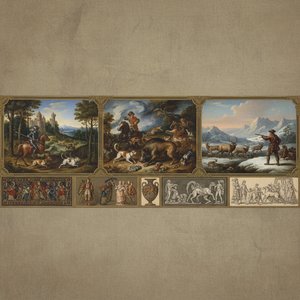
The Pursuit of Power & Prestige: Hunting Scenes in Western Art
Explore the rich history of hunting scenes in Western art, from royal pursuits to powerful allegories. Discover masterpieces & expert insights for discerning collectors. OriginalUniqueArt offers museum-quality reproductions.

The Visceral Stage: Exploring Dramatic Narratives & Emotional Intensity in Baroque Art
Explore the dramatic world of Baroque art! Discover iconic masters like Caravaggio & Rembrandt, their techniques, and the movement's lasting impact. Expert insights for collectors & enthusiasts at OriginalUniqueArt.

巴洛克艺术巅峰:十部巨作定义时代,点亮您的臻品格调
探索巴洛克艺术的辉煌!本文精选十部巨作,带您领略卡拉瓦乔、伦勃朗等大师的光影魔法与戏剧张力。从黄金时代到宗教绘画,感受奢华与精致。OriginalUniqueArt.com为您提供博物馆品质的艺术复制品和家居装饰灵感。尽在OriginalUniqueArt.com!

巴洛克戏剧性:将辉煌与情感融入当代室内设计
探索巴洛克艺术的辉煌与奢华!OriginalUniqueArt提供精湛的手工油画复制、定制服务和专业艺术咨询,助您将经典作品融入当代室内设计,提升家居品味。投资艺术,传承价值。

巴洛克艺术的戏剧性辉煌:历史背景、风格特征与持久影响
深入探索巴洛克艺术的辉煌历史、独特风格与持久影响。了解卡拉瓦乔、贝尼尼等大师的作品,洞悉反宗教改革运动下的艺术变革。OriginalUniqueArt.com为您提供专业的艺术解读与高清画作欣赏。


