 切换至版画销售渠道
 展开全文
展开全文







































 对于任何边长超过 105 厘米(约 41 英寸)的艺术品或复制品,画框将以拆解后的组件形式发货。此方法可确保安全送达并防止运输过程中的损坏。


St. George the Victorious: A Symbol of Courage and Triumph
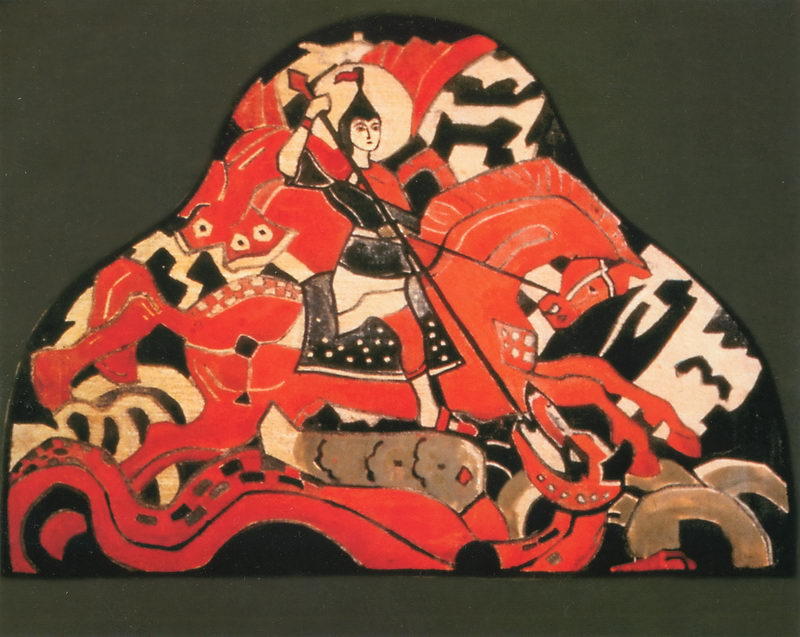
The painting St. George the Victorious by Nicholas Roerich is a masterpiece that embodies the essence of symbolism, inviting viewers to delve into its profound meaning. Created in 1920, this oil on canvas work measures 13 x 16 cm and is a testament to Roerich's skill in conveying complex ideas through art.
Artistic Style and Composition
Roerich's St. George the Victorious is characterized by its vibrant red background, intricate designs, and the depiction of St. George on horseback with a lance in hand. The composition showcases two horses, one on either side of the painting, adding to the sense of movement and energy. A figure is also visible near the top center, possibly representing an attendant or bystander, which adds depth to the scene. The overall effect is dynamic and visually arresting, drawing the viewer into a world of heroic action.
Symbolism and Interpretation
The symbolism in St. George the Victorious is multifaceted. St. George, as a figure, represents courage, victory, and the triumph of good over evil – a timeless narrative celebrated across cultures. The use of red in the background signifies passion, strength, and sacrifice, intensifying the dramatic impact of the scene. The horses, often symbols of power and freedom, underscore the dynamic nature of the encounter. The dragon itself represents chaos or evil that must be overcome, making St. George's victory a powerful symbol of hope and righteousness. Roerich masterfully uses these elements to create a work rich in meaning.
Historical Context and Artistic Influences
Created in 1920, St. George the Victorious reflects a period of significant cultural and artistic change. Roerich was deeply influenced by Russian Symbolism, which emphasized spirituality and emotional depth. His involvement with Sergei Diaghilev's “World of Art” society further shaped his aesthetic sensibilities. The painting’s stylized figures and simplified forms also suggest an influence from traditional East Asian art, particularly Korean celadon pottery. This blend of influences creates a unique artistic voice that resonates with both Eastern and Western traditions.
Emotional Impact and Legacy
St. George the Victorious evokes a sense of awe and inspiration. The vibrant colors, dynamic composition, and powerful symbolism combine to create an emotionally resonant experience for the viewer. It is not merely a depiction of a historical event but rather a timeless allegory about overcoming adversity and achieving victory through courage and faith. Roerich’s work continues to inspire art enthusiasts and collectors alike, solidifying his place as one of the most important artists of the 20th century.
常见问题与解答
在Art Nouveau运动中,尼古拉·罗斯里赫 的《St. George the Victorious》传达了怎样的情感?
"St. George the Victorious" 所蕴含的 Spiritual 情感,与其 Art Nouveau 风格相得益彰。
"St. George the Victorious" 属于哪种艺术风格?
尼古拉·罗斯里赫 的《St. George the Victorious》 属于 Art Nouveau 流派,该流派为这件作品提供了风格背景。
"St. George the Victorious"创作于哪一年,属于哪种艺术流派?
"St. George the Victorious"创作于1920年,属于Art Nouveau运动。
 实景预览
实景预览
 分享
分享 分享
分享
 详情
详情 指南
指南

 下载作品
下载作品
 相似作品
相似作品 X射线
X射线 幻灯片播放
幻灯片播放 问答
问答 统计数据
统计数据







