

 实景预览
实景预览
 发送
发送 分享
分享
 详情
详情 指南
指南

 下载图片
下载图片
 相似作品
相似作品 X射线
X射线 幻灯片播放
幻灯片播放 统计数据
统计数据Tree Chair
 Contemporary Design
 2015
2015 46.0 x 46.0 cm
 Loewe Foundation
 阅读全文
阅读全文
手工油画复制品
由我们的艺术家按需定制,为您提供您所选尺寸及画框的布面手工油画。 ( 切换至版画销售渠道 切换至数字图像销售渠道)




































您可以从与原作比例一致的预设尺寸中进行选择。

请输入您需要的宽度和高度,以适配您的画框或墙面。由于作品为手工绘制,若您选择不同的尺寸比例,艺术家可能会在画面边缘多画一些或稍作裁剪 —— 由您决定。在开始绘画之前,我们会为您发送一份数字效果图供您确认。本页面上展示的图片并非最终实物 —— 只有效果图才能反映真实结果。
下单后,OriginalUniqueArt.com 团队将通过电子邮件联系客户获取具体要求,并提供效果预览图


 玻璃选项仅适用于110厘米以下的尺寸。

Tree Chair
复制品材质
复刻品尺寸说明
-


总计金额
¥ 2016
问答详情
“Tree Chair”的创作者是谁,创作于何时?
"Tree Chair" 的作者是 Nicholas Iquan Gaspard,创作于 2015 年。
"Tree Chair" 属于 Nicholas Iquan Gaspard 艺术生涯中的哪个时期?
“Tree Chair”属于Nicholas Iquan Gaspard艺术生涯中的Contemporary时期。这一分类将该作品与艺术家的创作发展历程联系在一起。
Nicholas Iquan Gaspard 的《Tree Chair》 描绘了什么内容?
Nicholas Iquan Gaspard 的《Tree Chair》 描绘了:organic form, natural materials, sustainable design, wood sculpture, environmental art, contemporary furniture, minimalist aesthetic。
艺术家简介
A Life Forged in Trade and Turmoil: The Remarkable Story of Nicholas Iquan Gaspard (Zheng Zhilong)
The name Zheng Zhilong, or Nicholas Iquan Gaspard as he was known to many, resonates with a captivating blend of ambition, pragmatism, and the turbulent currents of 17th-century Asia. He wasn’t merely an admiral or a pirate; he was a master navigator of power, a merchant prince who rose from humble beginnings to command vast fleets and influence empires. Born in 1604 in Nan’an, Fujian province, his early life offered little hint of the extraordinary trajectory that lay ahead. His family's history traces back to those fleeing upheaval in central China centuries prior, settling in Fujian—a region already steeped in maritime trade and a breeding ground for both legitimate commerce and illicit ventures. It was this environment that would shape his destiny.
Young Zheng’s initial foray into the world wasn't through naval command but through employment with Europeans at the Portuguese settlement of Macau. There, he received not only practical skills in trade but also a baptism and the Christian name Nicholas Gaspard—a symbolic bridge between cultures that would define much of his life. This period proved formative, exposing him to global networks and fostering an understanding of European maritime practices. However, it was his subsequent involvement with pirate bands along the Chinese coast that truly ignited his rise. He quickly distinguished himself, not through brute force but through shrewdness and a growing mastery of naval tactics.
From Pirate Lord to Ming Admiral: A Shifting Allegiance
The turning point came in 1628 when Zheng Zhilong accepted amnesty from the Ming court. This wasn’t an act of repentance, but rather a calculated move—a recognition that aligning with established power offered greater opportunities than operating outside its reach. He was appointed as a Coastal Defense Guerrilla Commander and rapidly ascended through the ranks, leveraging his knowledge of pirate networks to suppress rivals and consolidate his control over southern waters. His wealth grew exponentially, fueled by both legitimate trade and the spoils of pacifying maritime forces like Li Kuiqi and Yang Liu. By the Chongzhen reign, he had become Assistant Commander-in-Chief, effectively controlling all commerce and security in the region.
Zheng Zhilong’s success wasn't simply about military prowess; it was about building a system. He understood that control of trade meant control of power, and he meticulously established networks to ensure his dominance. The defeat of the combined Dutch and Liu Xiang fleet at Liaoluo Bay in 1633 cemented his reputation as a formidable naval commander—a testament to his strategic thinking and the loyalty of his forces. This victory wasn’t just a military triumph; it was a demonstration of his ability to protect Chinese interests against foreign encroachment, further solidifying his position within the Ming hierarchy.
The Fall of the Dynasty and a Complex Legacy
The collapse of the Ming dynasty in 1644 plunged China into chaos. Zheng Zhilong initially supported Zhu Yujian, establishing him as the claimant to the throne in Fujian province and receiving the title of Count of Nan’an. However, his pragmatism once again took precedence. Recognizing the overwhelming strength of the Manchu Qing forces, he made the controversial decision to surrender in 1645, hoping to secure a future for himself and his family. He was granted noble titles by the Qing government but ultimately met a tragic end in 1661—executed due to his son, Zheng Chenggong’s continued resistance against the regime.
Despite this tumultuous ending, Zheng Zhilong's impact on maritime Asia remains profound. He wasn’t simply a pirate or an admiral; he was a pivotal figure in the transition between dynasties, a man who navigated treacherous political waters with remarkable skill. His promotion of immigration and development in Taiwan established a thriving trade network that generated immense wealth—a testament to his vision and entrepreneurial spirit. While his legacy is complex, marked by shifting allegiances and ultimately betrayal, it’s undeniable that Nicholas Iquan Gaspard left an indelible mark on the history of China and its relationship with the wider world.
His story serves as a potent reminder that power isn't solely derived from military strength or political position but also from economic control, strategic alliances, and a willingness to adapt—even if it means sacrificing principles along the way. The echoes of his ambition continue to resonate through the centuries, making him a fascinating and enduring figure in Asian history.

Nicholas Iquan Gaspard
1604 - 1661 , China
快速概览
- Full Name: Zheng Zhilong / Nicholas Iquan Gaspard
- Nationality: Chinese
- Date Of Birth: 1604
- Date Of Death: 1661
- Place Of Birth: Fuzhou, China
- Notable Artworks: ['Tree Chair']
- Artistic Movement Or Style: Maritime Art
相关文章

Bronze Sculptures That Defined Art History | OriginalUniqueArt
Journey through art history with our Top 10 bronze sculptures! Explore masterpieces by Rodin, Michelangelo & more. Discover stories behind iconic statues and find museum-quality reproductions for your home decor at OriginalUniqueArt.com.

The Enduring Form: Exploring Themes & Techniques in Sculpture Across Historical Periods
Explore the rich history of sculpture from ancient masterpieces to contemporary innovations. Discover key techniques, influential artists & investment potential for discerning art collectors.

The Enduring Form: Sculpture Across History, Technique & Emotional Resonance
Explore the rich history of sculpture with OriginalUniqueArt. Discover key techniques, influential artists & investment potential for discerning collectors. Expert insights into valuing and collecting timeless masterpieces.
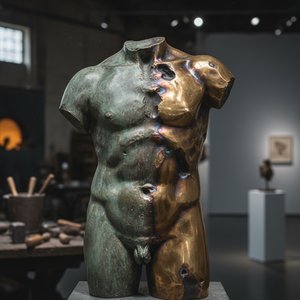
青铜雕塑艺术史:跨越千年的力量与美感,探究古代铸造工艺与现代创作的永恒魅力
探索青铜雕塑的千年魅力,本文由资深艺术史学者撰写,深入解析古代铸造技术与现代收藏价值。为高端藏家提供专业鉴定、保养指南和投资建议,让您在信任与品质中发现珍贵艺术品。

Bronze Age to Modern Masters: 10 Sculptures That Redefined Art | OriginalUniqueArt
Journey through art history with 10 legendary bronze sculptures – from Michelangelo's David to Rodin’s Thinker. Explore the stories, techniques & timeless beauty of these masterpieces. Find museum-quality reproductions & elevate your home decor on OriginalUniqueArt.com.