

 效果预览
效果预览
 购买印刷品
购买印刷品 分享
分享 分享
分享
 详情
详情

 下载
下载
 相似作品
相似作品 X射线
X射线 幻灯片播放
幻灯片播放Moonlit Landscape
 Ink
Ink- WallArt
- Maruyama School
 1794
1794- Early Modern
 98.0 x 41.0 cm
 展开详情
展开详情




P118B $10

P118H $10

P118W $10

P438Z $10

P508JH $12

P508YH $12

P805H $10

P805Z $10

P919BZ $10

P919G $10

P919XJ $10

P959ZH $10

P968JZ $12

W106C $8

W218G $10

W218JH $8

W218Y $10

W307PJ $10

W316G $10

W316PJ $8

W316Y $10

W398PJ $8

W4111J $10

W500HY $15

W500JH $15

W692G $12

W849H $8

W940BG $15

W953PJ $8




从与原作比例一致的预设尺寸中进行选择。

您可以输入自定义尺寸,以适配特定的画框或空间。如果所选尺寸与原图比例不符,我们将通过裁剪作品或添加手绘元素来扩展画面。数字样稿将在制作开始前发送给您确认。
请注意,屏幕预览无法准确反映实际的裁剪或扩展效果,只有样稿才能真实呈现最终的构图。
虽然我们提供定制尺寸服务,但为了保留原作比例,建议您从预设列表中选择尺寸。
下单后,OriginalUniqueArt.com 团队将通过电子邮件联系客户获取具体要求,并提供效果预览图。


 玻璃选项仅适用于110厘米以下的尺寸。

Moonlit Landscape
复制材质
复制品尺寸
-


最终总价
$ 300
A Nocturnal Symphony in Ink
In the quietude of the late Edo period, Nagasawa Rosetsu captured a moment where the boundary between the earthly and the celestial dissolves. His Moonlit Landscape is not merely a depiction of nature, but an atmospheric meditation on light and shadow. The scene unfolds upon silk, where a deep, nocturnal blue serves as the canvas for a world illuminated by the ethereal glow of a full moon. As the eye wanders through the composition, one encounters a solitary figure standing before the silhouette of a tree—perhaps a cherry blossom, its delicate form suggested by the interplay of light and dark. This figure, lost in contemplation of the heavens, invites the viewer to share in a moment of profound stillness, while scattered birds drift through the night air, adding a sense of living breath to the silent landscape.
The mastery of Rosetsu lies in his ability to manipulate the tsuketatefude technique, utilizing a wide, flexible brush to create soft, bleeding washes that define the contours of mountains without the need for harsh outlines. This method allows the mist and clouds to appear as if they are physically moving across the sky, evoking the legendary imagery of dragons winding through the heavens. The bold, dark silhouettes of pine trees provide a structural anchor to the composition, creating a striking visual tension against the luminous, pale moon. Through these layered applications of ink, Rosetsu achieves a sense of depth and moisture, making the atmosphere feel heavy with the scent of night dew and the mystery of the unknown.
Historical Resonance and Artistic Legacy
To understand this masterpiece, one must look to the artist’s place within the Maruyama School. Rosetsu was a pioneer who dared to blend the disciplined traditions of Japanese ink painting with a burgeoning interest in realism and expressive spontaneity. This particular work, dating from 1794, represents a period of intense creative exploration for the artist, as he traveled through regions like Hiroshima and Itsukushima. His fascination with moonlit themes was a lifelong pursuit, evolving from structured compositions to the more abstract, evocative forms seen here. The way he utilizes the "reserve" technique—leaving parts of the silk untouched to represent light—demonstrates a sophisticated understanding of negative space, a hallmark of East Asian aesthetic philosophy.
For the discerning collector or interior designer, this reproduction offers more than just visual beauty; it provides an emotional anchor for a room. The painting’s ability to evoke both serenity and a slight, haunting eeriness makes it a versatile centerpiece for spaces dedicated to reflection and calm. Whether placed in a contemporary setting to provide a touch of historical soul or integrated into a traditional study, the Moonlit Landscape serves as a window into a vanished era. It is an invitation to pause, to breathe, and to find beauty in the shadows, making it an enduring choice for those who appreciate art that speaks to the depths of the human spirit.
相关文章

葛饰北斋:25幅传世名作,浮世绘大师的艺术传奇 (Katsushika Hokusai: 25 Masterpieces, The Art Legacy of the Ukiyo-e Master)
探索葛饰北斋的25幅传世名作!深入了解浮世绘大师的艺术传奇,感受《神奈川冲浪波》等经典作品背后的故事与魅力。OriginalUniqueArt.com提供博物馆级高质量复制品,为您的家居带来日本风情和艺术灵感。立即探索完整系列!
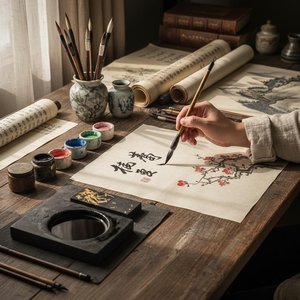
The Alchemy of Ink: Mastering the Timeless Beauty and Art History of Paper and Brush
Embark on a sophisticated exploration of ink wash painting and Sumi-e. Uncover the profound historical lineages, Zen philosophies, and technical mastery behind this timeless medium in our authoritative guide for fine art enthusiasts.


浪漫主义画派的十部巨作:定义风景画的艺术传奇
探索浪漫主义风景画的巅峰!本文精选十部经典名作,带您领略莫奈、库尔贝等大师的艺术魅力。感受色彩与光影的诗意,重温自然风光的震撼。OriginalUniqueArt.com为您提供博物馆级别的艺术复制品和个性化家居装饰方案。尽在OriginalUniqueArt.com!

Evocations of Place: A Historical Journey Through Landscape Art
Explore the rich history of landscape art with OriginalUniqueArt. Discover renowned artists, movements like Impressionism & Romanticism, and expert guidance for collecting timeless pieces. Find your perfect serene escape today!

