

 实景预览
实景预览
 发送
发送 分享
分享
 详情
详情 指南
指南

 下载图片
下载图片
 相似作品
相似作品 X射线
X射线 幻灯片播放
幻灯片播放 统计数据
统计数据Dalet Tet


 阅读全文
阅读全文
艺术微喷/版画
博物馆级艺术微喷或帆布版画,制作高效,并提供多种饰面选择。 ( 订购此收藏品的纯手工复刻画作 切换至数字图像销售渠道)




P118B ¥10

P118H ¥10

P118W ¥10

P438Z ¥10

P508JH ¥12

P508YH ¥12

P805H ¥10

P805Z ¥10

P919BZ ¥10

P919G ¥10

P919XJ ¥10

P959ZH ¥10

P968JZ ¥12

W106C ¥8

W218G ¥10

W218JH ¥8

W218Y ¥10

W307PJ ¥10

W316G ¥10

W316PJ ¥8

W316Y ¥10

W398PJ ¥8

W4111J ¥10

W500HY ¥15

W500JH ¥15

W692G ¥12

W849H ¥8

W940BG ¥15

W953PJ ¥8




您可以从与原作比例一致的预设尺寸中进行选择。

请输入您所需的宽度和高度,以适配您的画框或墙面。由于印刷品只能进行裁剪,无法超出原图尺寸,因此若比例不一致,画面的一部分将会被裁切。在正式印刷之前,我们会为您发送一份数字效果图供您确认。本页面显示的图片并非最终裁剪后的效果——只有效果图才能展示真实的裁剪情况。


 玻璃选项仅适用于110厘米以下的尺寸。

Dalet Tet
艺术微喷/版画
复刻品尺寸说明
-


总计金额
¥ 538
A Descent into Darkness: Morris Louis’s *Dalet Tet*
Morris Louis’s *Dalet Tet*, painted in 1959, isn't merely a canvas filled with color; it’s an immersive experience, a deliberate descent into the heart of darkness and a testament to the revolutionary techniques he pioneered. This monumental Color Field painting immediately commands attention with its overwhelming dominance of black, yet within this apparent void lies a complex interplay of subtle hues—whispers of orange, red, and yellow—that suggest a hidden vitality. It’s a work that invites prolonged contemplation, rewarding those willing to surrender to its quiet intensity.
Louis, a pivotal figure in the mid-20th century art world, sought to dismantle traditional notions of painting by rejecting representation altogether. Instead, he embraced abstraction as a means of exploring pure color and process. *Dalet Tet* exemplifies this approach perfectly, drawing heavily from the Color Field movement’s emphasis on large areas of unbroken hue. The painting's genesis lies in Louis’s groundbreaking experimentation with Magna paint – a newly developed acrylic resin that allowed for unprecedented fluidity and transparency when applied to unprimed canvas. This innovative material became central to his “veil” technique, where diluted paint was poured directly onto the fabric, creating cascading layers of color that bled and merged organically.
The Language of Flow: Composition and Technique
The composition of *Dalet Tet* is deceptively simple yet profoundly effective. Vertical bands or ribbons of color—the “veils,” as Louis termed them—cascade downwards, seemingly defying gravity. These aren’t sharply defined lines but rather the edges of expanding fields, creating a sense of dynamic movement and an illusion of depth despite the painting's predominantly two-dimensional nature. The absence of geometric precision contributes to the work’s organic quality; the forms feel fluid and responsive, as if reacting to the forces of gravity and chance.
The layering process itself is crucial to understanding *Dalet Tet*. Louis meticulously controlled the dilution of the Magna paint, allowing it to flow freely across the canvas. The resulting effect isn’t one of deliberate brushstrokes but rather a spontaneous, almost chaotic, dance of color. This technique—a departure from traditional painting methods—was incredibly risky at the time, as it challenged established notions of control and skill. Yet, Louis's willingness to embrace this process resulted in paintings that are both visually arresting and emotionally resonant.
Symbolism and Emotional Resonance
The overwhelming darkness of *Dalet Tet* immediately evokes feelings of melancholy, introspection, or perhaps even a sense of the sublime. It’s not a cheerful or celebratory work; rather, it feels deeply contemplative, inviting viewers to confront their own inner landscapes. The subtle hints of color—the flashes of orange, red, and yellow—suggest a glimmer of hope or resilience within the darkness, hinting at the possibility of transformation and renewal.
The title *Dalet Tet*, derived from the Hebrew alphabet, adds another layer of meaning. It refers to the first four letters, representing “creation” or “beginning.” This suggests that the painting isn’t simply an exploration of darkness but also a meditation on emergence—the potential for something new to arise from within it.
A Legacy in Color: Morris Louis and Beyond
Morris Louis's *Dalet Tet* stands as a landmark achievement in American art history, profoundly influencing generations of artists. His pioneering use of Magna paint and his embrace of spontaneous process revolutionized the way painting was conceived and executed. His work paved the way for subsequent Color Field painters like Helen Frankenthaler and Kenneth Noland, establishing a vibrant tradition that continues to inspire today.
Reproductions of *Dalet Tet* offer a remarkable opportunity to experience Louis’s vision firsthand. The rich textures and subtle color variations are beautifully captured in high-quality prints, allowing viewers to appreciate the depth and complexity of this iconic work. Whether adorning a contemporary living space or serving as a focal point in a gallery setting, *Dalet Tet* remains a powerful testament to the transformative potential of color and process.
问答详情
莫里斯·路易斯 的《Dalet Tet》 是油画、素描还是版画?
在目录中,莫里斯·路易斯 的《Dalet Tet》 被归类为 WallArt。该类别有助于查找相似作品。
"Dalet Tet" 是否不受版权保护?
莫里斯·路易斯 的《Dalet Tet》 的版权说明:该作品属于 仍受版权保护。这决定了是否可以自由进行图像复制。
莫里斯·路易斯 的《Dalet Tet》 描绘了怎样的场景,又传达了怎样的意境?
莫里斯·路易斯 的《Dalet Tet》 描绘了 color, black, flowing, vertical, dark, abstract, veil, dynamics,呈现出 Calm 的意境。其主题与氛围共同构成了这件作品的精髓。
艺术家简介
早年生活与教育
- 出生:莫里斯·路易斯·伯恩斯坦(Morris Louis Bernstein),1912年11月28日,出生于马里兰州巴尔的摩
- 父母:路易斯·伯恩斯坦(家具销售员)与塞西莉亚·拉克曼·伯恩斯坦(Cecelia Luckambut Bernstein)
- 教育背景:就读于巴尔的摩公立学校;1929年至1932年就读于马里兰艺术学院(现MICA)。未获得学位。
- 早期的艺术启蒙包括尤金·斯佩尔(Eugene Speicher)和保罗·塞尚(Paul Cézanne)。
- 尽管在巴尔的摩的机会有限,但在家人的鼓励下,他从小便展现出对艺术的浓厚兴趣。
艺术发展与关键影响
- 1930年代:为了维持绘画生活,他从事过各种零工(如削蔬菜、洗衣服、盖洛普民调研究员等)。
- 1934-1936年:在萨姆·斯威德洛夫(Sam Swerdloff)的指导下,参与了公共艺术工程(Public Works of Art Project)的壁画创作。
- 1936-1937年:移居纽约市;并在西奎罗斯工作室(Siqueiros Workshop)进行技法实验。
- Magna油漆的发现(1948年):这是一个转折性的时刻——路易斯率先使用了Magna油漆,这是一种由莱昂纳德·博库尔(Leonard Bocour)和萨姆·戈登(Sam Golden)专门为他研发的新型油性丙烯颜料。这一发现赋予了他的作品更强的流动性与透明感。
- 海伦·弗兰肯塔勒的影响:1953年,路易斯与肯尼斯·诺兰德(Kenneth Nond)参观了弗兰肯塔勒的工作室,被她的浸染画法(尤其是《山与海》)深深震撼。这激发了他们对泼洒与浸染技法的实验探索。
面纱系列绘画与色域创新的巅峰
- 成熟时期的“面纱”绘画(1954年):其特征是将透明的色彩层层叠加、重叠,并泼洒在经过底料处理或未经处理的画布上,使其渗入纤维。
- 技法:将极度稀释的颜料涂抹在未经底料处理且未绷紧的画布上,让颜料顺着倾斜的表面流动,从而创造出半透明的色彩面纱。这种方法消除了笔触,强调了画面的平面性。
- 色域绘画:路易斯成为了色域绘画(Color Field painting)的核心人物,他简化了画面空间,转而强调强烈的色彩平面。他是华盛顿色彩学派(Washington Color School)运动的重要成员。
- 系列与风格:除了“面纱”系列,他还探索了花卉系列、柱状系列(1960年)、展开系列(1960-61年,以不透明颜料的流淌痕迹为特色)以及条纹绘画(1961-62年)。
重大成就与历史意义
- 色域绘画的先驱:路易斯被公认为色域绘画的关键创新者,与肯尼斯·诺兰德和海伦·弗兰肯塔勒并驾齐驱。
- 对抽象表现主义的影响:他的作品通过聚焦于色彩与平面性,而非动作或构图,拓展了抽象表现主义的边界。 华盛顿色彩学派:作为这一具有影响力的运动的重要贡献者,他强调了一种还原主义的绘画方法。
- 作品的毁弃:值得注意的是,路易斯在1955年至1957年间销毁了许多自己的画作,这反映了他对自身创作的一种严苛的自我审视。
- 艺术遗产:他对色彩、平面性以及颜料物质性的强调,至今仍在持续影响着当代艺术家。
晚年与逝世
- 路易斯在生命的最后阶段依然保持着高产的创作状态。
- 逝世:1962年9月7日,于华盛顿特区去世,享年49岁。
- 纪念展览(1963年):在他去世后不久,索罗门·R·古根海姆博物馆为其举办了一场重要的纪念展。
- 回顾展:随后,波士顿美术馆(1967年)和华盛顿特区国家美术馆(1976年)相继为其举行了大型回顾展。

莫里斯·路易斯
1912 - 1962 , 美国
快速概览
- Artistic Movement Or Style: 色域绘画
- Artists Or Movements Influenced By This Artist:
- Kenneth Noland
- 华盛顿色彩学派
- Artists Who Influenced This Artist:
- Helen Frankenthaler
- Jackson Pollock
- 塞尚
- Date Of Birth: 1912年11月28日
- Date Of Death: 1962年9月7日
- Full Name: 莫里斯·路易斯
- Nationality: 美国
- Notable Artworks:
- High
- Number 1-36
- Where
- Number 1-68
- Gamma Tau
- Third Element
- Delta Theta
- Place Of Birth: 美国巴尔的摩
相关文章

抽象表现主义:十幅定义艺术史的杰作
探索抽象表现主义的十幅经典杰作!波洛克、罗斯科等大师作品,揭秘艺术史上的重要瞬间。OriginalUniqueArt.com为您呈现高品质艺术品复制和精选家居装饰方案,感受现代艺术的力量与魅力。立即浏览全系列!

Kandinsky's Masterpieces: 25 Paintings That Define Abstract Art | OriginalUniqueArt
Journey through Wassily Kandinsky's 25 most iconic abstract paintings. Explore his revolutionary use of color, form & spiritual expressionism. Find museum-quality Kandinsky reproductions and elevate your home decor with OriginalUniqueArt.com. Discover all masterpieces on OriginalUniqueArt.com!
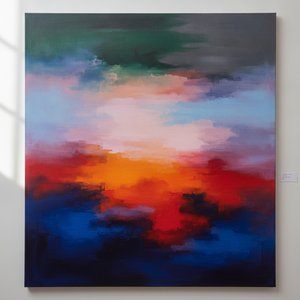
Color Field Painting: The Emotional Power of Pure Abstraction and Chromatic Depth
Explore the profound emotional depth of Color Field painting. Discover the history of mid-century abstraction, from Rothko to Newman, and learn how pure color transforms the viewer's experience through our expert art history guide.
Navigating Abstract Expression: A Guide to Contemporary Movements for Emotional Resonance in Art Selection
Explore the evolution of Abstract Expressionism & discover contemporary movements for emotional resonance. Expert guidance for discerning art collectors seeking lasting value. OriginalUniqueArt.

Morris Louis: Pioneering Color Field Painting & Abstract Expressionism's Legacy
Explore the groundbreaking abstract expressionism of Morris Louis, a pioneer of Color Field painting. Discover his innovative techniques, influential series & lasting legacy in post-war American art. Learn more at OriginalUniqueArt.
