
 购买手绘画作
 分享
分享 分享
分享
 详情
详情

 下载
下载
 相似作品
相似作品 幻灯片播放
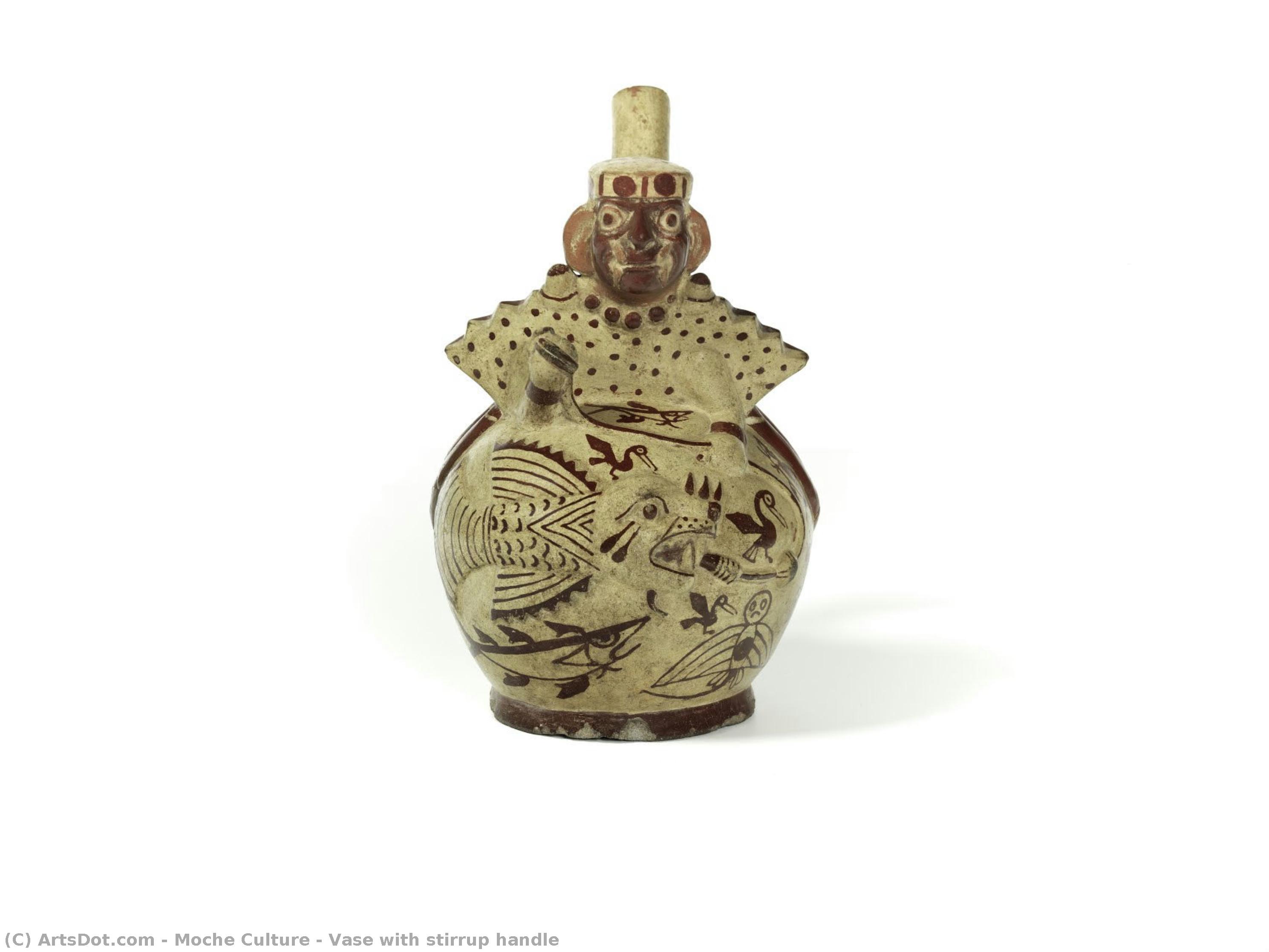
幻灯片播放Vase with stirrup handle


 展开详情
展开详情




































从与原作比例一致的预设尺寸中进行选择。

您可以输入自定义尺寸,以适配特定的画框或空间。如果您选择的尺寸与原图比例不符,我们将对作品进行裁剪,或通过镜像填充/纯色填充边缘的方式来扩展图像。在开始制作之前,我们会向您发送一份数字效果图供您确认。
请注意,屏幕上的预览并不能反映实际的裁剪或扩展效果。只有效果图才能准确展示最终的构图。
虽然我们提供定制尺寸,但为了保持原图比例,我们建议您从预设列表中选择尺寸。


 玻璃选项仅适用于110厘米以下的尺寸。

Vase with stirrup handle
艺术微喷/版画
复制品尺寸
-


最终总价
$ 80
藏品详情
An Ancient Echo from the Peruvian Coast
In the quiet presence of the Vase with stirrup handle, one does not merely observe an object, but encounters a profound dialogue with a vanished world. Emerging from the brilliant, arid landscapes of the Moche culture along Peru’s northern coast, this ceramic masterpiece serves as a tactile window into a civilization that flourished between 100 AD and 700 AD. The vessel, characterized by its iconic stirrup handle, is far more than a functional container; it is a sculptural narrative, a vessel of memory that captures the very essence of Moche spiritual life. To hold a gaze upon its surface is to feel the pulse of an ancient society that found divinity in the earth and rhythm in the ritualistic depiction of the natural world.
The artistry of the Moche masters is revealed through a sophisticated interplay of slip painting and meticulous incising. The palette is grounded in the organic, utilizing earthy tones of deep brown and warm beige that reflect the sun-drenched landscapes of the Lambayeque Region. These pigments, derived from natural mineral sources, are applied with a precision that belies the ancient medium of clay. As light dances across the uneven, textured surface, it highlights the bold, geometric lines and curvilinear forms that define the vessel's iconography. The technique creates a sense of movement, where the raised edges of incised patterns catch shadows, lending a rhythmic, three-dimensional vitality to the stylized figures that inhabit the ceramic skin.
Symbolism and the Divine Narrative
Every curve and contour of this vase is steeped in a complex web of mythological significance. The Moche were masters of symbolic storytelling, using their pottery to document a cosmos populated by powerful deities and sacred animals. Within the composition, one finds a mesmerizing arrangement of human faces with exaggerated, expressive features, interspersed with motifs of birds and perhaps the llama—creatures that held deep ritualistic importance in Moche agriculture and cosmology. These figures are not merely decorative; they are characters in a cosmic drama, representing the interconnectedness of life, death, and the divine forces governing fertility and the seasons.
For the discerning collector or interior designer, this piece offers an unparalleled opportunity to introduce a sense of historical gravity and soulful texture into a contemporary space. The vase’s aesthetic power lies in its ability to bridge the gap between the prehistoric and the modern. Its rugged, earthen texture provides a stunning contrast to the sleek surfaces of minimalist decor, while its profound historical weight adds a layer of intellectual and emotional depth to any curated collection. Owning a reproduction of such a significant cultural artifact is an invitation to surround oneself with the enduring legacy of human creativity and the timeless beauty of the ancient Andes.
艺术家简介
莫切文化:陶艺艺术与祭祀图腾的大师
在公元100年至700年间,莫切文化于秘鲁干旱的海岸线上蓬勃发展,成为艺术创新与复杂社会组织的永恒见证。与许多当时逐渐走向帝国集权的文明不同,莫切并非单一的庞大帝国,而是一系列由共同传统维系的独立政体群落——其核心纽带便是对陶瓷艺术无与伦比的掌控力,以及对宗教信仰的深邃参与。他们的遗产至今仍令考古学家和艺术家为之着迷,为我们窥见那个在权力、丰饶与来世命题中挣扎求索的充满活力的社会提供了珍贵的窗口。- 起源与地理:位于今日秘鲁兰拜克地区(Lambayeque)的莫切人,在极具挑战性的自然环境下繁衍生息。他们主要依靠灌溉农业来种植玉米、藜麦和豆类等作物。这种对土地的依赖培养了他们精湛的植物学与畜牧业知识,并微妙地渗透进他们的艺术表现之中。
- 陶瓷创新:莫切文明的盛名主要源于其卓越的陶器制作,尤其是著名的“马蹄口瓶”(stirrup-spout vessels)——这是一种革命性的技术,利用青铜模具进行铸造。这些器皿绝非仅仅是实用的生活用品,它们更像是承载史诗的画布,上面绘有极其细腻的人物场景、祭祀游行以及神话叙事。艺术家们以惊人的精准度,细致地刻画了人类、动物(尤其是鸟类)、植物以及几何纹饰。
- 图像学与象征意义:莫切艺术充满了反映其宇宙观的象征符号。反复出现的图案包括代表丰饶与再生的蛇,象征神圣使者的程式化鸟类,以及描绘统治者参与祭祀活动的场景。这些图像传递的不只是视觉信息,更是精神层面的概念——关于创世神话、祖先崇拜以及生命循环往复的信仰。
- 宏伟建筑:除了陶瓷艺术,莫切人还建造了令人震撼的土坯金字塔和装饰着精美壁画的神庙。诸如瓦卡普克拉罗(Huaca Puclaro)和夸阿怀纳马卡(Kuahuaynamarca)等遗址,展示了卓越的建筑技艺与艺术雄心。这些建筑宏大的规模,彰显了宗教与社会等级在莫切社会中的核心地位。
- 遗产与影响:尽管莫切文明在公元700年左右突然衰落,但其艺术成就却得以延续,并深刻影响了秘鲁及周边随后的文化。马蹄口瓶技术在莫切文明衰落后的数个世纪里仍被沿用,证明了其创新的持久生命力。此外,莫切的图像学符号——特别是对鸟类和蛇的描绘——至今仍能在安第斯艺术传统中寻得踪迹。
卓越成就:马蹄口瓶与壁画艺术
马蹄口瓶代表了莫切陶瓷艺术的巅峰。这些器皿从微小的塑像到宏伟的纪念碑式作品,均达到了无与伦比的写实度与细节水平,这种成就令同时代的其他文化望尘莫及。艺术家们运用复杂的工艺,结合青铜模具与精细的施釉技术,创造出能够精准捕捉微妙纹理与色彩的器物表面。与此同时,装饰在瓦卡普克拉罗和夸阿怀纳马卡遗址上的壁画同样令人震撼,它们使用了从朱砂和赤铁矿等矿物中提取的鲜艳颜料。这些壁画生动地描绘了祭祀游行、皇家庆典及神话传说,为我们研究莫切人的信仰与艺术规范提供了无价的洞察。宗教信仰与祭祀仪式
莫切宗教的核心是一套与丰饶、农业及天文现象紧密相关的神灵体系。蛇在莫切图像学中扮演着举足轻重的角色,象征着再生并体现了神圣的力量。鸟类——尤其是蜂鸟和猛禽——被视为神的使者而受到崇拜,并在艺术作品中频繁出现。其祭祀活动包括向神灵献祭以求庇佑,以及为纪念出生、死亡和农作物丰收等重大事件举行的盛大仪式。有证据表明,在宗教仪式中甚至存在活人祭祀(特别是幼童)的现象——这一争议性的文化侧面至今仍是学术界激烈辩论的话题。对安第斯艺术传统的深远影响
莫切文化的艺术创新在文明衰落后的数个世纪里,始终在安第斯艺术传统中回响。马蹄口瓶技术作为一种主流的陶瓷形式得以延续,证明了莫切工艺精髓的持久传承。此外,莫切的图像符号——尤其是对鸟类与蛇的描绘——也出现在随后的纳斯卡(Nazca)和奇穆(Chimú)文明的纺织品、雕塑与壁画之中。这些艺术元素的借用与融合,不仅强调了安第斯艺术史的内在连贯性,更见证了莫切大师们那永不磨灭的影响力。
莫切文化
秘鲁
艺术家简介
- Artistic Movement Or Style: 陶瓷艺术
- Full Name: 莫切文化
- Nationality: 秘鲁
- Notable Artworks:
- 鬐口瓶
- 鬐把瓶
- Place Of Birth: 秘鲁
相关文章

The Alchemy of Clay: A Collector's Guide to the Mastery, Texture, and Timeless Form of Ceramic Art
Discover the profound beauty of ceramic art. Our expert guide explores the alchemy of clay, texture, and glaze, offering collectors deep insights into mastering earth and fire to create timeless, sculptural masterpieces for any curated collection.
The Art of Ceramics: A Guide to Mastery, Texture, and Timeless Form for the Discerning Collector
Explore the profound elegance of ceramic art. From master glazes to sculptural forms, our expert guide offers discerning collectors deep insights into the mastery, texture, and timeless value of fine ceramics for sophisticated collections and luxury interiors.
Timeless Treasures: A Journey Through the Sacred Artistry of Ancient Egyptian Masterpieces
Embark on an authoritative journey through Ancient Egyptian masterpieces. Uncover the profound symbolism of hieroglyphs and the Nile's legacy. Discover museum-quality, hand-painted oil reproductions of these timeless treasures, curated for the discerning history lover.
Epic Remnants: The Bold and High-Impact Visual Power of Ancient Ruins
Dive into the epic drama of ancient ruins. Our high-impact, hand-painted oil reproductions bring the cinematic power of lost worlds to your walls. Elevate your space with bold, modern remixes of historical grandeur. Premium quality, global shipping, and pure visual impact.

Preserving Your Masterpieces: The Ultimate Guide to Cleaning and Handling Fine Art
Master the art of stewardship with our expert guide to fine art preservation. Learn professional techniques for cleaning, handling, and protecting your oil paintings from light, humidity, and decay to ensure your masterpieces endure for generations.

