切换至版画销售渠道
 展开全文
展开全文







































 对于任何边长超过 105 厘米(约 41 英寸)的艺术品或复制品,画框将以拆解后的组件形式发货。此方法可确保安全送达并防止运输过程中的损坏。


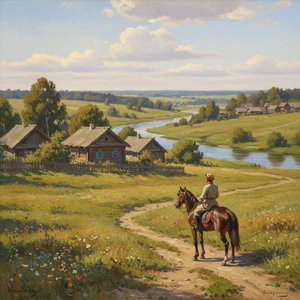
A Glimpse of Rural Serenity: Mikhail Nesterov’s "Spring"
Mikhail Nesterov's "Spring," painted in 1901, offers a tranquil and evocative portrayal of rural life. This captivating landscape transports the viewer to a peaceful countryside setting, dominated by a modest wooden house with a charming thatched roof. The scene exudes an atmosphere of quiet solitude; the slightly weathered appearance of the dwelling suggests a history lived simply, perhaps even hinting at abandonment or a gentle return to nature. Two dogs stand attentively in the foreground – one closer to the left and another nearer the center – their presence adding a touch of domesticity and companionship to the otherwise serene vista. The backdrop is composed of lush trees, creating a harmonious blend of natural elements that contribute to the painting's overall sense of calm and renewal.Impressionistic Brushwork & Gouache Technique
Nesterov’s "Spring" exemplifies his unique approach within the Impressionist movement. While influenced by Impressionism’s focus on capturing fleeting moments and the effects of light, Nesterov infused his work with a distinctly Russian sensibility – a deep connection to folk traditions and spiritual themes. The painting is executed in gouache on cardboard, a medium that allows for vibrant color saturation and delicate layering. Notice how Nesterov uses loose, expressive brushstrokes to depict the foliage and sky, creating a sense of movement and atmosphere. This technique contrasts with the more defined lines used for the house and dogs, drawing attention to their solidity within the ethereal landscape. The choice of gouache lends a luminous quality to the scene, enhancing the feeling of springtime freshness.Historical Context & Russian Identity
Painted at the turn of the 20th century, "Spring" reflects a period of significant social and artistic change in Russia. The country was undergoing rapid industrialization and modernization, yet many Russians cherished their rural heritage and sought to preserve traditional ways of life. Nesterov’s work often explored themes of Russian identity, spirituality, and the beauty of the natural world. This painting can be seen as a nostalgic reflection on a simpler past, celebrating the enduring charm of the countryside amidst the changing times. It resonates with a longing for connection to nature and a rejection of the increasingly impersonal urban environment.Symbolism & Emotional Resonance
Beyond its visual appeal, "Spring" carries subtle symbolic weight. The thatched roof house, while seemingly neglected, represents resilience and endurance – a testament to the enduring spirit of rural communities. The dogs symbolize loyalty, companionship, and protection, adding warmth and life to the scene. The vibrant greens and blues evoke feelings of renewal, hope, and tranquility. Nesterov masterfully captures the emotional essence of springtime—a time of rebirth, growth, and optimism. The painting’s quiet beauty invites contemplation and offers a moment of respite from the complexities of modern life, leaving the viewer with a sense of peace and serenity.常见问题与解答
“Spring”整体色调是偏明亮还是偏暗?
米哈伊尔·内斯特罗夫 的《Spring》 的记录数值为:亮度 shadow,亮度感 Soft Shadow。
“Spring”中的色彩呈现出多少光泽感?
米哈伊尔·内斯特罗夫 的《Spring》 的亮度为 Soft Shadow。亮度描述了色彩呈现出的反射光量。
"Spring" 的色彩之间是如何相互关联的?
米哈伊尔·内斯特罗夫 的《Spring》 呈现出一种 Unified Palette 的色彩和谐感。
 实景预览
实景预览
 分享
分享 分享
分享
 详情
详情 指南
指南

 下载作品
下载作品
 相似作品
相似作品 X射线
X射线 幻灯片播放
幻灯片播放 问答
问答 统计数据
统计数据