切换至版画销售渠道
 展开全文
展开全文







































 对于任何边长超过 105 厘米(约 41 英寸)的艺术品或复制品,画框将以拆解后的组件形式发货。此方法可确保安全送达并防止运输过程中的损坏。


A Testament to Renaissance Power: Michelangelo’s Risen Christ
Michelangelo Buonarroti's *Risen Christ* (detail), completed in 1521, is far more than a depiction of religious triumph; it’s a profound exploration of human potential and divine power rendered in breathtaking marble. Housed within the Santa Maria sopra Minerva church in Rome, this sculpture stands as a pivotal work of the High Renaissance, showcasing Michelangelo's unparalleled mastery of anatomy, composition, and emotional expression.Commission & Creation: Overcoming Obstacles
The story behind *Risen Christ* is one of artistic perseverance. Commissioned by Metello Vari in 1514, Michelangelo initially began work on a different marble block, only to abandon it upon discovering a significant flaw – a dark vein that compromised the stone’s integrity. This setback underscores the challenges inherent in working with such a demanding medium and highlights Michelangelo's uncompromising standards. The final sculpture, completed between 1519 and 1520, is a testament to his dedication and skill in coaxing life from unyielding material.Anatomy & Artistic Innovation: Contrapposto and Dynamic Pose
The sculpture immediately captivates with its dynamic energy. Christ stands unclothed, powerfully built, holding the cross – not as a symbol of suffering, but as an emblem of victory. Michelangelo’s masterful use of *contrapposto*—the asymmetrical arrangement of the body resulting in a graceful S-curve—imparts a sense of movement and latent power. The figure seems poised to step forward, radiating strength and resilience. This pose wasn't merely aesthetic; it was revolutionary for its time, moving away from static representations towards a more naturalistic and emotionally charged depiction of the human form.Symbolism & Interpretation: Triumph Over Sin
The sculpture’s symbolism is layered and complex. The exposed anatomy, particularly the rendering of Christ's physique, has been subject to much discussion. While initially causing controversy, it’s widely interpreted as representing not a sensual display, but rather Christ’s triumph over sin and death – a celebration of the uncorrupted human form restored to its original perfection. The loincloth, added later in 1546, was a concession to modesty concerns, yet carefully designed to preserve the sculpture's artistic integrity.Historical Context & Michelangelo’s Legacy
Michelangelo created *Risen Christ* during a period of immense artistic and intellectual ferment – the High Renaissance. This era valued humanism, classical ideals, and anatomical accuracy. His work reflects these values while simultaneously pushing boundaries. Comparing this sculpture to his monumental frescoes on the Sistine Chapel ceiling, reveals a consistent thread: an exploration of the human form as a vessel for divine expression. *Risen Christ* stands alongside works like *David* and the *Pietà* as cornerstones of Western art, influencing generations of artists.Emotional Impact & Enduring Appeal
The sculpture evokes a powerful emotional response. It’s not simply a depiction of resurrection; it's an embodiment of hope, strength, and spiritual renewal. The viewer is drawn into Christ’s gaze, experiencing a sense of awe and reverence. Its enduring appeal lies in its ability to transcend religious boundaries and speak to universal themes of human resilience and the triumph of good over evil.Collecting & Reproduction
- For Collectors: Acquiring a high-quality reproduction of *Risen Christ* allows you to bring a piece of Renaissance mastery into your home or collection.
- For Interior Designers: This sculpture, even in reproduction, serves as a striking focal point. Its classical form and powerful presence complement both traditional and contemporary interiors.
- Considerations: When selecting a reproduction, prioritize materials and craftsmanship to ensure accuracy and longevity. A carefully chosen piece will serve as a lasting source of inspiration and beauty.
常见问题与解答
"Risen Christ (detail)" 的作者是谁?
《Risen Christ (detail)》被归为米开朗基罗的作品。
米开朗基罗 的《Risen Christ (detail)》 是运用了强烈的对比,还是呈现出柔和的和谐?
米开朗基罗 的《Risen Christ (detail)》 的色彩分析呈现出一种 Statement 的对比与 Strong Color Unity 的和谐。
建议将“Risen Christ (detail)”打印成多大的尺寸?
米开朗基罗 的《Risen Christ (detail)》 的建议打印尺寸为 Large。
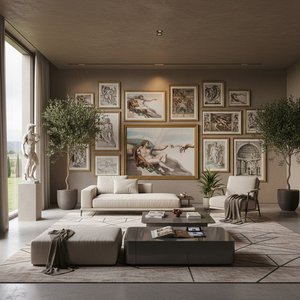
 实景预览
实景预览
 分享
分享 分享
分享
 详情
详情 指南
指南

 下载作品
下载作品
 相似作品
相似作品 X射线
X射线 幻灯片播放
幻灯片播放 Q&A
Q&A 统计数据
统计数据