切换至版画销售渠道
 展开全文
展开全文







































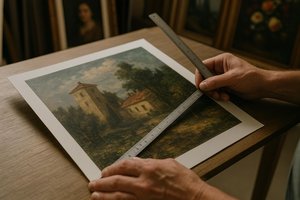
 对于任何边长超过 105 厘米(约 41 英寸)的艺术品或复制品,画框将以拆解后的组件形式发货。此方法可确保安全送达并防止运输过程中的损坏。


Hercules and Cacus: A Titan's Testament to Strength and Narrative
Michelangelo Buonarroti’s Hercules and Cacus stands as a cornerstone of High Renaissance sculpture, embodying not merely anatomical precision but also profound psychological depth—a testament to Michelangelo’s unparalleled ability to convey emotion through stone. Completed in 1525, this monumental statue resides within Casa Buonarroti in Florence, Italy, offering visitors an intimate glimpse into the artistic genius that shaped Western art history.Composition and Symbolism: Drama Encapsulated
The sculpture depicts two figures locked in a dynamic struggle—Hercules, powerfully rendered with muscular musculature and determined gaze, grappling with Cacus, a monstrous serpent representing primal chaos and resistance. Michelangelo meticulously crafted this scene to communicate not just physical exertion but also moral conflict. The positioning of Hercules’s torso is deliberately angled upwards, emphasizing his dominance and conveying an unwavering resolve. Simultaneously, Cacus's coiled form embodies defiance against divine authority—a visual representation of the battle between order and disorder that resonated deeply within Renaissance humanist thought. The statue’s pyramidal composition reinforces this sense of stability and control amidst turbulent forces.Artistic Significance: Mastery of Marble and Emotional Resonance
Michelangelo’s technique is breathtakingly evident in Hercules and Cacus. He skillfully employed Carrara marble—renowned for its purity and translucency—to achieve an astonishing level of realism. The sculptor painstakingly sculpted every muscle fiber, conveying the palpable tension of the confrontation with remarkable accuracy. Beyond mere technical virtuosity, however, Michelangelo infused the statue with emotional intensity. The faces of Hercules and Cacus are rendered with expressive detail, capturing their determination and fear respectively—a feat that cemented Michelangelo’s reputation as a master of portraying human psychology.Context in Michelangelo's Oeuvre: A Dialogue With Classical Ideals
David (detail) and Madonna of the Stairs exemplify Michelangelo’s broader artistic vision—one rooted in the ideals of Classical sculpture and imbued with humanist sensibilities. Like these iconic works, Hercules and Cacus reflects Michelangelo’s fascination with idealized human form and his desire to elevate sculpture beyond mere representation into a vehicle for conveying moral and spiritual truths.Relevance to Art History: An Enduring Legacy
Michelangelo Buonarroti's contribution to art history is immeasurable. His sculptures, including Hercules and Cacus, profoundly influenced subsequent generations of artists—inspiring them to strive for anatomical accuracy and emotional expression. The Galleria dell'Accademia di Firenze, where many of his masterpieces reside, stands as a testament to his enduring legacy—a pilgrimage site for art lovers seeking inspiration from the undisputed champion of Renaissance sculpture.常见问题与解答
米开朗基罗 的《Hercules and Cacus》 的创作年份是哪一年?
"Hercules and Cacus"创作于1525年。这一时期将该作品置于米开朗基罗的艺术生涯及其所处时代之中。
米开朗基罗 的《Hercules and Cacus》 的实际尺寸是多少?
原作 米开朗基罗 的《Hercules and Cacus》 的尺寸为 41 x 22 cm。
米开朗基罗 的《Hercules and Cacus》 是人像、风景还是方形构图?
米开朗基罗 的《Hercules and Cacus》 采用 Tall 格式。该格式描述了构图的比例。
 实景预览
实景预览
 分享
分享 分享
分享
 详情
详情 指南
指南

 下载作品
下载作品
 相似作品
相似作品 X射线
X射线 幻灯片播放
幻灯片播放 Q&A
Q&A 统计数据
统计数据