 油画原件
 关于 Chéri Bibi 的一切







































 对于任何边长超过 105 厘米(约 41 英寸)的艺术品或复制品,画框将以拆解后的组件形式发货。此方法可确保安全送达并防止运输过程中的损坏。


A Fragment of Surreal Reverie: The Enigmatic Presence of Chéri Bibi
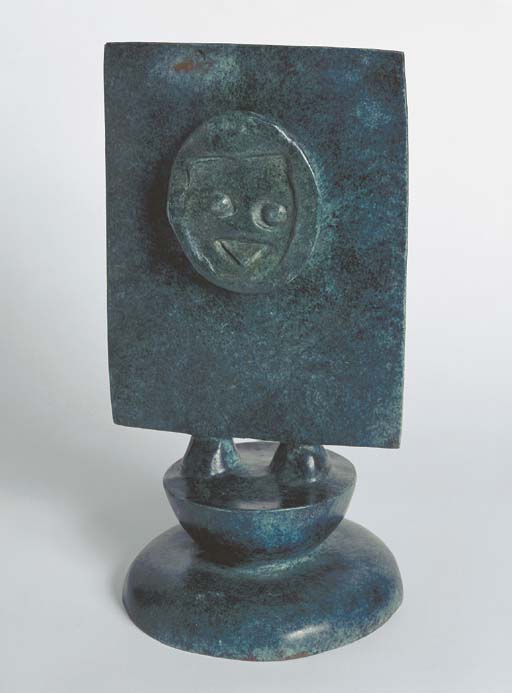
In the vast, labyrinthine landscape of Surrealism, few objects possess the quiet, unsettling charm of Max Ernst’s Chéri Bibi. Crafted in the mid-1930s, this sculpture serves as a profound window into the artist's psyche, acting less like a static object and more like a fragment of a dream captured in metal. At first glance, the work presents a striking simplicity, yet beneath its surface lies a complex tapestry of philosophical inquiry and psychological depth. The piece is composed of three interconnected elements—a sturdy rectangular base, a central pedestal, and a stylized face relief—that together create a vertical ascent toward a whimsical, yet enigmatic, expression. It is an artwork that does not merely occupy space; it commands attention through its ability to bridge the gap between the tangible world and the boundless reaches of the subconscious.
The materiality of Chéri Bibi is central to its emotional resonance. Utilizing bronze or patinated metal, Ernst embraced a texture that feels intentionally raw and uneven. This deliberate manipulation of the surface avoids the polished perfection often found in classical sculpture, instead leaning into a primitive, almost tribal aesthetic. The rough contours invite the viewer to touch with their eyes, sensing the weight and history embedded in the patina. Through this technique, Ernst disrupts the illusion of reality, using the interplay of light and shadow across the textured metal to evoke primal emotions. For the discerning collector or interior designer, this piece offers a sophisticated textural element that brings an organic, historical soul to any contemporary setting.
Symbolism and the Architecture of the Subconscious
To understand Chéri Bibi, one must look through the lens of Ernst’s academic background in philosophy, psychology, and psychiatry. The sculpture is a masterclass in the juxtaposition of opposites: the rigid, geometric precision of the rectangular base and cylindrical pedestal stands in stark contrast to the soft, organic curves of the facial relief. This tension between the rational and the irrational mirrors the core tenet of the Surrealist movement—the desire to liberate the imagination from the constraints of logic. The face itself, with its oversized eyes, small nose, and a wide, playful smile, transcends literal representation. It taps into archetypal imagery, reminiscent of ancient masks, suggesting a sense of timelessness and universality that speaks to the shared human experience of joy and mystery.
The emotional impact of the work is found in its duality. While the smile suggests a sense of whimsy or even amusement, there is an underlying enigmatic quality that prevents the piece from feeling merely decorative. It invites contemplation about vulnerability, desire, and the repressed layers of the human mind. For those seeking to curate a space filled with intellectual depth, Chéri Bibi provides a focal point that stimulates conversation and introspection. As a high-quality reproduction, it allows the spirit of Ernst’s revolutionary vision to inhabit modern interiors, offering a touch of Surrealist magic that transforms a room into a sanctuary for the imagination.
常见问题与解答
Chéri Bibi是手绘的还是印刷的?
手工绘制:由受过专业训练的画家在亚麻画布上,以油画形式临摹 Chéri Bibi。
Chéri Bibi 我该选择什么尺寸?
尺寸范围从 36.8 x 27.2 cm (¥1336) 到 245.0 x 181.0 cm (¥10959);本页表格列出了主要步骤及其价格。
物流需要多长时间?
送货时间为 4 至 5 周,并提供全球免费快递服务;本页面还提供加急制作选项。您可以在 100 天内无条件退货并获得全额退款。
马克斯·恩斯特 在创作《Chéri Bibi》时使用了什么媒介?
Bronze
 分享
 分享
 详情
 详情页


 下载作品
 相似作品
 幻灯片播放
 问答

 统计数据





