
 切换至版画销售渠道
 分享
分享 分享
分享
 详情
详情

 下载
下载
 相似作品
相似作品 幻灯片播放
幻灯片播放 统计数据
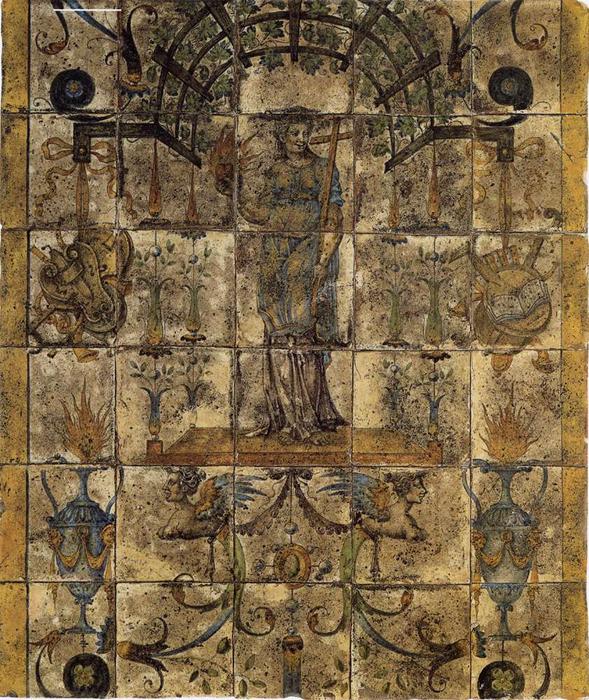
统计数据Ceramic Floor


 展开详情
展开详情
购买高分辨率增强版数字图像,其品质远超在线预览。
每一份文件都由我们的内部专家使用先进工具与专业的后期润色技术精心打造。我们确保每一张图像都具备卓越的清晰度、精准的色彩还原度以及细腻的细节表现。
最终文件将在 72 小时内通过电子邮件交付,并针对专业、编辑及印刷用途进行了优化。其品质与顶级设计工作室、出版社和画廊所信赖的标准完全一致。
每份数字图像订单均包含
专业数字图像交付,品质保障
选择 OriginalUniqueArt.com,您获得的不仅仅是一张图像——您收到的是经过专业级增强、精雕细琢的数字艺术作品,并享有满意保证。以下是您的订单中自动包含的所有内容:

邮件快速送达
您的高分辨率数字图像文件将在下单后 72 小时内通过电子邮件发送给您 —— 即可立即使用。

AI 增强型数字文件
您的艺术品经过专业优化,结合先进的 AI 技术与人工修饰,确保呈现极致的细节、清晰度与色彩准确度。

终身免费重发服务
不小心删除了文件或找不到了?没关系——我们将随时为您免费重发。

无需进口费用,始终如一
即刻拥有您的艺术作品,无需支付任何关税、税费或运费——数字下载始终免税。

色彩精准保证
我们通过专业工具与色彩管理技术,确保您的数字图像尽可能真实地还原原作色彩。

100天满意保证
如果您对所购数字图像不满意,我们将在100天内为您进行修改或提供100%的全额退款——无需任何理由。

100% 退款保证
不满意?在收到数字文件后的100天内,您可以申请全额退款——无需任何理由。

批量订单优惠
购买 3 张图片可享 10% 折扣 - 购买 5 张可享 15% 折扣 - 购买 10+ 张可享 20% 折扣。非常适合创意项目、画廊和机构使用。
艺术家简介
The Renaissance Potter of Rouen: Masséot Abaquesne and the Brilliance of French Faience
Masséot Abaquesne, a name perhaps unfamiliar to many outside the circles of ceramic history, represents a pivotal figure in the development of French faience during the 16th century. Born around 1500 in Cherbourg, Normandy, and passing away in 1564 in Sotteville-lès-Rouen, Abaquesne wasn’t merely a potter; he was an innovator who brought a new level of artistry and technical skill to earthenware production in France. His work emerged at a time when French decorative arts were increasingly looking towards Italy for inspiration, and he became instrumental in translating Italian Renaissance aesthetics into the distinctly French medium of tin-glazed pottery.Early Life and the Rise of Rouen Ceramics
Details surrounding Abaquesne’s early life remain somewhat scarce, a common challenge when studying artisans from this period. However, it is known that he established himself in Rouen by 1538, quickly becoming a leading figure in the burgeoning ceramic industry of the city. Rouen, strategically located and with access to essential raw materials, was poised to become a center for faience production. Abaquesne’s arrival coincided with a growing demand for decorative ceramics among the French nobility and wealthy merchant class, who were eager to emulate the sophisticated tastes of Italy. He rapidly rose through the ranks, eventually becoming director of the Rouen factory, solidifying his position as a master craftsman. His early work demonstrated a keen understanding of Italian maiolica techniques, but he wasn’t simply an imitator; he began to develop a unique style that blended Italian influences with French sensibilities.A Master of Technique and Design
Abaquesne's mastery lay in his skillful application of *grand feu* technique – firing the glaze and metallic oxides at a high temperature, resulting in a limited but vibrant palette of blues, yellows, browns, and greens. This contrasted with later *petit feu* methods that allowed for greater color variation but required more complex firing processes. His most celebrated achievement is undoubtedly the ceramic pavement created for the Château d'Écouen in 1542 for Anne de Montmorency, Constable of France. This remarkable floor, a veritable “earthenware carpet,” showcased his ability to create large-scale decorative schemes with intricate designs and narrative scenes. The subject matter often drew from mythology, heraldry, and grotesque motifs – popular themes during the Renaissance. Beyond the Écouen pavement, Abaquesne became renowned for his *albarello* jars—pharmacy vessels adorned with faces and floral wreaths. He produced over 4,000 of these jars for Pierre Dubosc, a Rouen apothecary, demonstrating both his technical capacity and the commercial success of his workshop.Influences and Legacy
The artistic lineage of Abaquesne is complex. While Luca della Robbia’s sculptural ceramics undoubtedly influenced his early style, particularly in the use of relief decoration and expressive faces, he also drew inspiration from Bernard Palissy, another pioneering French potter who experimented with innovative glazing techniques. However, Abaquesne predated much of Palissy's most famous work, establishing himself as a key figure *before* Palissy’s rise to prominence. His studio became a hub for ceramic innovation, and his influence extended beyond Rouen. The tiles he created for Claude d'Urfé’s chapel in the Loire Valley, though later dispersed, further attest to his widespread reputation and patronage. Abaquesne’s work paved the way for the flourishing of French faience in the 17th and 18th centuries, influencing generations of potters and contributing significantly to the development of a distinctly French ceramic tradition. His legacy is not merely one of technical skill but also of artistic vision—a testament to his ability to transform humble earthenware into objects of beauty and enduring cultural significance.Rediscovering Abaquesne: Modern Appreciation
For centuries, Abaquesne’s contributions were often overshadowed by the fame of later ceramicists like Palissy. However, recent scholarship and exhibitions – such as the retrospective organized by the National Renaissance Museum in partnership with the Rouen Museum of Fine Arts and Ceramics – have brought renewed attention to his work. Museums worldwide, including The Metropolitan Museum of Art, now showcase examples of his tiles and *albarello* jars, allowing a wider audience to appreciate his artistry. The brilliance of Abaquesne’s faience lies not only in its aesthetic qualities but also in its historical context. He represents a crucial moment in the French Renaissance—a time when artistic influences converged, and new techniques were embraced, leading to the creation of uniquely beautiful and culturally significant objects. His story serves as a reminder that even seemingly modest crafts can embody profound artistic innovation and lasting cultural impact. His work continues to inspire contemporary artists and collectors alike.
masséot abaquesne
1500 - 1564 , France
基本信息
- Artistic Movement Or Style: Faience, Rouen ceramics
- Artists Or Movements Influenced By This Artist: ['Anne de Montmorency']
- Artists Who Influenced This Artist:
- Luca della Robbia
- Bernard Palissy
- Date Of Birth: 1500
- Date Of Death: 1564
- Full Name: Masséot Abaquesne
- Nationality: French
- Notable Artworks:
- The Flood
- Ceramic Floor (Ecouen)
- Albarello
- Place Of Birth: Cherbourg, France