Early Renaissance · 1425
Trinity (马萨乔, 1425)
马萨乔 (1401–1428) 创作了《Trinity》。 创作于 1425 年。 它属于 Early Renaissance 运动。 由 Fresco 创作。 现藏于佛罗伦萨, 意大利的圣玛丽亚·诺韦拉教堂。 尺寸为 640 × 317 cm。
- 1425
- Fresco
- 640 × 317 cm
- 圣玛丽亚·诺韦拉教堂, 佛罗伦萨

 手工油画复制品
 分享
 分享
 详情页


 下载作品
 相似作品
 幻灯片播放
 问答

 统计数据
Trinity简介
- 标题
- Trinity
- 艺术家
- 马萨乔 (1401–1428)
- 艺术家出生于
- 圣乔瓦尼-瓦尔达诺, 意大利
- 日期
- 1425
- 媒介
- Fresco
- 尺寸
- 640 × 317 cm
- 观赏地点
- 圣玛丽亚·诺韦拉教堂, 佛罗伦萨, 意大利
- 主题
- perspective, religion, humanism, classicalelements, florence, biblicalscene
Trinity 描绘了什么内容?
A Portal to the Divine: The Dawn of Renaissance Realism
To step before Masaccio’s Holy Trinity is to witness the exact moment when the flattened, symbolic world of the Middle Ages dissolved into the profound, breathing reality of the Renaissance. Painted between 1425 and 1427 within the hallowed walls of Santa Maria Novella in Florence, this fresco does not merely depict a religious scene; it carves a hole in the very wall of the chapel, inviting the viewer to step into a sacred, three-dimensional space. At its heart lies a revolutionary commitment to humanism—the belief that the divine can be understood through the lens of human experience and physical truth. Through his masterful command of light and form, Masaccio transformed a static icon into a living drama of salvation.
The composition is anchored by the central figure of Jesus Christ, depicted with a startling naturalism that was unprecedented for his era. He stands as the axis of the universe, flanked by the Virgin Mary and Saint John the Evangelist. Unlike the ethereal, weightless figures of the preceding Gothic period, Masaccio’s subjects possess a palpable sense of mass and gravity. Their robes fall with heavy, realistic folds, and their faces carry an emotional depth that speaks to the viewer across centuries. This is not art meant for distant adoration alone; it is art designed to resonate with the human soul, making the theological mysteries of the Trinity feel intimately present within our own physical realm.
The Architecture of Illusion: Mastery of Perspective
Perhaps the most enduring legacy of this masterpiece is Masaccio’s pioneering use of linear perspective. By employing a single vanishing point, he created an architectural illusion so convincing that contemporary viewers felt they were looking into a real, deep chapel rather than at a painted surface. The coffered barrel vault above the figures recedes with mathematical precision, guiding the eye upward and inward. This technical triumph was not merely a display of skill; it served a profound symbolic purpose. By placing the holy figures within a believable, structured environment, Masaccio bridged the gap between the earthly and the divine, suggesting that the sacred exists within the very geometry of our world.
This sense of depth is further enhanced by his sophisticated use of chiaroscuro. The subtle interplay of light and shadow—the way light seems to strike the figures from a consistent source—gives them a sculptural quality. This technique breathes life into the flesh, defining the musculature of Christ and the gentle contours of Mary’s face. For the modern collector or interior designer, this mastery of volume offers a sense of structural elegance and intellectual depth, making it a piece that commands attention through its quiet, commanding presence.
A Timeless Legacy for the Discerning Collector
Beyond the technical brilliance, the Holy Trinity remains an emotional powerhouse. It captures the tension between human mortality and eternal hope. At the base of the composition, the inclusion of the donors—the mortal figures who commissioned the work—serves as a poignant reminder of our own place in the grand tapestry of history. They stand at the threshold, looking up toward the divine, mirroring the journey of every viewer who encounters this fresco.
For those seeking to adorn a space with art that inspires contemplation and awe, a high-quality reproduction of this Masaccio masterpiece offers more than mere decoration. It brings into a home or gallery a piece of the very foundation of Western art. Whether placed in a study filled with books or as a focal point in a grand living space, the Holy Trinity provides an atmosphere of profound stability, historical richness, and enduring beauty. It is an invitation to pause, to look deeper, and to rediscover the breathtaking realism that first ignited the Renaissance.
哪家博物馆收藏有 Trinity?
圣玛丽亚·诺韦拉教堂
佛罗伦萨, 意大利
建筑与建筑艺术 这座巴西利卡被视为托斯卡纳地区最重要的罗曼式-哥特式教堂。其建筑结构反映了漫长的演变历程,其罗曼式-哥特式立面下部始建于1350年,直至1920年才最终完工。立面本身通过白与绿大理石交织的几何图案展现出独特的视觉外观。巨大的S型涡卷纹定义了每个山墙的角落,为不同楼层之间的过渡提供了结构上的巧妙解决方案。 莱昂·巴蒂斯塔·阿尔伯蒂设计了立面上部,并于1470年完工。这一干预将人文主义的情怀引入了现有的哥特式框架之中。在教堂内部,巴西利卡遵循着宏大的T字型埃及十字平面布局。建筑风格在此展开了一场跨越时空的对话,高耸的肋架拱顶与多色拱门将观者的目光引向高处的采光窗。馆藏杰作 在巴西利卡的静谧之中,乔托·迪·邦多内的《受难图》占据了核心空间。这部作品以其独特的蛋彩画技法著称,通过蛋黄的运用,在描绘肉身与衣褶时呈现出一种特殊的明亮度。不远处,创作于约1425-1427年间的马萨乔的《三位一体》,利用线性透视法创造出深邃的深度错觉,仿佛在神圣的空间领域开启了一扇窗。这些作品并非仅仅是静止的物件,而是塑造了宗教艺术发展轨迹的生命存在。 托纳布奥尼礼拜堂的墙壁上绘有多梅尼科·基兰达奥的壁画,艺术家在细腻的肖像画中展现了捕捉人类性格的卓越技艺。在另一个角落,一幅由桑德罗·波提切利创作的壁画描绘了一幕诞生场景,利用柔和的陶土色调,在马厩的背景中勾勒出玛利亚、约瑟夫与圣婴耶稣的形象。艺术家笔下那细腻、流动的线条,营造出一种宁静而虔诚的氛围。 雕塑元素为室内增添了触觉的维度。一座由尼诺·皮萨诺创作的圣母与圣子大理石雕像坐落于鲁切莱礼拜堂内。此外,一座约作于1410-1415年间的彩绘木雕,作为教堂众多珍宝之一,依然散发着重要的艺术存在感。这些器物与建筑元素共同作用,在神圣与物质之间建立起一场持续不断的对话。圣玛丽亚·诺韦拉药房珍宝 位于佛罗伦萨Via della Scala 16号的圣玛丽亚·诺韦拉药房,占据了圣玛丽亚·诺韦拉教堂修道院建筑群的历史遗址。该场所被公认为世界上最古老的药房。其存在最早可追溯至1508年,尽管直到1612年才向公众开放。这个空间保留了一种延续感,将现代药房与其多明我会的起源紧密联系在一起。 店内的香气独特而持久。制剂中融合了玫瑰、茉莉与龙涎香。这些芬芳源于种植药用植物的传统,这一实践始于1221年多明我会定居于此之时。空气中承载着这些植物历史的厚重感,在药房的长廊间缓缓流淌。


Trinity 的高分辨率图像

马萨乔, Trinity (1425), 圣玛丽亚·诺韦拉教堂. 公有领域
关于 Trinity 的常见问题解答
哪家博物馆收藏了《Trinity》的原作?
您可以在 圣玛丽亚·诺韦拉教堂, 佛罗伦萨, 意大利 欣赏到原件《Trinity》。
原件"Trinity"的尺寸是多少?
"Trinity" 原作尺寸为 640 x 317 cm。在选择复制品尺寸时,参考原作尺寸会非常有帮助。
“Trinity”的主题是什么?
关于艺术家 马萨乔

1401–1428, 意大利
马萨乔
马萨乔 (1401-1428): 文艺复兴黎明的曙光 托马索·迪·塞尔·乔瓦尼·西蒙内,更为人熟知的是马萨乔(意为“笨拙的托马索”),是早期意大利文艺复兴时期的一位关键人物。他于1401年12月21日出生在意大利圣乔瓦尼·瓦尔达诺,并在1428年英年早逝。短暂的一生彻底改变了绘画艺术,以开创性的现实主义、透视法和明暗对比(强烈的光影对比)而闻名。尽管生命短暂,马萨乔对后世艺术家的影响深远,确立了一种新的自然主义标准,并影响了西方艺术的发展进程。 早年生活与教育 出身: 出生于公证员乔瓦尼·迪·西蒙内·卡赛和雅科帕·迪·马蒂诺佐之子。他的家族姓氏卡赛源自他父亲祖父的木匠行业。 早年经历: 父亲去世时年仅五岁,孤儿寡母,有一个名叫乔瓦尼(洛·斯凯贾)的兄弟,他也成为了一名画家。 学徒生涯: 马萨乔的艺术训练细节至今仍不为人所知,这对于文艺复兴时期的艺术家来说非常罕见。据信他可能在12岁左右开始学徒生涯,但尚未确定其导师。缺乏明确的培训记录为他的快速发展和创新技术增添了神秘色彩。 行会会员: 他于1422年1月7日加入佛罗伦萨画家行会(Arte de’ Medici e Speziali),标志着他作为独立艺术大师的出现。 艺术发展与主要作品 早期影响: 最初受到乔托·迪·邦多内的影响,乔托是一位以自然主义而闻名的前驱者,马萨乔很快在透视法和解剖学方面超越了他。他还从菲利波·布鲁内莱斯基的建筑创新中汲取灵感,特别是布鲁内莱斯基对线性透视法的重新发现。 关键创新: 马萨乔开创了几项突破性的技术: 线性透视法: 运用消失点和数学精度在二维表面上创造出令人信服的深度幻觉。 明暗对比: 精湛地运用光影来塑造形体,营造出前所未有的体积感和现实感。 自然主义: 以解剖学准确性和情感表现力描绘人物形象,摆脱了早期风格化的表现形式。 重要作品: 圣吉奥瓦内三联画 (约1422年): 一部早期的作品,展示了他透视法和自然主义表现技巧的发展。 圣母子与圣安妮 (约1423-1425年): 与马索里诺合作的作品,展现了马萨乔新兴的现实主义风格以及马索里诺更为传统的风格。 布兰卡奇教堂壁画 (约1425-1428年): 他最著名且最具影响力的作品,位于佛罗伦萨圣玛丽亚·德尔·卡米纳教堂内。这些壁画,包括《进贡税》、《被逐出天堂》和《施洗约翰为新教徒施洗》,被认为是早期文艺复兴艺术的杰作。 历史意义与遗产 尽管马萨乔的职业生涯短暂,但他对西方艺术的影响是巨大的。他在透视法、明暗对比和自然主义方面的创新从根本上改变了艺术家描绘世界的方式。他有效地弥合了中世纪艺术传统与新兴文艺复兴理想之间的差距。 对后世艺术家的影响: 马萨乔的作品深刻影响了几代画家,包括多纳泰罗、莱昂纳多·达·芬奇、米开朗基罗和拉斐尔。他们深入研究他的壁画,采用并调整了他的技术以适应自己的风格。 为盛期文艺复兴奠定基础: 他对现实主义和人类情感的强调为盛期文艺复兴艺术成就奠定了基础。 瓦萨里的记载: 传记学家乔尔乔·瓦萨里认识到马萨乔的天才,称赞他是“他那个时代最伟大的画家”,并强调了他以无与伦比的技巧模仿自然的能力。 一场悲剧性的损失: 他年仅26岁就去世,令同时代的人感到惋惜,包括菲利波·布鲁内莱斯基,他哀叹着失去如此杰出的天才。 结论 马萨乔的遗产作为历史上最重要和最具影响力的艺术家之一而延续。他站在从中古到文艺复兴艺术过渡的关键位置,永远改变了我们通过绘画感知和表现世界的方式。他短暂而辉煌的职业生涯证明了创新力量和艺术天才的持久影响力。
马萨乔 的其他作品
 三位一体1428
 进贡税1425
 逐出伊甸园1426
 《献金图》细节
关于 Trinity 的论文集
 Understanding Gothic and Renaissance Art: Key Differences and FeaturesMaster the differences between Gothic and Renaissance art through expert analysis of technique and style. Discover the evolution of art tod…
 25 Masterpieces by Duccio di Buoninsegna: The Dawn of Sienese ArtJourney through the Sienese School with our curated guide to Duccio di Buoninsegna’s top 25 masterpieces. From the Maesta to iconic Madonna…
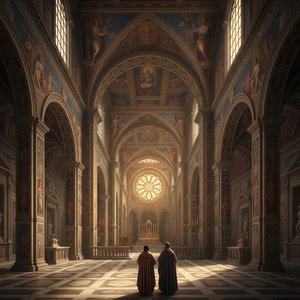 Mastering Depth: The Architectural Power of Linear Perspective in Renaissance MasterpiecesExplore the profound impact of linear perspective on Renaissance art. Discover how masters like Brunelleschi and Uccello used mathematical …