

 实景预览
实景预览
 发送
发送 分享
分享
 详情
详情 指南
指南

 下载图片
下载图片
 相似作品
相似作品 X射线
X射线 幻灯片播放
幻灯片播放 统计数据
统计数据Predella panel from the Pisa Altar
 Acrylic On Canvas
- WallArt
- Early Renaissance Realism
 1426
1426 21.0 x 61.0 cm
 柏林州立博物馆
 阅读全文
阅读全文
艺术微喷/版画
博物馆级艺术微喷或帆布版画,制作高效,并提供多种饰面选择。 ( 订购此收藏品的纯手工复刻画作 切换至数字图像销售渠道)




P118B ¥10

P118H ¥10

P118W ¥10

P438Z ¥10

P508JH ¥12

P508YH ¥12

P805H ¥10

P805Z ¥10

P919BZ ¥10

P919G ¥10

P919XJ ¥10

P959ZH ¥10

P968JZ ¥12

W106C ¥8

W218G ¥10

W218JH ¥8

W218Y ¥10

W307PJ ¥10

W316G ¥10

W316PJ ¥8

W316Y ¥10

W398PJ ¥8

W4111J ¥10

W500HY ¥15

W500JH ¥15

W692G ¥12

W849H ¥8

W940BG ¥15

W953PJ ¥8




您可以从与原作比例一致的预设尺寸中进行选择。

您可以输入自定义尺寸,以适配特定的画框或空间。如果您选择的尺寸与原图比例不符,我们将对作品进行裁剪,或通过镜像填充/纯色填充边缘的方式来扩展图像。在开始制作之前,我们会向您发送一份数字效果图供您确认。
请注意,屏幕上的预览并不能反映实际的裁剪或扩展效果。只有效果图才能准确展示最终的构图。
虽然我们提供定制尺寸,但为了保持原图比例,我们建议您从预设列表中选择尺寸。


 玻璃选项仅适用于110厘米以下的尺寸。

Predella panel from the Pisa Altar
艺术微喷/版画
复刻品尺寸说明
-


总计金额
¥ 540
A Dawn of Realism: The Predella Panel from Masaccio’s Pisa Altar
The world of 15th-century Florentine painting was undergoing a seismic shift, and at the heart of this transformation stood Masaccio – a name that resonates with an almost mythical quality within art history. His “Predella panel from the Pisa Altar,” a remarkably intimate depiction of scenes from Christ’s life, isn't merely a religious image; it’s a foundational document in the birth of Western Renaissance painting. Measuring just 21 x 61 cm, this unassuming panel belies its monumental significance – it represents a radical departure from the stylized conventions of the preceding Gothic era and lays the groundwork for the naturalism that would define the movement.
Masaccio’s genius lay in his ability to capture not just the outward appearance of figures but also their underlying physicality, their emotional depth. The panel, painted in 1426, immediately draws the eye with its masterful use of *chiaroscuro* – the dramatic interplay of light and shadow that sculpts forms and imbues them with a startling sense of volume. Notice how the figures aren’t flat or idealized; they possess weight, texture, and a palpable sense of three-dimensionality. This is achieved through meticulous observation of anatomy, a technique pioneered by Masaccio and directly influenced by his study of classical sculpture.
- The Scene: The panel depicts two pivotal moments from the life of Christ – the Crucifixion of St. Peter and the Beheading of St. John the Baptist. These aren’t grand, theatrical events; rather, they are rendered with a quiet intensity, focusing on the human cost of sacrifice and martyrdom.
- Perspective: Masaccio was a pioneer in the application of linear perspective to painting. The architectural elements within the scenes – the arches, columns, and walls – converge towards a vanishing point, creating an illusion of depth that pulls the viewer into the narrative. This technique, revolutionary at the time, establishes a new standard for realism in art.
- Emotional Resonance: The figures aren’t simply depicted; they *feel*. The sorrowful gaze of Mary Magdalene, the stoic acceptance of St. Peter, and the horrified expression of onlookers convey a profound sense of empathy and human vulnerability.
Masaccio: A Brief but Brilliant Life
Born Tommaso di Ser Giovanni di Simone in San Giovanni Valdarno around 1401, Masaccio’s life was tragically short – he died in Florence in the summer of 1428, likely from a fever. Despite his brief career, he left an indelible mark on the art world. His apprenticeship remains shrouded in some mystery, though it's believed he learned primarily through observation and direct contact with other artists like Andrea del Verrocchio. His early works, including the “Pisa Altarpiece,” demonstrate a remarkable ability to synthesize influences from Giotto – particularly his use of naturalistic figures – with the emerging principles of linear perspective and classical ideals.
Masaccio’s influence extended far beyond his own lifetime. Artists like Leonardo da Vinci and Michelangelo would later acknowledge his profound impact on their work, recognizing him as a key figure in the development of Western art. His legacy lies not just in specific paintings but in the revolutionary approach to representation that he pioneered – an approach that continues to inspire artists today.
The Context: The Pisa Altar and Early Renaissance Florence
The “Predella panel” was originally part of a larger altarpiece commissioned for Santa Maria del Carmine in Pisa by Giuliano di Colino. This commission represents a crucial moment in the early Renaissance – a time of renewed interest in classical art, humanism, and scientific observation. The altarpiece itself reflects this intellectual ferment, incorporating elements of both religious iconography and architectural design.
Florence, at this time, was experiencing an explosion of artistic creativity fueled by patronage from wealthy families like the Medici. Masaccio’s work exemplifies this spirit of innovation, pushing the boundaries of what was possible in painting and setting a new standard for realism and emotional expression. The panel stands as a testament to the transformative power of art during this pivotal period.
A Timeless Masterpiece: Reproductions and Beyond
Today, reproductions of Masaccio’s “Predella panel” are widely available, offering an accessible way to experience the beauty and innovation of this remarkable work. When selecting a reproduction, consider the quality of materials and printing techniques – a faithful rendering will capture the subtle nuances of light, shadow, and color that define Masaccio's genius. This small panel offers a profound glimpse into the dawn of Renaissance art—a reminder of the enduring power of observation, emotion, and artistic vision.
艺术家简介
马萨乔 (1401-1428): 文艺复兴黎明的曙光
托马索·迪·塞尔·乔瓦尼·西蒙内,更为人熟知的是马萨乔(意为“笨拙的托马索”),是早期意大利文艺复兴时期的一位关键人物。他于1401年12月21日出生在意大利圣乔瓦尼·瓦尔达诺,并在1428年英年早逝。短暂的一生彻底改变了绘画艺术,以开创性的现实主义、透视法和明暗对比(强烈的光影对比)而闻名。尽管生命短暂,马萨乔对后世艺术家的影响深远,确立了一种新的自然主义标准,并影响了西方艺术的发展进程。
早年生活与教育
- 出身: 出生于公证员乔瓦尼·迪·西蒙内·卡赛和雅科帕·迪·马蒂诺佐之子。他的家族姓氏卡赛源自他父亲祖父的木匠行业。
- 早年经历: 父亲去世时年仅五岁,孤儿寡母,有一个名叫乔瓦尼(洛·斯凯贾)的兄弟,他也成为了一名画家。
- 学徒生涯: 马萨乔的艺术训练细节至今仍不为人所知,这对于文艺复兴时期的艺术家来说非常罕见。据信他可能在12岁左右开始学徒生涯,但尚未确定其导师。缺乏明确的培训记录为他的快速发展和创新技术增添了神秘色彩。
- 行会会员: 他于1422年1月7日加入佛罗伦萨画家行会(Arte de’ Medici e Speziali),标志着他作为独立艺术大师的出现。
艺术发展与主要作品
- 早期影响: 最初受到乔托·迪·邦多内的影响,乔托是一位以自然主义而闻名的前驱者,马萨乔很快在透视法和解剖学方面超越了他。他还从菲利波·布鲁内莱斯基的建筑创新中汲取灵感,特别是布鲁内莱斯基对线性透视法的重新发现。
- 关键创新: 马萨乔开创了几项突破性的技术:
- 线性透视法: 运用消失点和数学精度在二维表面上创造出令人信服的深度幻觉。
- 明暗对比: 精湛地运用光影来塑造形体,营造出前所未有的体积感和现实感。
- 自然主义: 以解剖学准确性和情感表现力描绘人物形象,摆脱了早期风格化的表现形式。
- 重要作品:
- 圣吉奥瓦内三联画 (约1422年): 一部早期的作品,展示了他透视法和自然主义表现技巧的发展。
- 圣母子与圣安妮 (约1423-1425年): 与马索里诺合作的作品,展现了马萨乔新兴的现实主义风格以及马索里诺更为传统的风格。
- 布兰卡奇教堂壁画 (约1425-1428年): 他最著名且最具影响力的作品,位于佛罗伦萨圣玛丽亚·德尔·卡米纳教堂内。这些壁画,包括《进贡税》、《被逐出天堂》和《施洗约翰为新教徒施洗》,被认为是早期文艺复兴艺术的杰作。
历史意义与遗产
尽管马萨乔的职业生涯短暂,但他对西方艺术的影响是巨大的。他在透视法、明暗对比和自然主义方面的创新从根本上改变了艺术家描绘世界的方式。他有效地弥合了中世纪艺术传统与新兴文艺复兴理想之间的差距。
- 对后世艺术家的影响: 马萨乔的作品深刻影响了几代画家,包括多纳泰罗、莱昂纳多·达·芬奇、米开朗基罗和拉斐尔。他们深入研究他的壁画,采用并调整了他的技术以适应自己的风格。
- 为盛期文艺复兴奠定基础: 他对现实主义和人类情感的强调为盛期文艺复兴艺术成就奠定了基础。
- 瓦萨里的记载: 传记学家乔尔乔·瓦萨里认识到马萨乔的天才,称赞他是“他那个时代最伟大的画家”,并强调了他以无与伦比的技巧模仿自然的能力。
- 一场悲剧性的损失: 他年仅26岁就去世,令同时代的人感到惋惜,包括菲利波·布鲁内莱斯基,他哀叹着失去如此杰出的天才。
结论
马萨乔的遗产作为历史上最重要和最具影响力的艺术家之一而延续。他站在从中古到文艺复兴艺术过渡的关键位置,永远改变了我们通过绘画感知和表现世界的方式。他短暂而辉煌的职业生涯证明了创新力量和艺术天才的持久影响力。

马萨乔
1401 - 1429 , 意大利
快速概览
- Artistic Movement Or Style: 早期文艺复兴
- Artists Or Movements Influenced By This Artist: ['后文艺复兴画家']
- Artists Who Influenced This Artist:
- 乔托
- 菲利波·布鲁内莱斯基
- 多纳泰罗
- Date Of Birth: 1401年12月21日
- Date Of Death: 1428年
- Full Name: 马萨乔(托马索·迪·塞尔·乔万尼)
- Nationality: 意大利人
- Notable Artworks:
- 三位一体
- 布拉奇教堂壁画
- 圣三一
- 进贡钱
- Place Of Birth (City And Country): 意大利圣乔瓦尼·瓦尔达尔诺
相关文章

The Enduring Legacy of Fresco: Technique, History & Artistic Expression Across Cultures
Explore the rich history & enduring legacy of fresco painting! Discover ancient techniques, Giotto's masterpieces, and modern applications. Expert insights for art lovers & professionals.

The Fresco as Family Legacy: Preserving Heritage Through Wall Art
Explore the rich history & enduring legacy of fresco painting. Discover how to preserve family heritage through stunning wall art. Expert insights & restoration guidance.
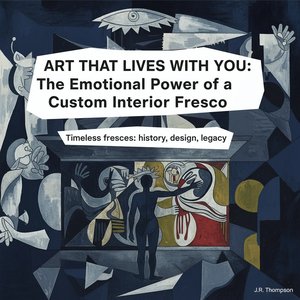
情感共鸣:定制室内壁画的力量与艺术史维度 (Qínggǎn gòngmíng: Dìngzhì nèishì bìhuà de lìliàng yǔ yìshǐ wéidù)
探索定制室内壁画的力量,从文艺复兴艺术史到现代空间设计。OriginalUniqueArt提供专业艺术家手绘、个性化定制服务,打造独一无二的艺术品,提升家居品味与文化价值。

The Enduring Legacy of Fresco: Technique, History & Artistic Expression
Explore the rich history & enduring artistry of fresco painting. Discover techniques from Giotto to Michelangelo, conservation efforts, & modern applications. Learn how OriginalUniqueArt brings this timeless art form to your home.
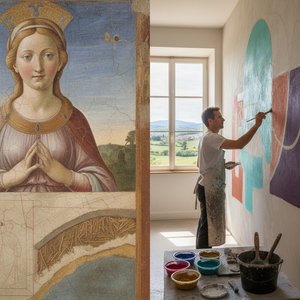
The Enduring Legacy of Fresco Painting: Techniques, History & Contemporary Relevance
Explore the rich history & enduring artistry of fresco painting – from Giotto to Michelangelo! Discover techniques, conservation efforts, & modern applications. Learn how OriginalUniqueArt brings this timeless art form to your home.
