

 实景预览
实景预览
 发送
发送 分享
分享
 详情
详情 指南
指南

 下载图片
下载图片
 相似作品
相似作品 X射线
X射线 幻灯片播放
幻灯片播放 统计数据
统计数据Village
 Oil On Canvas
- WallArt
- Novecento Italiano
 1924
1924- Early Modern
 70.0 x 79.0 cm
 Boschi Di Stefano House Museum
 阅读全文
阅读全文
手工油画复制品
由我们的艺术家按需定制,为您提供您所选尺寸及画框的布面手工油画。 ( 切换至版画销售渠道 切换至数字图像销售渠道)




P118B ¥10

P118H ¥10

P118W ¥10

P438Z ¥10

P508JH ¥12

P508YH ¥12

P805H ¥10

P805Z ¥10

P919BZ ¥10

P919G ¥10

P919XJ ¥10

P959ZH ¥10

P968JZ ¥12

W106C ¥8

W218G ¥10

W218JH ¥8

W218Y ¥10

W307PJ ¥10

W316G ¥10

W316PJ ¥8

W316Y ¥10

W398PJ ¥8

W4111J ¥10

W500HY ¥15

W500JH ¥15

W692G ¥12

W849H ¥8

W940BG ¥15

W953PJ ¥8




您可以从与原作比例一致的预设尺寸中进行选择。

请输入您需要的宽度和高度,以适配您的画框或墙面。由于作品为手工绘制,若您选择不同的尺寸比例,艺术家可能会在画面边缘多画一些或稍作裁剪 —— 由您决定。在开始绘画之前,我们会为您发送一份数字效果图供您确认。本页面上展示的图片并非最终实物 —— 只有效果图才能反映真实结果。
下单后,OriginalUniqueArt.com 团队将通过电子邮件联系客户获取具体要求,并提供效果预览图


 玻璃选项仅适用于110厘米以下的尺寸。

Village
复制品材质
复刻品尺寸说明
-


总计金额
¥ 2016
Subject & Atmosphere
The canvas opens onto a quiet village cradled by towering mountains, their peaks veiled in misty blue. A modest stone house stands at the heart of the scene, surrounded by lush trees and scattered bushes that frame the pastoral life unfolding before us. In the foreground, a handful of villagers—perhaps shepherds or farmers—move through the landscape with purposeful grace, their silhouettes softened by the gentle light that bathes the entire tableau. The painting invites the viewer into a moment of serene contemplation, where the rhythm of rural existence harmonizes with the grandeur of nature.Technique & Style
Mario Sironi, known for his transition from Divisionist beginnings to a more disciplined modernist language, employs here a restrained palette that balances earthy browns and muted greens with subtle touches of ochre. The brushwork is deliberate yet fluid; broad strokes capture the solidity of stone and the texture of foliage, while finer layers reveal the delicate play of light across the village’s rooftops. Sironi’s mastery lies in his ability to condense complex scenes into a cohesive visual narrative, using color modulation rather than sharp division to create depth and luminosity.Historical Context & Symbolism
Created in 1924, “Village” emerges from an Italy that was redefining itself after the turmoil of World War I. Sironi’s choice to depict a tranquil rural setting can be read as a quiet homage to traditional values amid rapid modernization. The mountains symbolize endurance and timelessness, standing sentinel over the fleeting lives of the villagers below. The small building, central yet humble, reflects the artist’s fascination with everyday dignity—a recurring theme in his oeuvre that underscores the resilience of ordinary people.Emotional Impact & Interior Design Appeal
The painting’s gentle color harmony and balanced composition evoke a sense of calm that can transform any interior space. For collectors, it offers an investment in both aesthetic beauty and cultural significance; for interior designers, its pastoral serenity provides a versatile backdrop that complements contemporary furnishings while adding depth and narrative intrigue. Whether displayed above a living room sofa or as a focal point in a gallery wall, “Village” invites viewers to pause, breathe, and reconnect with the quiet rhythms of nature and community.问答详情
我能查看马里奥·西罗尼 (Mǎlǐào Xīluóní) 的《Village》的X光影像吗?
您可以在作品的 X射线检测 页面上逐层探索 “Village”;该交互式查看器的设计灵感源自修复师使用的光源台,通过十一层光学读数呈现图像细节。
马里奥·西罗尼 (Mǎlǐào Xīluóní) 的《Village》 为室内空间增添了怎样的氛围?
马里奥·西罗尼 (Mǎlǐào Xīluóní) 的《Village》 营造出 Serene 的氛围,与推荐的陈设空间——Living Room 完美契合。
马里奥·西罗尼 (Mǎlǐào Xīluóní) 的《Village》 属于哪种艺术流派?
马里奥·西罗尼 (Mǎlǐào Xīluóní) 的《Village》 属于 Novecento Italiano 流派。该流派为这件作品提供了风格背景。
艺术家简介
马里奥·西罗尼:现代意大利艺术的一生
1885年5月12日,马里奥·西罗尼出生于意大利撒丁岛萨萨里。他的父亲是一位工程师,而他母亲的祖父伊格纳齐奥·维拉(Ignazio Villa)则是一位受人尊敬的建筑师和雕塑家,这为西罗尼早期接触艺术提供了宝贵的机会。最初,西罗尼在罗马大学学习工程学,但由于1903年的一次精神崩溃而放弃了这项研究,这是一个重要的转折点,标志着他转向艺术之路。随后,他在罗马美术学院的自由裸体学校接受正规的艺术训练,在那里遇到了他的第一位重要老师贾科莫·巴拉(Giacomo Balla)。
艺术发展与影响
西罗尼早期的作品深受分离主义的影响,这种技巧强调色彩的分离以创造光亮度——例如《学生》一作。大约在1914年左右,他短暂地尝试未来主义,并在罗马的斯普罗维埃里画廊展出作品。然而,他很快超越了未来主义对速度和动力的关注。第一次世界大战之后,西罗尼经历了一个关键性的转变,发展出一种以巨大、静止的形式和几何形状为特征的风格。这种风格受到他的战争经历以及日益增长的孤独感的深刻影响。巴拉(早期训练)、乔治奥·德·基里科(Giorgio de Chirico)和卡洛·卡拉(Carlo Carrà)(形而上绘画对形式的影响),以及新古典主义和原始经典主义元素,都是西罗尼的关键影响因素。
意大利九世纪运动与成熟风格
1922年,西罗尼成为意大利九世纪运动的创始成员——这是一场战后欧洲艺术中回归秩序的运动,强调清晰和传统。他的成熟风格具有以下特点:对几何形状和简化形式的强调;后期作品中刻意笨拙的美学;孤独、异化和人类状况的主题;以及对工业景观和工人阶级生活的探索。这一时期的代表作包括《维纳斯》(1921-1923)和《孤独》(“Solitudine”,1925)。西罗尼的作品不仅仅是对形式的探索,更是对意大利社会现实深刻的反思。
政治倾向与晚年生活
西罗尼是贝尼托·墨索里尼的支持者,并为法西斯出版物贡献了大量作品,超过1700幅漫画。他坚信艺术和建筑的融合,力求为公共空间创作纪念性作品——反映了法西斯政权的理想。第二次世界大战后,由于与法西斯的关联,他的受欢迎程度和评论声誉下降。随后,他逐渐退出公众生活,在相对孤立的状态下继续绘画,直到1961年去世。尽管饱受争议,西罗尼始终坚持自己的艺术理念,并留下了许多令人难忘的作品。
主要成就与历史意义
西罗尼的作品代表了意大利现代主义的重要贡献,弥合了未来主义和后期艺术发展之间的差距。他对孤独和异化等主题的探索引起了20世纪人们的共鸣。尽管围绕其政治倾向存在争议,他的作品已被国际上许多重要展览所展出,包括1981年的蓬皮杜中心和1989年的伦敦皇家学院。西罗尼于1961年8月13日去世于米兰。他的遗产在于他独特的风格综合以及他对快速变化的世界中人类状况的有力描绘。他的艺术作品是意大利现代艺术史上的重要组成部分,并持续影响着后来的艺术家。

马里奥·西罗尼 (Mǎlǐào Xīluóní)
1885 - 1961 , 意大利
快速概览
- 代表作品:
- 灯塔(1919)
- 维纳斯(1921-1923)
- 孤独(1925)
- 出生地: 意大利萨萨里
- 出生日期: 1885年5月12日
- 国籍: 意大利
- 姓名: 马里奥·西罗尼
- 影响者: ['贾科莫·巴拉']
- 艺术运动或风格: 未来主义,九世纪派
- 逝世日期: 1961年8月13日
相关文章

康斯塔布尔大师之作:25幅传世风景画赏析 | OriginalUniqueArt
探索康斯塔布尔的25幅传世杰作!沉浸于英国田园风光,感受浪漫主义绘画大师的光影与色彩。高清油画复制、艺术品购买尽在OriginalUniqueArt.com,为您的家居增添经典之美。立即在线探索完整系列!

Evocations of Place: A Historical Journey Through Landscape Art
Explore the rich history of landscape art with OriginalUniqueArt. Discover renowned artists, movements like Impressionism & Romanticism, and expert guidance for collecting timeless pieces. Find your perfect serene escape today!

浪漫主义画派的十部巨作:定义风景画的艺术传奇
探索浪漫主义风景画的巅峰!本文精选十部经典名作,带您领略莫奈、库尔贝等大师的艺术魅力。感受色彩与光影的诗意,重温自然风光的震撼。OriginalUniqueArt.com为您提供博物馆级别的艺术复制品和个性化家居装饰方案。尽在OriginalUniqueArt.com!
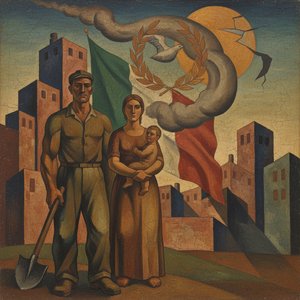
Mario Sironi: A Poetic of Modern Italian Identity Through Symbolism & Social Commentary
Explore the profound works of Mario Sironi, a key figure in Italian Modernism. Discover his evolution from Futurism to Metaphysical painting and his powerful social commentary. Learn about his legacy at OriginalUniqueArt.

Capturing Nostalgia: The Timeless Allure and Art History of Village Scene Landscapes
Explore the profound beauty of village scene art. From Impressionist light to pastoral realism, discover how timeless landscapes capture nostalgia through expert artistry and historical depth. Perfect for collectors seeking evocative, museum-quality landscape inspirations.
