切换至版画销售渠道
 展开全文
展开全文







































 对于任何边长超过 105 厘米(约 41 英寸)的艺术品或复制品,画框将以拆解后的组件形式发货。此方法可确保安全送达并防止运输过程中的损坏。


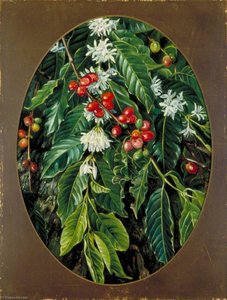
Marianne North’s Vision of Pushkar
Marianne North (1830–1890) wasn't merely an artist; she was a pioneer, charting unexplored territories—both geographical and botanical—with unwavering determination. Born into privilege in Hastings, England, her early life seemed destined for musical pursuits, yet fate intervened with a profound redirection toward the delicate art of flower painting – a choice that blossomed into a lifetime dedicated to scientific observation and artistic expression. Her story resonates with resilience, independence, and an unparalleled connection to the natural world; it’s a testament to a spirit unshackled by societal constraints.- The Subject Matter: North's fascination centered on Pushkar Lake in Rajasthan, India—a site revered for centuries as one of Hinduism’s holiest pilgrimage destinations. She meticulously documented the lake’s ecosystem, capturing its vibrant flora and fauna with breathtaking accuracy.
- Style & Technique: Her paintings exemplify Victorian botanical illustration, characterized by meticulous detail and a commitment to scientific precision blended seamlessly with artistic beauty. Employing oil paints on board, North achieved luminous tonal gradations and subtle textural nuances that conveyed the essence of her subjects.
- Historical Context: Painted in December 1878 during Queen Victoria’s reign, “Another View at Pushkar” reflects the Victorian era's burgeoning interest in exploration and scientific discovery—a period marked by advancements in botany and a desire to categorize and understand the natural world.
Symbolism Within the Landscape
The painting transcends mere representation; it’s imbued with symbolic significance rooted in Hindu cosmology and folklore. The majestic Pushkar Hills—Ratnagiri, Nilgiri, Sanchoora, and Suryagiri—were positioned by Brahma to protect his yajna (ritual), symbolizing divine guardianship and spiritual sanctity. The lake itself embodies purity and regeneration, reflecting the sacred waters of Saraswati—the goddess of knowledge and eloquence—who accompanied Brahma during his ceremonial performance.- The Ghats: The stepped embankments of Pushkar Lake are populated by women collecting water – a gesture representing devotion and purification.
- Shrines & Temples: Scattered along the shoreline are whitewashed shrines and temples, symbolizing faith and remembrance—a visual reminder of India’s rich spiritual heritage.
- The Sky: The pale sky serves as backdrop to the landscape, conveying serenity and contemplation – inviting viewers to immerse themselves in the painting's tranquil atmosphere.
Emotional Resonance & Artistic Impact
“Another View at Pushkar” isn’t simply a depiction of a place; it’s an invitation to experience its beauty and contemplate its spiritual depth. North’s masterful technique—characterized by luminous color palettes and subtle textural variations—captures the essence of Pushkar's atmosphere, transporting viewers to this sacred landscape. The painting speaks to our innate desire for connection with nature and reminds us of the transformative power of artistic contemplation. It stands as a poignant emblem of Victorian scientific curiosity coupled with artistic sensitivity – an enduring legacy of Marianne North’s extraordinary life and unparalleled creative vision.常见问题与解答
玛丽安·诺思 的《Another View at Pushkar》 的色彩是如何与其情感表达相联系的?
玛丽安·诺思 的《Another View at Pushkar》 将 Neutrals 色调与 Tranquil 的基调完美融合。
玛丽安·诺思 的《Another View at Pushkar》 的整体基调是什么?
玛丽安·诺思 的《Another View at Pushkar》 的艺术氛围被描述为 Serene。这种分类有助于将作品与特定的空间环境相匹配。
玛丽安·诺思 的《Another View at Pushkar》 属于哪种艺术流派,又处于哪个时代?
在玛丽安·诺思 的《Another View at Pushkar》中,Victorian Romantic Landscape Painting运动与19世纪时代交相辉映。
 实景预览
实景预览
 分享
分享 分享
分享
 详情
详情 指南
指南

 下载作品
下载作品
 相似作品
相似作品 X射线
X射线 幻灯片播放
幻灯片播放 Q&A
Q&A 统计数据
统计数据