
 实景预览
实景预览
 发送
发送 分享
分享
 详情
详情 指南
指南

 下载图片
下载图片
 相似作品
相似作品 X射线
X射线 幻灯片播放
幻灯片播放 统计数据
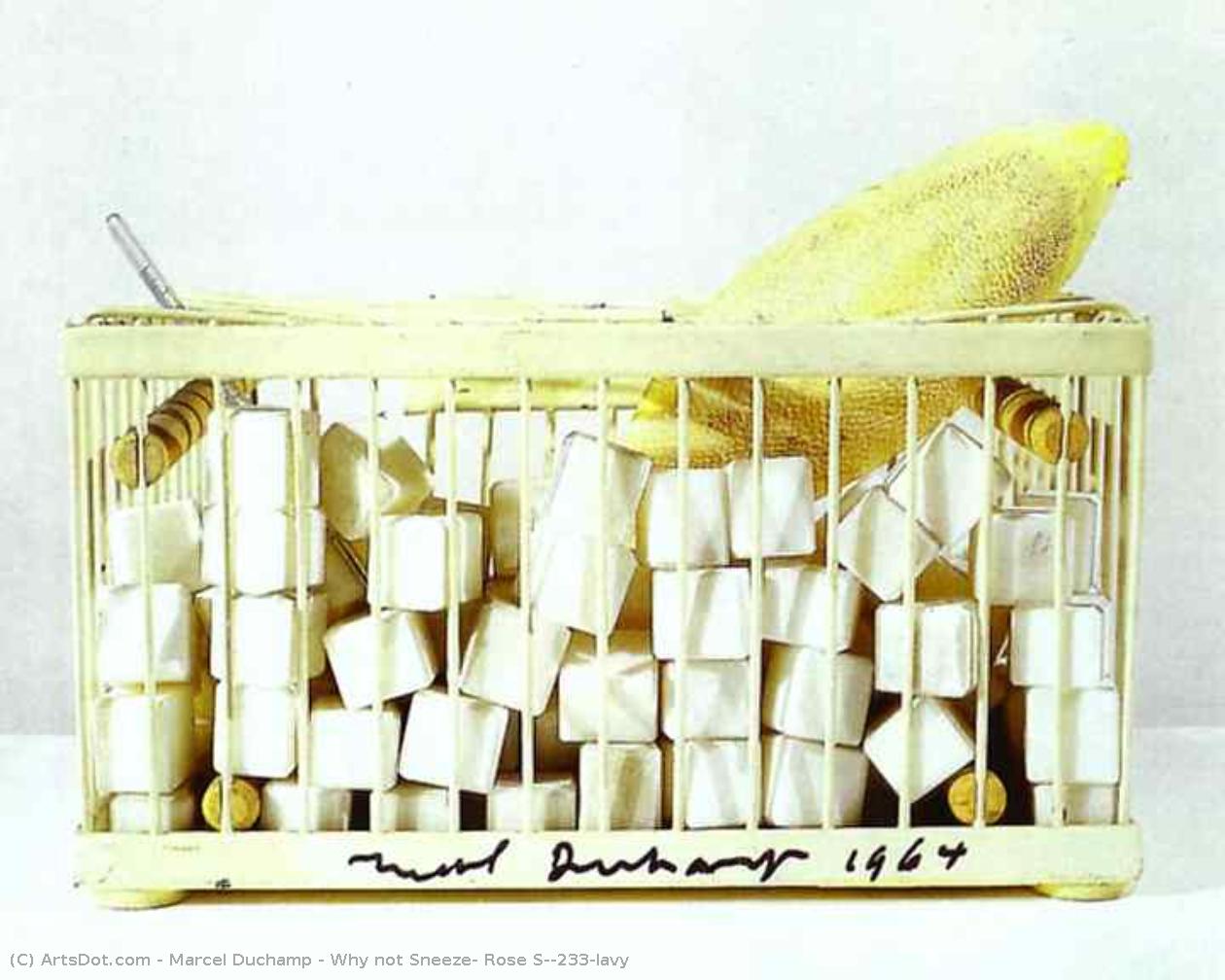
统计数据Why not Sneeze, Rose Sélavy
 Acrylic On Canvas
- WallArt
- Dada Gesamtkunstwerk
 1921
1921 12.0 x 22.0 cm
 泰特现代美术馆
 阅读全文
阅读全文
购买高分辨率增强版数字图像,其品质远超在线预览。
每一份文件都由我们的内部专家使用先进工具与专业的后期润色技术精心打造。我们确保每一张图像都具备卓越的清晰度、精准的色彩还原度以及细腻的细节表现。
最终文件将在 72 小时内通过电子邮件交付,并针对专业、编辑及印刷用途进行了优化。其品质与顶级设计工作室、出版社和画廊所信赖的标准完全一致。
数字图像
下载高分辨率文件,用于个人展示、打印及创意项目。 ( 切换至版画销售渠道 订购此收藏品的纯手工复刻画作)
每份数字图像订单均包含的内容
专业级数字交付,品质无忧
选择 OriginalUniqueArt.com,您获得的不仅仅是一张图像——您收到的是经过专业级增强、精雕细琢的数字艺术作品,并享有满意保证。以下是您的订单中自动包含的所有内容:

即时邮件交付
您的高分辨率数字图像文件将在下单后 72 小时内通过电子邮件发送给您 —— 即可立即使用。

AI 增强型数字图像
您的艺术品经过专业优化,结合先进的 AI 技术与人工修饰,确保呈现极致的细节、清晰度与色彩准确度。

终身免费重发服务
不小心删除了文件或找不到了?没关系——我们将随时为您免费重发。

无需进口税费,始终如一
即刻拥有您的艺术作品,无需支付任何关税、税费或运费——数字下载始终免税。

色彩精准保障
我们通过专业工具与色彩管理技术,确保您的数字图像尽可能真实地还原原作色彩。

100天满意保证
如果您对所购数字图像不满意,我们将在100天内为您进行修改或提供100%的全额退款——无需任何理由。

100% 退款保证
不满意?在收到数字文件后的100天内,您可以申请全额退款——无需任何理由。

批量订购优惠
购买 3 张享 10% 折扣 - 购买 5 张享 15% 折扣 - 购买 10 张以上享 20% 折扣。非常适合创意项目、画廊及机构使用。
A Provocative Pause: Unpacking “Why Not Sneeze, Rose Sélavy”
Marcel Duchamp’s "Why Not Sneeze, Rose Sélavy," painted in 1921, isn't merely a still life; it’s an audacious declaration. This deceptively simple image – a white box containing a yellow banana alongside several cups and spoons – immediately throws the viewer off balance, demanding they reconsider their assumptions about art itself. Duchamp, a pivotal figure in the Dada movement, wasn’t interested in replicating reality or expressing personal emotion through traditional means. Instead, he sought to dismantle established artistic conventions, forcing us to confront the very definition of what constitutes “art” and its role within society.
The painting's genesis lies within Duchamp’s exploration of chance and readymades – everyday objects presented as art without alteration. "Why Not Sneeze" exemplifies this approach perfectly. The choice of a banana, an utterly mundane item, elevates it to the status of subject matter through its placement within the box, transforming it into something worthy of contemplation. The inclusion of the cups and spoons further complicates the scene, suggesting a potential for consumption or ritual – elements deliberately devoid of inherent meaning, yet imbued with a subtle tension.
Dadaist Disruptions: Style and Technique
“Why Not Sneeze” is firmly rooted in the principles of Dadaism, a movement born from the disillusionment following World War I. Rejecting logic and reason, Dada artists embraced absurdity, chance, and anti-art sentiments. Duchamp’s technique reflects this ethos; he employed a precise, almost clinical approach to rendering the objects, using oil paint on canvas with a smooth, matte finish. There's no attempt at illusionistic depth or vibrant color – instead, the focus is entirely on the arrangement of the elements and their juxtaposition. The stark white box acts as a frame, isolating the objects and intensifying their impact.
Interestingly, Duchamp’s process involved a degree of chance. He reportedly placed the banana in the box after it had been emptied, allowing the positioning to be determined by accident. This element of randomness underscores the movement's core belief that art should not be dictated by conscious intention but rather emerge from unexpected encounters and unforeseen circumstances.
Symbolic Whispers: Interpretation and Context
The symbolism within “Why Not Sneeze” is deliberately ambiguous, inviting multiple interpretations. The banana itself has been suggested to represent fertility, sexuality, or even a subtle critique of consumer culture – a small, yellow object placed in an enclosed space, hinting at both abundance and confinement. The cups and spoons could symbolize hospitality, offering, or perhaps the act of consuming – again, devoid of any specific narrative but laden with potential meanings.
Furthermore, the title itself, “Why Not Sneeze?”, is a direct challenge to conventional artistic expectations. Duchamp’s question implies that there are no rules governing art, no prescribed methods for creating it. It's an invitation to embrace spontaneity and reject rigid constraints. The painting can be viewed as a meditation on the absurdity of artistic norms and a playful provocation against established aesthetic values.
A Timeless Dialogue: Emotional Impact and Legacy
Despite its seemingly simple composition, “Why Not Sneeze, Rose Sélavy” possesses a profound emotional impact. It’s unsettling, humorous, and thought-provoking – qualities that have cemented its place as one of the most significant works in modern art history. Duchamp's work continues to resonate today, prompting us to question our own perceptions of beauty, value, and the very nature of artistic expression. A reproduction of this iconic piece offers a unique opportunity to engage with a pivotal moment in art history and contemplate the enduring legacy of Marcel Duchamp’s revolutionary spirit.
问答详情
在哪里可以预览“Why not Sneeze, Rose Sélavy”?
若要预览 马塞尔·杜尚 的《Why not Sneeze, Rose Sélavy》 复制品的详情,请打开该作品的 预览 页面。
马塞尔·杜尚 的《Why not Sneeze, Rose Sélavy》 是油画、素描还是版画?
在目录中,马塞尔·杜尚 的《Why not Sneeze, Rose Sélavy》 被归类为 WallArt。该类别有助于查找相似作品。
"Why not Sneeze, Rose Sélavy" 属于 马塞尔·杜尚 艺术生涯中的哪个时期?
"Why not Sneeze, Rose Sélavy" 代表了 马塞尔·杜尚 的 Dada Phase 时期。
艺术家简介
马塞尔·杜尚:观念艺术的先驱与艺术定义的颠覆者
马塞尔·杜尚(Marcel Duchamp,1887-1968)并非仅仅一位艺术家,更是一位深刻的思想家和艺术界的革命者。他以其独特的视角和前卫的实践,彻底改变了人们对艺术的理解,为20世纪现代艺术的发展奠定了基石。出生于法国布莱尼维尔-叙默的小镇,杜尚早年便展现出对艺术的热情,并在巴黎美术学院学习过短暂的一段时间。然而,他很快意识到传统的艺术教育并不能满足他对艺术本质的深刻探究。他并非仅仅追求绘画技巧的精湛,而是渴望挑战艺术的定义、目的以及其在社会中的角色。这种不安于现状的精神,最终促使他走上了颠覆传统艺术观念的道路。从立体主义到达达:对传统的决绝
杜尚的艺术生涯充满了不断地探索和转变。早期的作品受到立体主义的影响,例如《象棋棋手肖像》(1911),展现了他对碎片化形式和多重视角的兴趣。然而,他很快超越了单纯的视觉美学追求,意识到仅仅通过重新排列视觉元素并不能触及更深层次的问题。一战的残酷现实进一步加剧了他的不满,促使他投身于达达主义运动。在达达主义的影响下,杜尚开始对艺术的传统观念发起挑战。他不再致力于创造令人愉悦的美丽物体,而是希望通过作品引发思考、质疑假设,并揭示审美判断的任意性。《着装下楼的裸女》(1912)激怒了许多立体主义画家,因为它既借鉴了立体主义的色彩和形式,又融入了对运动的描绘以及对女性形象的解构。杜尚逐渐将艺术创作从视觉愉悦转向观念表达。“现成品”:颠覆艺术定义的钥匙
杜尚最伟大的贡献莫过于“现成品”(readymade)的概念。这是一种将日常工业制品作为艺术品的做法,是对传统艺术技能和作者概念的直接挑战。他选择的物品往往是普通到难以想象的事物,例如小便池(《泉》,1917),经过他的重新命名和署名“R. Mutt”,便被提升为一件艺术品。这件作品提交给独立艺术家展览时,引发了巨大的争议,迫使人们重新思考什么是艺术、谁可以定义艺术以及艺术的价值所在。《L.H.O.O.Q》(1919)则是一张蒙娜丽莎的明信片,上面被杜尚画上了胡须和猴子的眼睛,是对艺术史经典作品的戏仿与解构。这些“现成品”并非仅仅是简单的物品摆设,而是艺术家观念的具象化,它们挑战了人们对艺术的固有认知,强调了思想在艺术创作中的主导地位。《巨大的玻璃》:象征主义的迷宫
杜尚耗费近十年时间创作的巨幅作品《巨大的玻璃》(The Large Glass,1915-1923)是其艺术生涯中最具野心的项目之一。这件作品由两块巨大的玻璃面板组成,上面绘制着复杂的符号和图像,构成了一个神秘而迷人的世界。它被解读为对浪漫主义、工业化以及人类欲望的复杂思考。《巨大的玻璃》并非一件容易理解的作品,它的象征意义充满了歧义,但正是这种模糊性和开放性吸引了无数观众和艺术评论家。杜尚本人也从未明确解释其含义,而是鼓励观者进行自由的解读和想象。持久的影响与遗产
马塞尔·杜尚对后世艺术家的影响是深远的。他为观念艺术的发展铺平了道路,启发了极简主义、波普艺术等一系列重要的艺术运动。他对艺术定义的质疑以及对艺术家角色重新审视的态度,至今仍激励着当代艺术家不断探索艺术的边界。《现成品》的概念彻底改变了人们对艺术创作方式的理解,强调了观念在艺术中的重要性。杜尚的作品并非仅仅是视觉上的享受,更是思想的挑战和精神的启迪。他是一位真正的革命者,用他的作品颠覆了传统的艺术观念,为现代艺术的发展开辟了新的道路。他留下的遗产,不仅仅是一系列具有历史意义的艺术品,更是一种对艺术本质的深刻思考,一种永不妥协的精神。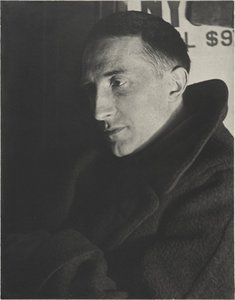
马塞尔·杜尚
1887 - 1968 , 法国
概览
- Artistic Movement Or Style:
- 立体主义
- 达达主义
- 观念艺术
- Artists Or Movements Influenced By This Artist:
- 观念艺术
- 波普艺术
- 极简主义
- Date Of Birth: 1887年7月28日
- Date Of Death: 1968年10月2日
- Full Name: 马塞尔·杜尚
- Nationality: 法国裔美国人
- Notable Artworks:
- 《下楼的裸女》
- 《泉》
- 《大型玻璃》
- 《波伊特-恩-瓦莱兹》
- Place Of Birth: 布莱尼维尔-苏尔-默,法国