 切换至版画销售渠道
 展开全文
展开全文







































 对于任何边长超过 105 厘米(约 41 英寸)的艺术品或复制品,画框将以拆解后的组件形式发货。此方法可确保安全送达并防止运输过程中的损坏。


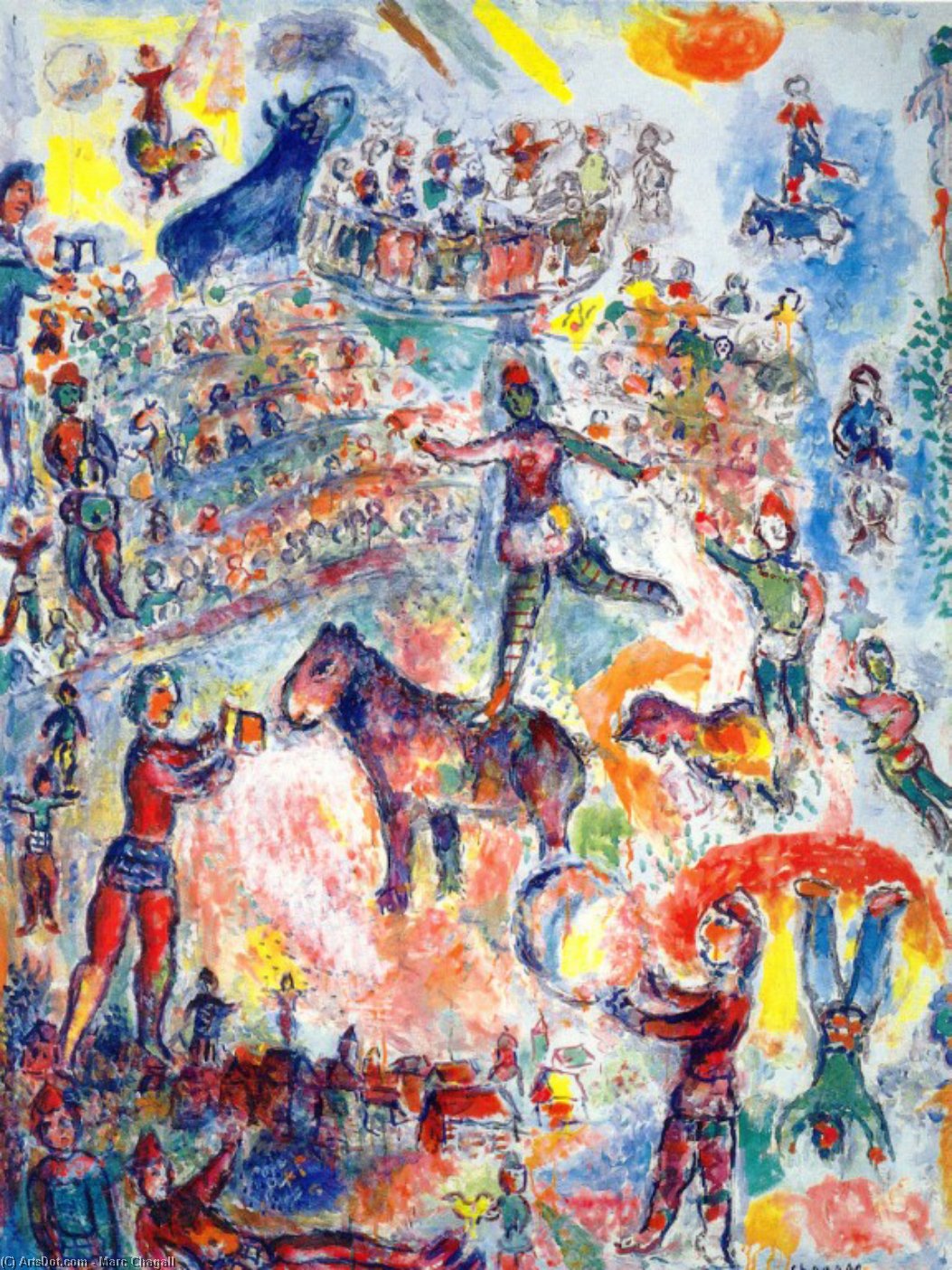
Great Circus – A Surrealist Dreamscape by Marc Chagall
Marc Chagall’s “Great Circus,” completed in 1984, isn't merely a depiction of an itinerant spectacle; it’s a profound meditation on memory, faith, and the fantastical realm of childhood imagination—themes consistently explored throughout Chagall’s prolific oeuvre. Painted during a period marked by significant artistic experimentation and personal upheaval, this monumental canvas embodies the spirit of Surrealism while firmly anchoring itself in Chagall's deeply rooted Jewish heritage.
- Subject Matter: The painting captures a vibrant circus scene—a familiar motif for Chagall—populated by figures both human and animal. Dominating the composition is a man perched atop a horse, symbolizing strength and aspiration, surrounded by an array of fellow performers and equine companions.
- Style & Technique: “Great Circus” exemplifies Chagall’s signature style, characterized by flattened perspectives, stylized forms, and luminous color palettes. Employing tempera on canvas—a technique he favored throughout his career—Chagall achieved a remarkable textural richness and vibrancy that defies conventional realism. The artist's meticulous brushwork contributes to an ethereal quality, blurring the boundaries between dream and reality.
- Historical Context: Chagall’s artistic journey coincided with the tumultuous years following World War II and the rise of Soviet influence in Europe. Despite facing censorship and political pressures, he persevered in his pursuit of artistic expression, reflecting the anxieties and hopes of a generation grappling with profound societal changes. The circus imagery itself speaks to themes of escapism and illusion—a deliberate choice mirroring the artist’s desire to transcend the constraints of everyday life.
- Symbolism: Recurring elements within “Great Circus” resonate with Jewish folklore and biblical narratives. Birds, frequently appearing in Chagall's paintings, represent freedom and spiritual aspiration, soaring above the earthly realm. The horse symbolizes nobility and resilience—a motif that appears repeatedly throughout Chagall’s work as a symbol of faith and perseverance.
- Emotional Impact: Viewing “Great Circus” evokes a sense of wonder and nostalgia—a feeling palpable in its dazzling colors and whimsical arrangements. Chagall's masterful use of color imbues the scene with an emotional intensity, transporting the viewer into a realm of dreamlike beauty. The painting’s enduring appeal lies in its ability to capture the essence of childhood innocence and the yearning for transcendence—themes that continue to resonate powerfully with audiences today.
常见问题与解答
"Great Circus" 创作于哪一年?
马尔克·夏加尔 的《Great Circus》创作于1984年。
"Great Circus" 会为空间营造怎样的氛围?
马尔克·夏加尔 的《Great Circus》 营造出 Romantic 的氛围,与推荐的陈设空间——Living Room 完美契合。
马尔克·夏加尔 的《Great Circus》 的亮度是多少?
马尔克·夏加尔 的《Great Circus》 的亮度为 Bright Balance。亮度描述了色彩呈现出的反射光量。
 实景预览
实景预览
 分享
分享 分享
分享
 详情
详情 指南
指南

 下载作品
下载作品
 相似作品
相似作品 X射线
X射线 幻灯片播放
幻灯片播放 问答
问答 统计数据
统计数据