
 效果预览
效果预览
 购买手绘画作
 分享
分享 分享
分享
 详情
详情

 下载
下载
 相似作品
相似作品 X射线
X射线 幻灯片播放
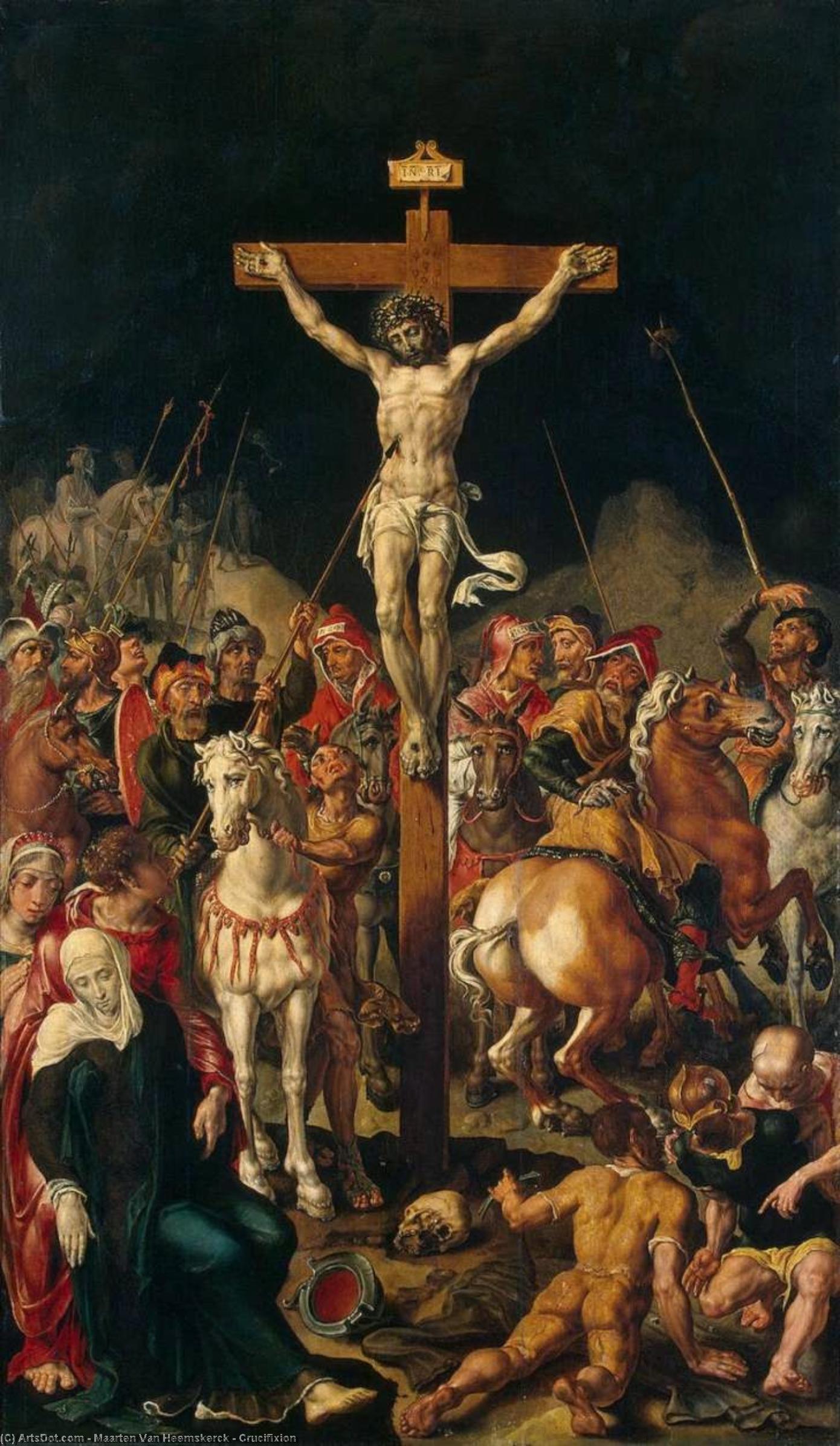
幻灯片播放Crucifixion
 Oil On Canvas
- WallArt
- Renaissance Dutch
 1545
1545- Renaissance
 101.0 x 58.0 cm
 冬宫博物馆 (Hermitage Museum)
 展开详情
展开详情




P118B $10

P118H $10

P118W $10

P438Z $10

P508JH $12

P508YH $12

P805H $10

P805Z $10

P919BZ $10

P919G $10

P919XJ $10

P959ZH $10

P968JZ $12

W106C $8

W218G $10

W218JH $8

W218Y $10

W307PJ $10

W316G $10

W316PJ $8

W316Y $10

W398PJ $8

W4111J $10

W500HY $15

W500JH $15

W692G $12

W849H $8

W940BG $15

W953PJ $8




从与原作比例一致的预设尺寸中进行选择。

您可以输入自定义尺寸,以适配特定的画框或空间。如果您选择的尺寸与原图比例不符,我们将对作品进行裁剪,或通过镜像填充/纯色填充边缘的方式来扩展图像。在开始制作之前,我们会向您发送一份数字效果图供您确认。
请注意,屏幕上的预览并不能反映实际的裁剪或扩展效果。只有效果图才能准确展示最终的构图。
虽然我们提供定制尺寸,但为了保持原图比例,我们建议您从预设列表中选择尺寸。


 玻璃选项仅适用于110厘米以下的尺寸。

Crucifixion
艺术微喷/版画
复制品尺寸
-


最终总价
$ 80
藏品详情
A Window Into Faith: Maerten van Heemskerck’s Crucifixion Triptych
The Crucifixion by Maerten van Heemskerck, completed in 1545, stands as a monumental achievement of the Dutch Renaissance and a testament to the enduring power of religious iconography. More than just a depiction of Christ's suffering – though undeniably poignant – this triptych transcends mere representation, immersing viewers in a meticulously crafted tableau that speaks volumes about humanist ideals and artistic innovation. Painted during a period marked by fervent piety and intellectual curiosity, it embodies the spirit of its time while simultaneously securing its place as one of the most influential artworks of the era.Style and Technique: Bridging Italian Renaissance Grandeur with Dutch Realism
Van Heemskerck skillfully blended elements of Italian Renaissance grandeur with the burgeoning realism characteristic of Dutch art. Influenced by artists like Michelangelo and Raphael, he adopted a pyramidal composition – a technique favored in monumental religious paintings – to convey stability and solemnity. However, unlike many Italian counterparts that prioritized idealized beauty, Van Heemskerck’s approach embraced meticulous detail and naturalistic observation. The artist painstakingly rendered textures—the rough linen of Christ's robe, the weathered stone of the cross—creating a palpable sense of physicality that distinguishes it from more stylized depictions. This careful attention to realism was further enhanced by his masterful use of chiaroscuro – dramatic contrasts between light and shadow – which sculptured form and imbued the scene with emotional depth.Historical Context: Rome Under Charles V and the Reformation’s Influence
The Crucifixion's creation coincided with a pivotal moment in European history: the reign of Charles V, Holy Roman Emperor, and the escalating tensions surrounding the Protestant Reformation. The Habsburg monarch championed Catholicism fiercely, commissioning artworks like this to reaffirm papal authority and bolster religious faith. Yet, Van Heemskerck’s work wasn’t solely driven by political considerations; it reflected a broader humanist preoccupation with human suffering and mortality – themes explored extensively in classical literature and philosophy. The triptych served as part of a larger project to decorate the Porta San Sebastiano in Rome, commemorating Charles V's victory over Protestant forces—a visual declaration of imperial piety amidst religious upheaval.Symbolism: Layers of Meaning Beyond Visual Representation
The Crucifixion’s symbolism is rich and multifaceted. The central panel depicts Jesus Christ crucified on the cross, a universally recognized emblem of sacrifice and redemption. His outstretched arms symbolize humility and acceptance of divine judgment, while his gaze directs upward towards God—a gesture signifying hope and spiritual aspiration. Surrounding him are figures representing Mary Magdalene, Nicodemus, Joseph of Arimathea, and others who witnessed Christ’s death – each embodying compassion and devotion. The inclusion of a horse on the right panel reinforces the imagery of royalty and divine majesty, mirroring the emperor's patronage. Furthermore, the cup positioned at the bottom left corner symbolizes the Eucharist—the sacrament commemorating Jesus’s sacrifice—underscoring the theological significance of the artwork.Emotional Impact: A Profound Reflection on Suffering and Faith
Ultimately, Maerten van Heemskerck’s Crucifixion transcends mere visual spectacle; it evokes a profound emotional response in viewers. The subdued palette – dominated by earthy tones – contributes to an atmosphere of solemn contemplation. Yet, the artist's masterful manipulation of light and shadow intensifies the drama of the scene, conveying the agony of Christ’s torment and eliciting empathy for his suffering. It compels us to confront questions about faith, mortality, and divine compassion—themes that continue to resonate across centuries. The Crucifixion remains a powerful reminder of humanity's capacity for sorrow and its unwavering belief in redemption – an enduring masterpiece that secures its place as one of the most poignant expressions of Renaissance spirituality.艺术家简介
早年生活与艺术训练
Maerten van Heemskerck 是一位卓越的荷兰肖像画与宗教画家,于1498年6月1日出生在北荷兰省的希姆斯克村。他的艺术征途始于哈勒姆,师从 Cornelius Willemsz,随后在德尔夫特跟随 Jan Lucasz 进行了一段短暂的学习时光。最终,他成为了 Jan van Scorel 的弟子,并深受其导师那充满意大利风情的艺术风格影响。职业生涯亮点
- Maerten van Heemskerck 的作品以其荷兰本土特色与意大利艺术影响的创新融合而著称,这在他著名的家族肖像画中得到了完美体现,该作被视为荷兰漫长家族绘画传统中的开山之作。
- 他在罗马为纪念查理五世而建造的凯旋门——圣塞巴斯蒂安门 进行重新装饰时,与 Antonio da Sangallo the Younger、Battista Franco 以及 Francesco de' Rossi (Il Salviati) 的合作,充分展现了他作为场景画家极高的创作效率。
- Heemskerck 对古典雕塑与建筑的素描作品现保存在 柏林版画库 的两本写生簿中,这些作品精准地捕捉到了意大利艺术的精髓。
传世杰作与艺术遗产
- 捐赠者与圣玛利亚·玛达拉 (在 OriginalUniqueArt 查看)
- 圣母与圣若望 (在 OriginalUniqueArt 查看)
- 参孙摧毁圣殿支柱,Maarten van Heemskerck (在 OriginalUniqueArt 查看)
结语
Maerten van Heemskerck 对艺术界产生的深远影响是不言而喻的。他的作品如今已成为包括荷兰国家博物馆在内的众多博物馆馆藏的重要组成部分,并持续激励着艺术家与艺术爱好者。若想探索更多他的杰作,请访问 OriginalUniqueArt 上的 Maerten van Heemskerck 专题页面。欲更深入地了解其生平与成就,请参阅 维基百科上的传记。
马尔滕·范·海姆斯克拉克
1498 - 1574 , 荷兰
艺术家简介
- Artistic Movement Or Style: 矫饰主义
- Artists Who Influenced This Artist:
- 扬·范·斯科雷尔
- 小安东尼奥·达·桑加罗
- Date Of Birth: 1498年6月1日
- Date Of Death: 1574年10月1日
- Full Name: 马尔滕·雅各布斯·范·海姆斯克拉克
- Nationality: 荷兰
- Notable Artworks:
- 哀悼基督
- 彼得·扬·福佩松及其家人
- 忧患之子基督
- Place Of Birth: 荷兰,海姆斯克拉克
相关文章
梵高25幅杰作:艺术、情感与家居装饰的灵感之源 | OriginalUniqueArt
探索文森特·梵高25幅杰作!深入了解《星夜》、《向日葵》等经典作品背后的故事与艺术技巧。OriginalUniqueArt.com提供博物馆品质的油画复制品,为您的家居带来后印象派的色彩与灵感。立即在线探索完整系列。

伦勃朗25幅杰作:光影大师的艺术传奇与家居臻选
探索伦勃朗25幅杰作,领略荷兰黄金时代光影大师的艺术传奇!从《夜巡》到自画像,深入了解巴洛克艺术、历史绘画与人物肖像背后的故事。OriginalUniqueArt.com提供高清艺术复制品及家居装饰灵感。立即探索完整系列!

Maerten van Heemskerck: Bridging Mannerism & Renaissance Ideals
Explore the captivating world of Maerten van Heemskerck, a pivotal Dutch Renaissance painter bridging Mannerism & Italian influence. Discover his masterpieces and legacy with OriginalUniqueArt.

Dutch Baroque Masters: 10 Paintings That Shaped an Era | OriginalUniqueArt
Journey through the Golden Age with our guide to the Top 10 Dutch Baroque masterpieces! Explore iconic paintings by Rembrandt, Vermeer & Frans Hals. Find museum-quality art reproductions and elevate your home decor at OriginalUniqueArt.com.
Adriaen van Ostade: A Master of Dutch Genre Painting & Social Commentary
Explore the life & work of Adriaen van Ostade, a leading Dutch Golden Age painter. Discover his realistic genre scenes, social commentary, and lasting influence on art history. Learn more at OriginalUniqueArt.

