

 实景预览
实景预览
 发送
发送 分享
分享
 详情
详情 指南
指南

 下载图片
下载图片
 相似作品
相似作品 X射线
X射线 幻灯片播放
幻灯片播放 统计数据
统计数据Ludwig van Beethoven,


 阅读全文
阅读全文
手工油画复制品
由我们的艺术家按需定制,为您提供您所选尺寸及画框的布面手工油画。 ( 切换至版画销售渠道 切换至数字图像销售渠道)




P118B ¥10

P118H ¥10

P118W ¥10

P438Z ¥10

P508JH ¥12

P508YH ¥12

P805H ¥10

P805Z ¥10

P919BZ ¥10

P919G ¥10

P919XJ ¥10

P959ZH ¥10

P968JZ ¥12

W106C ¥8

W218G ¥10

W218JH ¥8

W218Y ¥10

W307PJ ¥10

W316G ¥10

W316PJ ¥8

W316Y ¥10

W398PJ ¥8

W4111J ¥10

W500HY ¥15

W500JH ¥15

W692G ¥12

W849H ¥8

W940BG ¥15

W953PJ ¥8




您可以从与原作比例一致的预设尺寸中进行选择。

您可以输入自定义尺寸,以适配特定的画框或空间。如果所选尺寸与原图比例不符,我们将通过裁剪作品或添加手绘元素来扩展画面。数字样稿将在制作开始前发送给您确认。
请注意,屏幕预览无法准确反映实际的裁剪或扩展效果,只有样稿才能真实呈现最终的构图。
虽然我们提供定制尺寸服务,但为了保留原作比例,建议您从预设列表中选择尺寸。
下单后,OriginalUniqueArt.com 团队将通过电子邮件联系客户获取具体要求,并提供效果预览图


 玻璃选项仅适用于110厘米以下的尺寸。

Ludwig van Beethoven,
复制品材质
复刻品尺寸说明
-


总计金额
¥ 2021
A Window Into Genius: Examining Ludwig van Beethoven’s ‘Beethoven’ Manuscript
Within the realm of classical music, few figures command as much reverence and enduring fascination as Ludwig van Beethoven. This meticulously reproduced manuscript, titled “Ludwig van Beethoven,” offers a rare and intimate glimpse into the creative process of one of history's most transformative composers. More than just musical notation, it’s a tangible artifact—a weathered testament to years of dedication, struggle, and unparalleled artistic vision. The image presented here captures a close-up view of an aged sheet of paper, dominated by densely packed notes, symbols, and textual annotations, hinting at the complex intellectual landscape from which this masterpiece emerged.
The paper itself speaks volumes about its history. Its rough texture, marked with creases and stains, immediately conveys a sense of authenticity and time’s passage. These imperfections aren't flaws; they are evidence of countless readings, revisions, and perhaps even the occasional spilled ink—each mark contributing to the manuscript’s unique character. The vertical and horizontal lines of the staff create a framework for the intricate musical language, while the handwritten elements – likely Beethoven’s own annotations – add layers of personal reflection and artistic intent. The composition is deliberately restrained, focusing entirely on the core subject: the music itself, rather than extraneous details.
Decoding the Technique and Historical Context
This manuscript exemplifies the conventions of classical musical notation, utilizing established systems for representing pitch, rhythm, dynamics, and articulation. The meticulous detail in each note—the precise placement of rests, the subtle variations in duration—reflects Beethoven’s unwavering commitment to accuracy and clarity. The date, 1817, places this work within a pivotal period in Beethoven's life – a time marked by increasing deafness and a profound shift in his musical style. It was during this era that he began to move away from the strictures of the Classical era, experimenting with new harmonic structures and dramatic forms, ultimately paving the way for the Romantic movement.
The manuscript’s creation is inextricably linked to Beethoven's personal journey. His struggles with hearing loss profoundly impacted his compositional process, forcing him to rely increasingly on memory and intuition. This piece, therefore, can be interpreted as a deliberate act of self-expression—a way for the composer to translate his inner world into a tangible form. The meticulousness of the notation suggests an intense focus and a desire to capture every nuance of his musical ideas.
Symbolism and Emotional Resonance
Beyond its technical aspects, the manuscript carries significant symbolic weight. The aged paper represents the passage of time and the enduring legacy of Beethoven’s work. The handwritten annotations hint at the composer's intellectual process—his struggles, his insights, and his unwavering determination to express himself through music. The very act of examining this document invites us to connect with Beethoven on a deeply personal level, fostering an appreciation for his genius and resilience.
The image evokes a sense of quiet contemplation – a feeling of being transported back in time to witness the birth of a musical masterpiece. It’s a reminder that art is not merely about aesthetics; it's about human experience—about the triumphs, the challenges, and the profound emotions that shape our lives. This reproduction offers more than just an image; it provides a portal into the mind of one of history’s greatest composers.
Resources for Further Exploration
- Beethoven-Haus Bonn: Explore Beethoven's birthplace and delve deeper into his life and music at the Beethoven-Haus in Bonn, a UNESCO World Heritage site.
- Ludwig van Beethoven (Artist Database): Discover more about Beethoven's life and career on ArtNet, including biographical information and images of his works.
- Beethoven’s Missa Solemnis (Wikipedia): Explore the monumental “Missa Solemnis,” a cornerstone of Beethoven's late-period output.
Consider commissioning a high-quality reproduction to add a touch of timeless elegance and intellectual depth to your home or office. Each piece is meticulously crafted to capture the essence of this remarkable manuscript, ensuring that you own a tangible connection to one of music’s most enduring legacies.
艺术家简介
早年生活与音乐启蒙
路德维希·范·贝多芬,这位享誉世界的德国作曲家与钢琴家,于1770年出生在德国波恩。自幼便展现出非凡的音乐天赋,他在多位导师的悉心指导下开启了音乐研习之路,随后移居维也纳,并在那里度过了他生命中的绝大部分时光。- 钢琴与大提琴奏鸣曲(A大调)Op. 69,第一乐章(可在 OriginalUniqueArt.com 浏览)
- 贝多芬的《庄严弥撒》手稿(可在 维基百科 查看)
- 三首作品第一钢琴奏鸣曲,曾得到利希诺夫斯基亲王卡尔·阿洛伊斯的支持

路德维希·范·贝多芬
1770 - 1827 , 德国
快速概览
- 代表作品:
- 月光奏鸣曲
- 第九交响曲
- 全名: 路德维希·范·贝多芬
- 出生地: 德国波恩
- 出生日期: 1770年 德国波恩
- 去世日期: 1827年 奥地利维也纳
- 受此艺术家影响的艺术家或运动:
- 约翰内斯·勃拉姆斯
- 罗伯特·舒曼
- 国籍: 德国
- 影响此艺术家的艺术家:
- 弗朗茨·约瑟夫·海顿
- 克里斯蒂安·戈特洛布·舒尔茨
- 艺术风格或流派: 古典主义与浪漫主义
相关文章
古典主义的永恒遗产:原则、演变与西方艺术的影响
深入探索古典主义艺术的起源、演变与西方艺术史上的深远影响。OriginalUniqueArt.com提供高品质油画复制品和专业艺术咨询,助您鉴赏经典,收藏传世之作。
Neo-Classicism's Greatest Hits: 10 Masterpieces for Your Home |
Journey through Neo-Classicism's finest! Explore 10 iconic masterpieces by David, Ingres & Canova. Discover art history, techniques & timeless beauty – perfect for inspiring your home decor. Find museum-quality reproductions at
Timeless Resonance: Exploring Classic Vibe in Art – A Historical & Aesthetic Analysis
Explore the rich history & enduring aesthetic of Classicism art! Discover key movements, iconic artists like Raphael & David, and its lasting influence on Western art. Deepen your appreciation today.
The Enduring Legacy of Classical Style: Form, Narrative & Influence in Art
Explore the enduring legacy of classical art – from ancient Greece & Rome to Neoclassicism. Discover key artists, philosophical roots & build a timeless collection with OriginalUniqueArt's expert guidance.
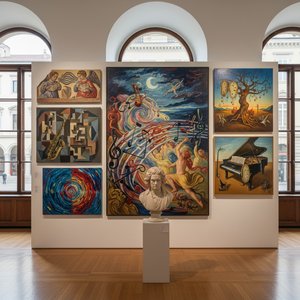
Harmonies on Canvas: Exploring the Visual Representation of Music in Art History
Explore the fascinating history of music's visual representation in art! From ancient symbolism to modern abstraction, discover how artists have captured sound and emotion on canvas. Expert insights & stunning examples.