
 实景预览
实景预览
 分享
分享 分享
分享
 详情
详情 指南
指南

 下载作品
下载作品
 相似作品
相似作品 X射线
X射线 幻灯片播放
幻灯片播放 问答
问答 统计数据
统计数据Conversation Booklet

- 16.0 x 9.0 cm


 展开全文
展开全文
艺术微喷/版画
博物馆级艺术微喷或帆布版画,制作高效,并提供多种饰面选择。 ( 订购纯手工绘制画作 切换至数字图像销售渠道)




P118B ¥10

P118H ¥10

P118W ¥10

P438Z ¥10

P508JH ¥12

P508YH ¥12

P805H ¥10

P805Z ¥10

P919BZ ¥10

P919G ¥10

P919XJ ¥10

P959ZH ¥10

P968JZ ¥12

W106C ¥8

W218G ¥10

W218JH ¥8

W218Y ¥10

W307PJ ¥10

W316G ¥10

W316PJ ¥8

W316Y ¥10

W398PJ ¥8

W4111J ¥10

W500HY ¥15

W500JH ¥15

W692G ¥12

W849H ¥8

W940BG ¥15

W953PJ ¥8




您可以从与原作比例一致的预设尺寸中进行选择。

请输入您所需的宽度和高度,以适配您的画框或墙面。由于印刷品只能进行裁剪,无法超出原图尺寸,因此若比例不一致,画面的一部分将会被裁切。在正式印刷之前,我们会为您发送一份数字效果图供您确认。本页面显示的图片并非最终裁剪后的效果——只有效果图才能展示真实的裁剪情况。


 玻璃选项仅适用于110厘米以下的尺寸。

Conversation Booklet
艺术微喷/版画
复刻品尺寸
-


最终结算价
¥ 543
The Intimate Echoes of a Genius
Before us lies more than just a collection of handwritten notes; it is a tangible fragment of Ludwig van Beethoven's world, meticulously preserved within the pages of his “Conversation Booklet.” Dating back to 1818, this remarkable document offers an unprecedented glimpse into the mind and daily life of one of history’s most transformative composers. It wasn’t intended for public consumption—rather, it served as a private journal, a space where Beethoven wrestled with ideas, managed practical affairs, and, perhaps most profoundly, communicated with those closest to him. The booklet's unassuming appearance belies the wealth of information contained within its aged pages, revealing a complex individual grappling with both artistic brilliance and the challenges of deafness.
The physical object itself is strikingly intimate – a small, leather-bound book filled with cramped, cursive handwriting in ink that has faded over centuries. The paper, bearing the marks of time—stains, creases, and slight discoloration— speaks to its history, suggesting countless readings and revisions. It’s not a formal composition or a polished manuscript; it's a record of everyday life, a testament to Beethoven’s relentless curiosity and his need to organize his thoughts and actions. The very texture of the paper invites us to touch, to feel the weight of history held within its fibers.
Decoding the Script: A Symphony of Detail
The handwriting itself is a key element in understanding this remarkable artifact. It’s not elegant or flowing; it's practical and direct, reflecting Beethoven’s personality—a man known for his intensity and unwavering focus. The notes are densely packed, filled with abbreviations, reminders, and seemingly random observations. We find references to purchases – sugar, spice, wine – alongside musical sketches, appointments, and even a lament about the difficulty of finding suitable shoes. These mundane details, juxtaposed with fragments of musical ideas, paint a vivid portrait of a man constantly balancing his artistic pursuits with the demands of daily life.
- Shopping Lists: Revealing Beethoven’s practical concerns and meticulous nature.
- Musical Fragments: Brief notations of melodies and harmonic progressions, hinting at the composer's creative process.
- Personal Correspondence: Snippets of conversations with friends and colleagues, offering insights into his social life.
- Administrative Notes: Details about financial matters, legal disputes, and arrangements for performances.
The booklet’s contents are not simply a collection of random notes; they form a cohesive narrative—a window into Beethoven's inner world. It is a testament to his relentless pursuit of knowledge, his unwavering dedication to his craft, and his profound humanity.
Symbolism and the Burden of Silence
The “Conversation Booklet” transcends its function as a mere record-keeping device; it’s imbued with potent symbolism. The act of writing itself represents communication—a vital lifeline for Beethoven as his hearing deteriorated. Each note, each abbreviation, is an attempt to bridge the gap between himself and the outside world. The very fact that he meticulously documented these conversations speaks volumes about his desire to remain connected, engaged, and informed.
Furthermore, the booklet serves as a poignant reminder of the isolating experience of deafness. The cramped handwriting, the dense notations—all suggest a man struggling to make himself heard, both literally and figuratively. It’s a powerful symbol of resilience, creativity, and the enduring human spirit in the face of adversity. The book becomes a visual representation of Beethoven's internal struggle – his genius battling against the encroaching silence.
A Reproduction for Reflection
Reproductions of this extraordinary document offer a unique opportunity to connect with one of history’s greatest composers on a deeply personal level. The meticulous detail captured in each page invites contemplation, encouraging viewers to consider Beethoven's life, his struggles, and the profound impact of his music. A high-quality reproduction allows us to appreciate not only the aesthetic beauty of the original but also the rich historical context that surrounds it. It’s a piece that can enrich any interior space, serving as a constant reminder of the power of human creativity and the enduring legacy of Ludwig van Beethoven.
常见问题与解答
“Conversation Booklet”是如何体现 路德维希·范·贝多芬 的创作主题与艺术风格的?
"Conversation Booklet" 与 路德维希·范·贝多芬 的其他作品一样,都体现了 Documentary Photography 风格以及其一贯的主题:beethoven’s personal communication, documenting musical ideas, thoughts, reflecting deafness, isolation”, “early sketches missa solemnis”, insight into creative process”。
"Conversation Booklet" 是 路德维希·范·贝多芬 最受欢迎的作品之一吗?
路德维希·范·贝多芬 的《Conversation Booklet》 的记录热度为 Iconic。
路德维希·范·贝多芬 的《Conversation Booklet》 属于哪种艺术流派,又处于哪个时代?
路德维希·范·贝多芬 的《Conversation Booklet》 属于 Documentary Photography 流派,创作于其作者的 19世纪 时期。
艺术家简介
早年生活与音乐启蒙
路德维希·范·贝多芬,这位享誉世界的德国作曲家与钢琴家,于1770年出生在德国波恩。自幼便展现出非凡的音乐天赋,他在多位导师的悉心指导下开启了音乐研习之路,随后移居维也纳,并在那里度过了他生命中的绝大部分时光。- 钢琴与大提琴奏鸣曲(A大调)Op. 69,第一乐章(可在 OriginalUniqueArt.com 浏览)
- 贝多芬的《庄严弥撒》手稿(可在 维基百科 查看)
- 三首作品第一钢琴奏鸣曲,曾得到利希诺夫斯基亲王卡尔·阿洛伊斯的支持

路德维希·范·贝多芬
1770 - 1827 , 德国
艺术家简介
- 代表作品:
- 月光奏鸣曲
- 第九交响曲
- 全名: 路德维希·范·贝多芬
- 出生地: 德国波恩
- 出生日期: 1770年 德国波恩
- 去世日期: 1827年 奥地利维也纳
- 受此艺术家影响的艺术家或运动:
- 约翰内斯·勃拉姆斯
- 罗伯特·舒曼
- 国籍: 德国
- 影响此艺术家的艺术家:
- 弗朗茨·约瑟夫·海顿
- 克里斯蒂安·戈特洛布·舒尔茨
- 艺术风格或流派: 古典主义与浪漫主义
相关文章

Hugo van der Goes: Devotion, Innovation & the Psychological Depth of Early Netherlandish Painting
Explore the revolutionary art of Hugo van der Goes – a master of Early Netherlandish painting renowned for his dramatic realism, psychological depth & profound influence on Renaissance artists. Discover his iconic works and lasting legacy.

Early Netherlandish Masters: 10 Paintings That Revolutionized Art & Decor
Journey into the world of Early Netherlandish painting! Explore 10 masterpieces by Jan van Eyck, Rogier van der Weyden & more. Discover stunning detail, symbolism & Renaissance art for your home decor. Find museum-quality reproductions on OriginalUniqueArt.com

Charles-André van Loo: A Study in Rococo Portraiture & the French Court's Artistic Dynamics
Explore the elegant world of Charles-André van Loo, a master of Rococo portraiture at the French court. Discover his life, techniques, and enduring influence on 18th-century art. Hand-painted reproductions available.

伦勃朗25幅杰作:光影大师的艺术传奇与家居臻选
探索伦勃朗25幅杰作,领略荷兰黄金时代光影大师的艺术传奇!从《夜巡》到自画像,深入了解巴洛克艺术、历史绘画与人物肖像背后的故事。OriginalUniqueArt.com提供高清艺术复制品及家居装饰灵感。立即探索完整系列!
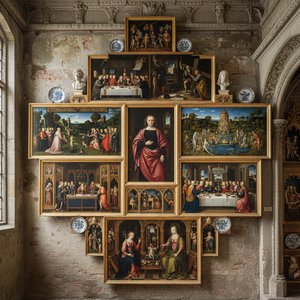
Early Netherlandish Masters: 10 Paintings That Revolutionized Art & Decor
Journey into the Early Netherlandish Renaissance! Explore 10 iconic paintings by Jan van Eyck, Rogier van der Weyden & more. Discover stunning detail, symbolism, and oil painting techniques. Find museum-quality art reproductions for your home at OriginalUniqueArt.com.