

 实景预览
实景预览
 发送
发送 分享
分享
 详情
详情 指南
指南

 下载图片
下载图片
 相似作品
相似作品 X射线
X射线 幻灯片播放
幻灯片播放 统计数据
统计数据Susanna and the Elders
 Engraving
- Northern Renaissance
 1508
1508 197.0 x 144.0 cm
 国家博物馆 (Rijksmuseum)
 阅读全文
阅读全文
艺术微喷/版画
博物馆级艺术微喷或帆布版画,制作高效,并提供多种饰面选择。 ( 订购此收藏品的纯手工复刻画作 切换至数字图像销售渠道)




P118B $10

P118H $10

P118W $10

P438Z $10

P508JH $12

P508YH $12

P805H $10

P805Z $10

P919BZ $10

P919G $10

P919XJ $10

P959ZH $10

P968JZ $12

W106C $8

W218G $10

W218JH $8

W218Y $10

W307PJ $10

W316G $10

W316PJ $8

W316Y $10

W398PJ $8

W4111J $10

W500HY $15

W500JH $15

W692G $12

W849H $8

W940BG $15

W953PJ $8




您可以从与原作比例一致的预设尺寸中进行选择。

您可以输入自定义尺寸,以适配特定的画框或空间。如果您选择的尺寸与原图比例不符,我们将对作品进行裁剪,或通过镜像填充/纯色填充边缘的方式来扩展图像。在开始制作之前,我们会向您发送一份数字效果图供您确认。
请注意,屏幕上的预览并不能反映实际的裁剪或扩展效果。只有效果图才能准确展示最终的构图。
虽然我们提供定制尺寸,但为了保持原图比例,我们建议您从预设列表中选择尺寸。


 玻璃选项仅适用于110厘米以下的尺寸。

Susanna and the Elders
艺术微喷/版画
复刻品尺寸说明
-


总计金额
$ 80
Susanna and the Elders: A Renaissance Masterpiece of Intrigue and Divine Justice
Lucas van Leyden’s engraving, “Susanna and the Elders,” dating from 1508, is more than just a biblical narrative; it's a meticulously crafted exploration of deception, virtue, and divine retribution. Created during the flourishing of Northern Renaissance art, this work stands as a testament to Lucas’s exceptional skill in both engraving and composition – a medium he mastered with remarkable speed and innovation. The scene unfolds within a carefully constructed architectural setting, transporting the viewer into a world of restrained elegance and subtle drama, characteristic of the Leiden workshop where van Leyden honed his craft under the tutelage of Cornelis Engelbrechtsz.
At the heart of the composition is Susanna, depicted from behind as she bathes in a secluded garden. Her posture – slightly bent over a basin, her hair elegantly arranged – speaks to both vulnerability and quiet dignity. The Elders, two imposing figures clad in flowing robes, observe her with an intensity that borders on predatory. Their positioning—leaning forward, their hands poised near the wall—suggests a calculated surveillance, hinting at the clandestine nature of their deceitful intentions. The use of light and shadow is masterful; it draws attention to Susanna’s form while simultaneously shrouding the Elders in a veil of ambiguity, leaving the viewer to question their motives.
Technique and Style: A Northern Renaissance Vision
Van Leyden's engraving showcases his remarkable technical prowess. The intricate detail—from the folds of the drapery to the texture of the stone wall—demands close scrutiny, revealing a level of precision rarely seen in contemporary prints. The artist’s use of hatching and cross-hatching creates a rich tonal range, imbuing the scene with depth and atmosphere. This technique, combined with his understanding of perspective, lends an astonishing sense of realism to the composition. The work is executed on laid paper, a common choice for engravings during this period, providing a slightly textured surface that enhances the visual impact.
Stylistically, “Susanna and the Elders” reflects the influence of Italian Renaissance art, particularly the works of Albrecht Dürer and Jan Gossaert. The emphasis on human anatomy, the dramatic lighting, and the carefully orchestrated composition are all hallmarks of this artistic movement. However, van Leyden retains a distinctly Northern sensibility, evident in his restrained palette and his focus on narrative clarity. The scene is not merely decorative; it’s a carefully constructed moral allegory.
Symbolism and Narrative: A Tale of Deception and Redemption
The story depicted—drawn from the Book of Daniel—is one of ancient virtue tested by temptation and ultimately vindicated by divine justice. Susanna, a young woman of impeccable reputation, is falsely accused of adultery by two corrupt Elders who are driven by lust. The engraving captures the pivotal moment when Daniel intervenes, exposing their lies and saving Susanna from certain death. The mirror in the background serves as a potent symbol—reflecting not only Susanna’s image but also the vanity and deceit that characterize the Elders.
Beyond the immediate narrative, “Susanna and the Elders” can be interpreted as an allegory of broader themes: the dangers of false accusations, the importance of truthfulness, and the triumph of virtue over vice. The scene resonates with a timeless moral message, inviting viewers to contemplate the complexities of human nature and the consequences of our actions.
Emotional Impact and Legacy: A Timeless Masterpiece
Despite its historical context, “Susanna and the Elders” continues to hold a powerful emotional resonance. The engraving’s dramatic composition, coupled with its subtle psychological insights, evokes a sense of suspense and intrigue. The vulnerability of Susanna, juxtaposed with the calculated malice of the Elders, creates a compelling narrative tension that draws the viewer into the scene. This work is not simply an illustration of a biblical story; it's a profound meditation on human morality and the enduring struggle between good and evil.
Lucas van Leyden’s “Susanna and the Elders” stands as a cornerstone of Northern Renaissance art, demonstrating his exceptional technical skill, artistic vision, and ability to imbue a seemingly straightforward biblical narrative with layers of symbolic meaning. Reproductions of this masterpiece offer a unique opportunity to experience the artistry and intellectual depth of one of the era’s most accomplished engravers.
艺术家简介
莱顿的先驱:卢卡斯·范·莱顿的艺术生涯
1494年,在荷兰的莱顿城诞生了一位注定要改变荷兰绘画面貌的天才——卢卡斯·范·莱顿。他并非出身于显赫家族,而是画家海格·雅各布兹(Huygh Jacobsz)之子,艺术之路从父亲的悉心教导开始启程。年幼的卢卡斯便展现出非凡的绘画天赋,很快便在1508年进入了科内利斯·恩赫尔布雷茨(Cornelis Engelbrechtsz)的工作室,接受更为系统的训练,打下了坚实的技术基础。那个时代,荷兰艺术尚处于探索阶段,卢卡斯·范·莱顿的出现,如同划破夜空的闪电,预示着一种全新的绘画风格即将到来。早期创作与版画技艺的精湛
卢卡斯·范·莱顿是荷兰最早尝试风俗画(genre painting)的画家之一,同时也是一位技艺高超的版画家。他早期的作品,大约在1506年至1512年间创作,以半身人物肖像为主,充分展现了他天生的原创力与对细节的敏锐观察。随着年龄的增长,他的风景画技巧日益成熟,而他对版画的热爱和天赋更是令人惊叹。他于1508年创作的第一幅已知版画作品《穆罕默德遇害的僧侣》(Mohammed and the murdered monk),便足以证明他在版画领域的非凡造诣。这幅作品不仅构图精巧,细节刻画入木三分,更体现了他对社会现实的深刻思考和批判精神。他对于光影的处理,以及人物情感的表达,都超越了同时代的许多艺术家。风格特点与代表作
卢卡斯·范·莱顿留存下来的十七幅绘画作品,每一幅都是荷兰艺术史上的珍品。《治愈耶利哥盲人》(The Healing of the Blind Man of Jericho)堪称他的杰作之一,画面中众多人物置身于茂密的森林景观之中,生动地展现了耶稣行奇迹的场景。这幅画色彩鲜明,构图饱满,充满了活力与希望。《圣保罗》(Saint Paul),则充分体现了他精湛的版画技巧。而1510年创作的版画作品《挤奶女》(The Milkmaid)更是他早期技艺的完美呈现,画面简洁朴素,却蕴含着深刻的生活气息。他的绘画风格以清新明快的色彩和空灵透视(aérienne perspective)为特点,这种风格深受阿尔布雷希特·丢勒(Albrecht Dürer)的影响与赞赏。他善于运用光线来营造氛围,使画面更具立体感和空间感。艺术影响与历史地位
卢卡斯·范·莱顿的作品在荷兰各地都能找到,其中以阿姆斯特丹的梵高博物馆(Van Gogh Museum)收藏最为丰富,馆内珍藏着他大量的版画作品和绘画作品。如今,通过像OriginalUniqueArt.com这样的在线平台,艺术爱好者们可以更方便地欣赏他的作品,深入了解他的艺术生涯。卢卡斯·范·莱顿对荷兰风俗画和版画的贡献是不可磨灭的。他大胆创新的风格和精湛的技术水平,使他在艺术史上占据着重要的地位。作为荷兰艺术的先驱者,他的遗产将继续激励着一代又一代的艺术家和艺术爱好者。体验艺术世界,尽在OriginalUniqueArt.com,这里汇集了包括卢卡斯·范·莱顿在内的众多大师的作品。- 主要艺术运动或风格:早期尼德兰文艺复兴
- 受此艺术家影响的艺术家:德国文艺复兴
- 影响此艺术家的艺术家:阿尔布雷希特·丢勒
- 出生日期:荷兰莱顿(1494年)
- 逝世日期:1533年
- 全名:卢卡斯·休根斯·范·莱顿 (Lucas Hugensz van Leyden)
- 国籍:荷兰
- 代表作品:《治愈耶利哥盲人》、《圣保罗》、《挤奶女》
- 出生地:莱顿

卢卡斯·范·莱登 (Lúkǎsī·Fàn·Láidēng)
1494 - 1533 , 荷兰
快速概览
- 代表作品:
- 《治愈耶利哥盲人》
- 《圣保罗》
- 《农妇》
- 全名: 卢卡斯·凡·莱登
- 出生地: 荷兰莱顿
- 出生日期: 荷兰莱顿(1494年)
- 受此艺术家影响的艺术家或运动: ['德国文艺复兴']
- 国籍: 荷兰
- 影响此艺术家的艺术家: ['阿尔布雷希特·丢勒']
- 艺术运动或风格: 早期尼德兰文艺复兴
- 逝世日期: 1533年
相关文章

Lucas van Leyden: Innovation & Intimacy in Early Netherlandish Printmaking
Explore the groundbreaking prints of Lucas van Leyden, a Dutch master bridging Gothic detail & Renaissance innovation. Discover his rare works, investment potential, and legacy for discerning collectors.

Early Netherlandish Masters: 10 Paintings That Revolutionized Art & Decor
Journey into the world of Early Netherlandish painting! Explore 10 masterpieces by Jan van Eyck, Rogier van der Weyden & more. Discover stunning detail, symbolism & Renaissance art for your home decor. Find museum-quality reproductions on OriginalUniqueArt.com

Engraving: A Historical Survey of Technique, Artistic Expression & Enduring Legacy
Explore the rich history of engraving with OriginalUniqueArt. Discover techniques, iconic artists like Dürer & Callot, collecting tips, and expert guidance for preserving your art investment. Learn about intaglio printing & more!

伦勃朗25幅杰作:光影大师的艺术传奇与家居臻选
探索伦勃朗25幅杰作,领略荷兰黄金时代光影大师的艺术传奇!从《夜巡》到自画像,深入了解巴洛克艺术、历史绘画与人物肖像背后的故事。OriginalUniqueArt.com提供高清艺术复制品及家居装饰灵感。立即探索完整系列!
Engraving's Golden Age: 10 Masterpieces That Redefined Art | OriginalUniqueArt
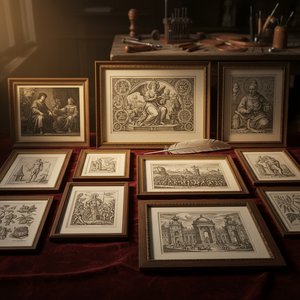
Journey through art history with our Top 10 Legendary Engravings! Explore masterpieces by Dürer, Rembrandt & Goya. Discover the stories behind these iconic prints and find museum-quality reproductions for your home at OriginalUniqueArt.com.
