

 实景预览
实景预览
 分享
分享 分享
分享
 详情
详情 指南
指南

 下载作品
下载作品
 相似作品
相似作品 X射线
X射线 幻灯片播放
幻灯片播放 Q&A
Q&A 统计数据
统计数据St Augustine Altarpiece (right wing)
 Oil On Panel
- WallArt
- Early Renaissance
 1498
1498- Renaissance
 146.0 x 76.0 cm
 柏林州立博物馆
 展开全文
展开全文
艺术微喷/版画
博物馆级艺术微喷或帆布版画,制作高效,并提供多种饰面选择。 ( 订购纯手工绘制画作 切换至数字图像销售渠道)




P118B ¥10

P118H ¥10

P118W ¥10

P438Z ¥10

P508JH ¥12

P508YH ¥12

P805H ¥10

P805Z ¥10

P919BZ ¥10

P919G ¥10

P919XJ ¥10

P959ZH ¥10

P968JZ ¥12

W106C ¥8

W218G ¥10

W218JH ¥8

W218Y ¥10

W307PJ ¥10

W316G ¥10

W316PJ ¥8

W316Y ¥10

W398PJ ¥8

W4111J ¥10

W500HY ¥15

W500JH ¥15

W692G ¥12

W849H ¥8

W940BG ¥15

W953PJ ¥8




您可以从与原作比例一致的预设尺寸中进行选择。

请输入您所需的宽度和高度,以适配您的画框或墙面。由于印刷品只能进行裁剪,无法超出原图尺寸,因此若比例不一致,画面的一部分将会被裁切。在正式印刷之前,我们会为您发送一份数字效果图供您确认。本页面显示的图片并非最终裁剪后的效果——只有效果图才能展示真实的裁剪情况。


 玻璃选项仅适用于110厘米以下的尺寸。

St Augustine Altarpiece (right wing)
艺术微喷/版画
复刻品尺寸
-


最终结算价
¥ 537
A Symphony of Faith and Form
In the quiet sanctity of the Bichi Chapel within Siena Cathedral, there exists a window into the spiritual fervor of the High Renaissance. Luca Signorelli’s St Augustine Altarpiece (right wing) is far more than a mere religious relic; it is an immersive experience of contemplation, meticulously crafted in 1498 to bridge the gap between the earthly and the divine. As one gazes upon this stunning panel painting, they are met with a profound sense of serene dignity. The composition, centered around the luminous presence of Saint Catherine of Alexandria, draws the viewer inward through a shallow depth of field that fosters an immediate, intimate connection with the sacred figures. Flanked by the authoritative presence of a bishop and the humble devotion of a monk, the arrangement creates a balanced, harmonious world where every line and contour serves a higher purpose.
The visual language of Signorelli is one of masterful equilibrium. He masterfully juxtaposes organic shapes—the flowing, rhythmic drapery that mimics natural movement—against the rigid, geometric certainty of the bishop’s mitre and the monk’s heavy robes. This interplay reflects the Renaissance preoccupation with order, proportion, and the humanist ideals of the era. The color palette, dominated by muted golds and deep, resonant reds, imbues the scene with a warmth that feels both solemn and welcoming. Through subtle glazing techniques, Signorelli achieves a breathtaking luminosity, as if a divine light is emanating from within the wood itself, elevating the subjects beyond mere representation into the realm of the eternal.
Mastery of Technique and Materiality
To appreciate this work is to appreciate the technical virtuosity of one of Italy's most skilled draftsmen. Utilizing oil paints applied to a sturdy wood panel—the preferred medium of the Renaissance masters—Signorelli built up layers of color with remarkable precision. His ability to manipulate light and shadow, or chiaroscuro, allows for nuanced tonal variations that create a convincing illusion of three-dimensionality. Each brushstroke is a testament to his command over anatomy and texture; the soft, diffused lighting casts gentle shadows that model the figures' forms, giving them a palpable weight and presence within the frame.
For the discerning collector or interior designer, this piece offers an unparalleled opportunity to introduce a sense of historical gravity and sophisticated grace into a space. The artwork’s ability to command attention through its meticulous detail while maintaining a tranquil atmosphere makes it a versatile centerpiece for any high-end curation. Whether placed in a gallery setting or as a focal point in a refined living space, the St Augustine Altarpiece serves as a constant reminder of the beauty found in devotion and the enduring power of classical composition.
常见问题与解答
卢卡·西尼奥雷利 的《St Augustine Altarpiece (right wing)》 的主导色调是什么?
“St Augustine Altarpiece (right wing)”呈现出Warm Sunset Tones色调。
"St Augustine Altarpiece (right wing)" 采用了什么技法,创作于何时?
卢卡·西尼奥雷利 的《St Augustine Altarpiece (right wing)》 的创作媒介为 Oil On Panel,创作于 1498 年。
卢卡·西尼奥雷利 的作品《St Augustine Altarpiece (right wing)》是否属于公有领域?其原因是什么?
卢卡·西尼奥雷利 的作品《St Augustine Altarpiece (right wing)》已进入 属于公有领域 —— 其版权已过期。版权期限自艺术家逝世之日起计算,卢卡·西尼奥雷利 于 1523 年逝世。
艺术家简介
早年生活与艺术启蒙
卢卡·西尼奥雷利是一位活跃于意大利文艺复兴时期的杰出画家,约于1450年出生在托斯卡纳的科尔托纳。尽管他的确切出生日期尚存争议,但史学界普遍认为是在1441年至1445年之间。这位艺术家以其卓越的素描功底和对“透视缩减法”的精妙运用而闻名于世,为后世留下了深刻的艺术印记。艺术生涯的辉煌历程
西尼奥雷利对艺术最初的感悟似乎源自佩鲁贾,在那里,他深受贝内德托·邦菲利等艺术家的风格影响。根据乔尔乔·瓦萨里的记载,西尼奥雷利是在其舅父拉扎罗·瓦萨里的引荐下,师从大师皮耶罗·德拉·弗朗チェ斯卡进行学徒训练。西尼奥雷利的作品散落在意大利各地的艺术殿堂中,包括阿雷佐(1472年)和卡斯泰洛(1474年)。他最负盛名的作品之一是献给洛伦佐·德·美第奇的《潘之学校》,这幅画作通过对人体形态的写实描绘,完美展示了他对明暗对照法与线性透视法的精湛掌控。传世名作
- 《最后的审判》(1499-1503),位于奥尔维耶托大教堂——这幅宏伟的湿壁画被视为他的巅峰杰作,生动地展现了西尼奥雷利在描绘末日景象与神圣审判时的惊人技艺。
- 《圣梅达德多翼祭坛画》(1507年),现藏于意大利阿尔切维亚的圣梅达德博物馆——这是西尼奥雷利作品的典范,以极其细腻且自然主义的手法呈现了人体之美。
艺术运动背景
西尼奥雷利是意大利文艺复兴运动的重要参与者,这一时期标志着欧洲从中世纪向近现代的伟大转型。在那个时代,古典传统、自然主义与人文主义精神得到了前所未有的复兴。- 早期文艺复兴艺术运动——简述这一塑造了人类艺术史进程的重要运动。
- 安杰利科修士——这位著名的艺术家对西尼奥雷利的作品产生了深远影响,并以其非凡的绘画造诣著称。
- 卢卡·西尼奥雷利——关于这位艺术家的简要传记,涵盖其代表作与所属艺术流派。
艺术遗产
西尼奥雷利的作品对文艺复兴艺术的发展产生了深远影响。他对于透视缩减法的运用以及精湛的素描技巧,激励了无数追随其脚步的艺术家。作为意大利文艺复兴时期的重要人物,西尼奥雷利的精神通过遍布意大利各地的博物馆与大教堂中的传世之作,至今仍被世人传颂。重要年份:- 1450年:出生于托斯卡纳科尔托纳
- 1499-1503年:创作了奥尔维耶托大教堂的《最后的审判》
- 1523年:逝世,留下了永恒的艺术瑰宝

卢卡·西尼奥雷利
1450 - 1523 , 意大利
艺术家简介
- Artistic Movement Or Style: 文艺复兴
- Artists Or Movements Influenced By This Artist: ['安杰利科修士 (Fra Angelico)']
- Artists Who Influenced This Artist: ['皮耶罗·德拉·弗朗チェ斯卡 (Piero della Francesca)']
- Date Of Death: 1523年10月16日
- Full Name: 卢卡·迪·埃吉迪奥·迪·文图拉·西尼奥雷利 (Luca di Egidio di Ventura Signorelli)
- Nationality: 意大利
- Notable Artworks:
- 末日审判
- 潘之学校
- Place Of Birth: 意大利,科尔托纳
相关文章

Luca Signorelli: Renaissance Innovation & Dramatic Foreshadowing of Modern Artistic Expression
Explore the revolutionary art of Luca Signorelli, a High Renaissance master renowned for his dramatic frescoes & anatomical precision. Discover his lasting impact on art history and techniques like foreshortening.

Sacred Narratives on Canvas: Exploring Religious Scenes & Their Enduring Influence
Explore the rich history of religious art from Giotto to the Renaissance masters with OriginalUniqueArt. Discover symbolism, techniques & enduring legacies. Museum-quality reproductions available.

乔托大师25幅杰作:文艺复兴的先驱与永恒艺术之美 | OriginalUniqueArt
探索乔托·迪·邦杜内25幅杰作,见证文艺复兴的曙光!深入了解这位意大利艺术大师的壁画、绘画技巧与永恒魅力。在OriginalUniqueArt.com发现高品质艺术复制品,为您的家居增添经典之美。
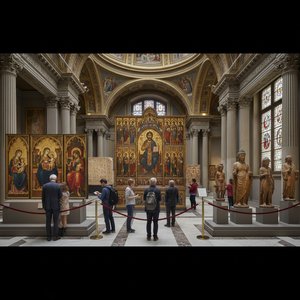
Sacred Narratives Embodied: A Comprehensive Exploration of Religious Iconography in Art History
Explore the rich history of religious iconography in art! Discover symbolism, movements & masterpieces from Byzantine to Renaissance periods. Expert insights for collectors and enthusiasts at OriginalUniqueArt.

埃尔·格列柯25幅杰作:探索艺术大师的信仰与火焰
探索埃尔·格列柯25幅杰作,领略这位西班牙画家巴洛克风格的宗教绘画魅力。从《圣塞巴斯蒂安》到《沉思者》,感受信仰与艺术的交融。OriginalUniqueArt.com提供高品质油画复制品,为您的家居装饰增添经典之美!探索完整系列作品。


