

 效果预览
效果预览
 购买手绘画作
 分享
分享 分享
分享
 详情
详情

 下载
下载
 相似作品
相似作品 X射线
X射线 幻灯片播放
幻灯片播放Scholar viewing a waterfall
 Acrylic On Canvas
- WallArt
- Shanshui
 1201
1201 25.0 x 26.0 cm
 大都会艺术博物馆
 展开详情
展开详情




P118B $10

P118H $10

P118W $10

P438Z $10

P508JH $12

P508YH $12

P805H $10

P805Z $10

P919BZ $10

P919G $10

P919XJ $10

P959ZH $10

P968JZ $12

W106C $8

W218G $10

W218JH $8

W218Y $10

W307PJ $10

W316G $10

W316PJ $8

W316Y $10

W398PJ $8

W4111J $10

W500HY $15

W500JH $15

W692G $12

W849H $8

W940BG $15

W953PJ $8




从与原作比例一致的预设尺寸中进行选择。

您可以输入自定义尺寸,以适配特定的画框或空间。如果您选择的尺寸与原图比例不符,我们将对作品进行裁剪,或通过镜像填充/纯色填充边缘的方式来扩展图像。在开始制作之前,我们会向您发送一份数字效果图供您确认。
请注意,屏幕上的预览并不能反映实际的裁剪或扩展效果。只有效果图才能准确展示最终的构图。
虽然我们提供定制尺寸,但为了保持原图比例,我们建议您从预设列表中选择尺寸。


 玻璃选项仅适用于110厘米以下的尺寸。

Scholar viewing a waterfall
艺术微喷/版画
复制品尺寸
-


最终总价
$ 80
藏品详情
Ma Yuan’s Scholar Viewing a Waterfall: A Meditation on Landscape and Contemplation
The artwork, “Scholar Viewing a Waterfall,” attributed to Ma Yuan (馬遠), stands as a cornerstone of Southern Song landscape painting—a genre that profoundly shaped Chinese artistic sensibilities and continues to resonate with audiences today. Executed circa 1201 during the reign of Emperor Gaozong, this monochrome ink wash painting transcends mere depiction; it embodies a philosophical quest for harmony between humanity and nature, reflecting the prevailing aesthetic ideals of its time. Ma Yuan’s masterful technique—characterized by subtle tonal gradations achieved through meticulous layering of ink washes—captures not just the visual appearance of the scene but also its emotional atmosphere.- Subject Matter: The composition centers on a solitary scholar positioned before a cascading waterfall amidst towering pine trees and rocky outcrops. This motif was deeply ingrained in Confucian thought, symbolizing resilience, longevity, and the pursuit of moral virtue—values paramount to the intellectual elite of Song Dynasty China.
- Style & Technique: Ma Yuan’s approach aligns perfectly with Shanshui (山水), or landscape painting, which prioritized capturing the essence of nature rather than striving for photographic realism. Brushstrokes are fluid and expressive, conveying movement within the stillness of the mountainside. The artist skillfully utilizes atmospheric perspective—a technique perfected during this period—to create depth and illusionistic space.
- Historical Context: The Southern Song Dynasty (1127–1279) witnessed a flourishing cultural landscape marked by advancements in scholarship, philosophy, and artistic innovation. Ma Yuan’s work reflects the broader preoccupation with Daoist principles of balance and interconnectedness—a worldview that sought to reconcile Confucian ethics with the dynamism of the natural world.
- Symbolism: The waterfall itself represents abundance and renewal – a visual metaphor for spiritual transformation. Simultaneously, the scholar embodies intellectual contemplation and moral integrity, mirroring the aspirations of educated men striving for enlightenment. These elements intertwine to convey a profound message about achieving inner peace through engagement with the sublime beauty of nature.
- Emotional Impact: Viewing “Scholar Viewing a Waterfall” evokes a feeling of tranquility and serenity—a deliberate aim of Shanshui artists. The muted palette—primarily shades of brown and grey—enhances this contemplative mood, inviting viewers to immerse themselves in the scene’s quiet grandeur and contemplate its symbolic significance.
艺术家简介
A Journey Across Continents: The Life of Li Yuan-chia
Li Yuan-chia was a soul that refused to be bound by borders, a polymath whose creative essence flowed through the veins of China, Taiwan, Italy, and eventually the rugged landscapes of Northern England. Born in the province of Guangxi, China, his early life was marked by profound displacement; given up for adoption as an infant, he navigated a childhood of orphanages before finding a sense of belonging in Taiwan. This early experience of searching for identity would later manifest in his art as a deep, philosophical inquiry into connection, presence, and the ephemeral nature of existence. He did not merely paint; he existed as a poet, a mathematician, and a curator, weaving together disparate threads of human experience into a singular, cohesive vision that bridged the gap between Eastern tradition and Western avant-garde experimentation.The Vanguard of Abstraction: From Ton Fan to the Global Stage
In the mid-1950s, within the vibrant artistic ferment of Taiwan, Li emerged as a pivotal figure in the Ton Fan Group, also known as the Orient Movement. Alongside a cohort of revolutionary peers known as the "Eight Great Outlaws," he challenged the prevailing academicism of his time, pushing toward an uncompromising exploration of abstraction. This movement was not merely about aesthetic change but was a bold assertion of a new Chinese artistic identity on the global stage. The group’s participation in the 1957 São Paulo Biennial served as a watershed moment, signaling to the world that a new language of modernism was being forged in the East. Li's early work, while rooted in the rhythmic grace of calligraphic traditions, began to shed its literal forms, embracing a conceptual depth that would define his later career.The LYC Museum: A Sanctuary of Experimental Spirit
As his journey took him through the historic streets of Bologna and into the heart of London’s experimental scene, Li's artistic scope expanded into the realms of installation, photography, and environmental art. However, it was his move to Cumbria, England, in the late 1960s that provided the ultimate canvas for his legacy. Purchasing a derelict farmhouse on Hadrian's Wall, he transformed the space into the LYC Museum and Art Gallery. This was not a traditional institution but a living, breathing sanctuary where experimental artworks existed in dialogue with Roman artifacts and local Cumbrian crafts. Through this museum, Li acted as a custodian of innovation, hosting works from over three hundred artists and creating a space where the boundaries between art, history, and life were intentionally blurred.A Legacy of Conceptual Depth and Materiality
The true significance of Li Yuan-chia lies in his ability to inhabit multiple artistic identities simultaneously. His oeuvre is a rich tapestry of diverse media:- Monochromatic and Ink Painting: Works that capture the meditative stillness of Eastern aesthetics.
- Conceptual Installations: Artworks that invite participation and explore the physical presence of objects in space.
- Photography and Mixed Media: A documentation of the ephemeral, blending the tangible with the imagined.
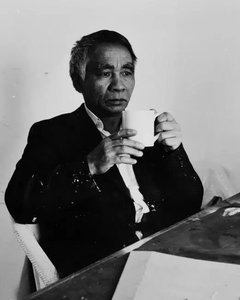
Li Yuan-chia
1929 - 1994 , China
艺术家简介
- Artistic Movement Or Style: Abstract Expressionism; Installations; Photography
- Artists Or Movements Influenced By This Artist: ['Ton Fan Group']
- Artists Who Influenced This Artist: ['Li Chung-sheng']
- Date Of Birth: 1929 Guangxi China
- Date Of Death: 1994
- Full Name: Li Yuan-chia
- Nationality: Chinese
- Notable Artworks:
- Untitled
- Untitled (Diptych)
- Scholar viewing a waterfall
- Place Of Birth: Guangxi China
相关文章
Beyond the Horizon: 10 Landscape Masterpieces for Your Home Decor
Journey through 10 breathtaking landscape paintings by Monet, Van Gogh & more! Explore iconic artworks, artistic techniques & find inspiration for your home decor. Museum-quality reproductions at OriginalUniqueArt.com. Discover all masterpieces on OriginalUniqueArt.com

葛饰北斋:25幅传世名作,浮世绘大师的艺术传奇 (Katsushika Hokusai: 25 Masterpieces, The Art Legacy of the Ukiyo-e Master)
探索葛饰北斋的25幅传世名作!深入了解浮世绘大师的艺术传奇,感受《神奈川冲浪波》等经典作品背后的故事与魅力。OriginalUniqueArt.com提供博物馆级高质量复制品,为您的家居带来日本风情和艺术灵感。立即探索完整系列!

康斯塔布尔大师之作:25幅传世风景画赏析 | OriginalUniqueArt
探索康斯塔布尔的25幅传世杰作!沉浸于英国田园风光,感受浪漫主义绘画大师的光影与色彩。高清油画复制、艺术品购买尽在OriginalUniqueArt.com,为您的家居增添经典之美。立即在线探索完整系列!

Evocations of Place: A Historical Journey Through Landscape Art
Explore the rich history of landscape art with OriginalUniqueArt. Discover renowned artists, movements like Impressionism & Romanticism, and expert guidance for collecting timeless pieces. Find your perfect serene escape today!

浪漫主义画派的十部巨作:定义风景画的艺术传奇
探索浪漫主义风景画的巅峰!本文精选十部经典名作,带您领略莫奈、库尔贝等大师的艺术魅力。感受色彩与光影的诗意,重温自然风光的震撼。OriginalUniqueArt.com为您提供博物馆级别的艺术复制品和个性化家居装饰方案。尽在OriginalUniqueArt.com!

