
 切换至印刷版
 分享
分享 分享
分享
 详情
详情

 下载
下载
 相似作品
相似作品 幻灯片播放
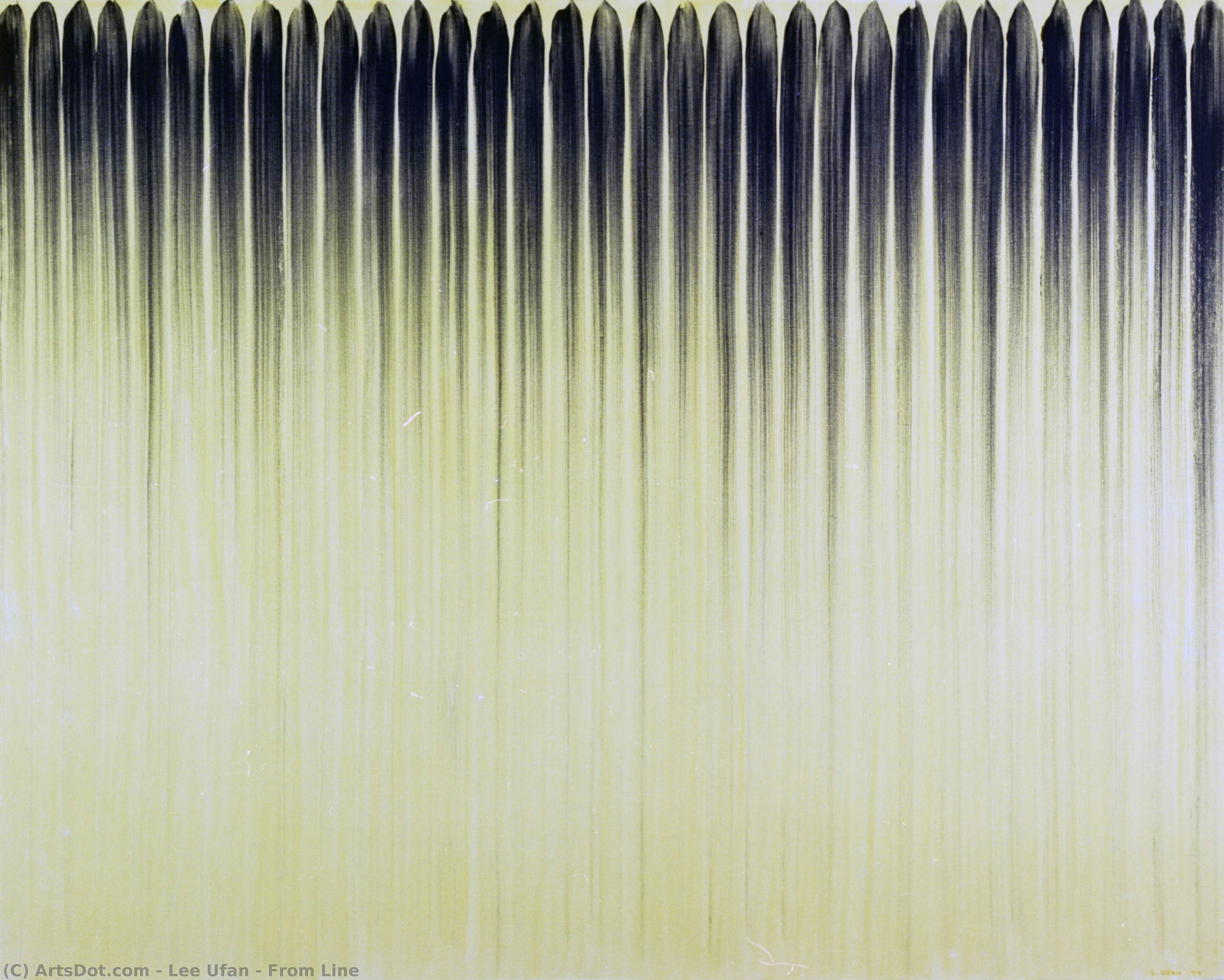
幻灯片播放From Line
 Painting
- Mono-ha
 Contemporary
 227.0 x 181.0 cm
 福岡亞洲美術館
 展开详情
展开详情




































从与原作比例一致的预设尺寸中进行选择。

您可以输入自定义尺寸,以适配特定的画框或空间。如果所选尺寸与原图比例不符,我们将通过裁剪作品或添加手绘元素来扩展画面。数字样稿将在制作开始前发送给您确认。
请注意,屏幕预览无法准确反映实际的裁剪或扩展效果,只有样稿才能真实呈现最终的构图。
虽然我们提供定制尺寸服务,但为了保留原作比例,建议您从预设列表中选择尺寸。
下单后,OriginalUniqueArt.com 团队将通过电子邮件联系客户获取具体要求,并提供效果预览图。


 玻璃选项仅适用于110厘米以下的尺寸。

From Line
复制材质
复制品尺寸
-


最终总价
$ 300
作品详情
The Poetics of Presence: Exploring Lee Ufan’s From Line
In the quiet intersection where Eastern philosophy meets Western minimalism, Lee Ufan’s From Line emerges as a profound meditation on existence and the passage of time. As a central figure of the Mono-ha movement, Lee Ufan does not merely paint; he orchestrates a dialogue between the void and the mark. This particular work serves as a breathtaking example of his ability to transform a canvas into a living, breathing landscape of thought. The composition, characterized by its rhythmic verticality, invites the viewer into a space where the distinction between the painted stroke and the surrounding emptiness begins to dissolve.
The visual journey of From Line is one of mesmerizing movement. At first glance, the eye is drawn to the series of vertical lines that traverse the canvas, creating a sense of depth and dimension that defies the two-dimensional surface. These strokes, reminiscent of traditional Eastern brushwork, possess a weight and texture that suggest the relentless flow of a waterfall or the steady descent of rain through a misty forest. A subtle horizontal line cuts through the center, acting as a horizon of sorts, providing a structural anchor that balances the kinetic energy of the vertical elements. This careful arrangement creates a profound sense of harmony, where every interval and every void plays a vital role in the overall equilibrium of the piece.
Technically, the work is a masterclass in controlled spontaneity. The artist utilizes the relationship between color and space to evoke emotion, using a palette that—while appearing simple—carries immense psychological weight. The interplay of light and shadow within the strokes suggests a physical presence, as if the paint itself is an organic material emerging from the canvas. For the discerning collector or interior designer, this piece offers more than just aesthetic beauty; it provides a focal point of serenity. It is a work that demands a slow gaze, rewarding the observer with a sense of meditative calm and a deeper connection to the concept of ma—the Japanese concept of meaningful emptiness.
Integrating a high-quality reproduction of From Line into a contemporary space allows for the introduction of intellectual depth and sophisticated tranquility. Whether placed in a minimalist gallery setting or as a soulful centerpiece in a modern living room, the painting acts as an anchor of peace. It does not shout for attention but rather commands it through its quiet strength and rhythmic grace. To possess such a work is to invite the philosophy of Lee Ufan into one's daily life, turning a physical environment into a sanctuary of reflection and artistic wonder.
艺术家简介
born in haman-gun, gyeongsangnam-do in 1936, lee ufan was raised by his parents and confucian grandfather. lee studied painting at the college of fine arts at seoul national university for just two months and moved to yokohama, japan in 1956, where he earned a degree in philosophy in 1961. whilst studying philosophy ufan painted in a restrained, traditional japanese style, eschewing the expressive abstraction of the contemporary japanese gutai movement. after graduating from the university in japan, 1961, he threw himself against the south–north unification movement and the military regime. in 1964, lee was arrested and tortured by the korean central intelligence agency (kcia).
lee spent his early working years pursuing careers as an art critic, philosopher, and artist. in japan he became an active participant in the countercultural upheavals surrounding the anpo movement of the 1960s. he came to prominence in the late 1960s as one of the founders and theoretical leaders of the avant garde mono-ha (school of thing) group. mono-ha was related in arte povera movement of the 1960s and japan's first contemporary art movement to gain international recognition. the mono-ha school of thought rejected western notions of representation, choosing to focus on the relationships of materials and perceptions rather than on expression or intervention. the movement's goal was to embrace the world at large and encourage the fluid coexistence of numerous beings, concepts, and experiences. lee u-fan's position in the philosophy department at nihon university in tokyo earned him a distinguished role as the movement's spokesman. in 1973, he was appointed professor of tama art university in tokyo and he stayed there until 2007. yoshio itagaki was one of his students in 1989–1991. he is professor emeritus at tama art university.
in the mid-1970s lee introduced korean five artists whom called later dansaekzo whehwa (monotone painting) school to japan, which offered a fresh approach to abstraction by presenting repetitive gestural marks as bodily records of time’s perpetual passage. in his early painting series, from point and from line (1972–84), lee combines ground mineral pigment with animal-skin glue, characteristic of nihonga painting in which he was trained. each brushstroke is applied slowly and is composed of several layers. where the brush first makes contact with the canvas, the paint is thick, forming a 'ridge' that gradually becomes lighter. rarely does his brush touch the surface more than three times. the artist refers to this as yohaku or the art of emptiness. in the from point works he adopted a similar method in order to produce a fading series of small, discrete, rectangular brushstokes. in 1991 lee began his series of correspondance paintings, which consist of just one or two grey-blue brushstrokes, made of a mixture of oil and crushed stone pigment, applied onto a large white surface. on average it takes lee about a month to finish a painting, on canvases that typically measure about 60 by 90 inches, although they can vary in size from a few inches to 10 feet per side. he completes no more than 25 works a year.
lee's sculptures, presenting dispersed arrangements of stones together with industrial materials like steel plates, rubber sheets, and glass panes, recast the discrete object as a network of relations based on parity between the viewer, materials, and site. in his sculptural series relatum, each work consists of one or more light-colored round stones and dark, rectangular iron plates.

lee ufan
1936 -
艺术家简介
- Artistic Movement Or Style: Minimalism, Mono-ha
- Artists Or Movements Influenced By This Artist:
- Mono-ha
- Dansaekjo Yesul
- Artists Who Influenced This Artist:
- Martin Heidegger
- Maurice Merleau-Ponty
- Date Of Birth: 1936
- Full Name: Lee Ufan
- Nationality: Korean
- Notable Artworks:
- From Point series
- From Line series
- Place Of Birth: Haman-gun, Korea
相关文章

Slate Blue Masterpieces: 10 Iconic Paintings & Timeless Home Decor Ideas
Immerse yourself in the captivating world of slate blue! Explore 10 iconic paintings by Monet, Van Gogh & Renoir. Discover their stories, techniques & find museum-quality art reproductions for your home at .
The Allure of Azure: Exploring the Symbolic & Aesthetic Depths of Blue in Art History
Explore the rich history of blue in art! Discover its symbolism, from ancient pigments to modern masterpieces by Kandinsky & Seurat. Uncover the psychological impact and cultural meanings behind this captivating hue.

The Power of the Line: An Art-Historical Exploration of Minimalist Elegance and Graphic Impact
Embark on a sophisticated journey through the history of line drawing. From classical mastery to modern minimalism, explore how the power of the line shapes emotion and space in fine art. Discover expert insights for collectors and enthusiasts of graphic elegance.

The Power of the Line: Transforming Minimalist Art into Timeless Masterpieces
Explore the profound elegance of minimalist art. Discover how the precision of a single line transforms simple geometry into timeless masterpieces for the discerning collector seeking sophistication and depth in fine art acquisitions.
Minimalist Masterpieces: 10 Artworks for Serene Home Decor | OriginalUniqueArt
Find serenity with 10 minimalist masterpieces! Explore Agnes Martin, Rothko & more. Discover the stories behind iconic abstract art, neutral palettes & calming designs. Museum-quality reproductions at OriginalUniqueArt.com – elevate your home decor today!

