
 效果预览
效果预览
 切换至印刷版
 分享
分享 分享
分享
 详情
详情

 下载
下载
 相似作品
相似作品 X射线
X射线 幻灯片播放
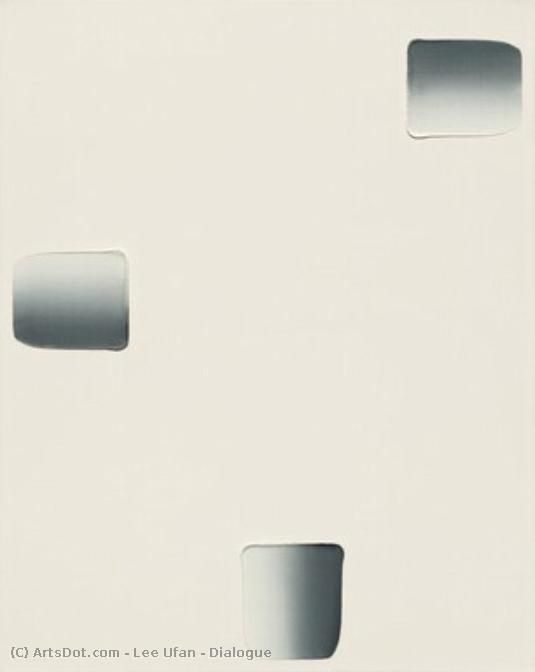
幻灯片播放Dialogue
 2011
2011 162.0 x 130.0 cm
 展开详情
展开详情
购买高分辨率增强版数字图像,其品质远超在线预览。
每一份文件都由我们的内部专家使用先进工具与专业的后期润色技术精心打造。我们确保每一张图像都具备卓越的清晰度、精准的色彩还原度以及细腻的细节表现。
最终文件将在 72 小时内通过电子邮件交付,并针对专业、编辑及印刷用途进行了优化。其品质与顶级设计工作室、出版社和画廊所信赖的标准完全一致。
每份数字图像订单均包含
专业数字图像交付,品质保障
选择 OriginalUniqueArt.com,您获得的不仅仅是一张图像——您收到的是经过专业级增强、精雕细琢的数字艺术作品,并享有满意保证。以下是您的订单中自动包含的所有内容:

邮件快速送达
您的高分辨率数字图像文件将在下单后 72 小时内通过电子邮件发送给您 —— 即可立即使用。

AI 增强型数字文件
您的艺术品经过专业优化,结合先进的 AI 技术与人工修饰,确保呈现极致的细节、清晰度与色彩准确度。

终身免费重发服务
不小心删除了文件或找不到了?没关系——我们将随时为您免费重发。

无需进口费用,始终如一
即刻拥有您的艺术作品,无需支付任何关税、税费或运费——数字下载始终免税。

色彩精准保证
我们通过专业工具与色彩管理技术,确保您的数字图像尽可能真实地还原原作色彩。

60天满意保证
如果您对所购买的数字图像不满意,我们将在60天内为您进行修改或退还100%的款项——无需任何解释。

100% 退款保证
如果不满意?在收到数字文件后的60天内,我们为您提供全额退款——无需任何理由。

批量订单优惠
购买 3 张图片可享 10% 折扣 - 购买 5 张可享 15% 折扣 - 购买 10+ 张可享 20% 折扣。非常适合创意项目、画廊和机构使用。
艺术家简介
born in haman-gun, gyeongsangnam-do in 1936, lee ufan was raised by his parents and confucian grandfather. lee studied painting at the college of fine arts at seoul national university for just two months and moved to yokohama, japan in 1956, where he earned a degree in philosophy in 1961. whilst studying philosophy ufan painted in a restrained, traditional japanese style, eschewing the expressive abstraction of the contemporary japanese gutai movement. after graduating from the university in japan, 1961, he threw himself against the south–north unification movement and the military regime. in 1964, lee was arrested and tortured by the korean central intelligence agency (kcia).
lee spent his early working years pursuing careers as an art critic, philosopher, and artist. in japan he became an active participant in the countercultural upheavals surrounding the anpo movement of the 1960s. he came to prominence in the late 1960s as one of the founders and theoretical leaders of the avant garde mono-ha (school of thing) group. mono-ha was related in arte povera movement of the 1960s and japan's first contemporary art movement to gain international recognition. the mono-ha school of thought rejected western notions of representation, choosing to focus on the relationships of materials and perceptions rather than on expression or intervention. the movement's goal was to embrace the world at large and encourage the fluid coexistence of numerous beings, concepts, and experiences. lee u-fan's position in the philosophy department at nihon university in tokyo earned him a distinguished role as the movement's spokesman. in 1973, he was appointed professor of tama art university in tokyo and he stayed there until 2007. yoshio itagaki was one of his students in 1989–1991. he is professor emeritus at tama art university.
in the mid-1970s lee introduced korean five artists whom called later dansaekzo whehwa (monotone painting) school to japan, which offered a fresh approach to abstraction by presenting repetitive gestural marks as bodily records of time’s perpetual passage. in his early painting series, from point and from line (1972–84), lee combines ground mineral pigment with animal-skin glue, characteristic of nihonga painting in which he was trained. each brushstroke is applied slowly and is composed of several layers. where the brush first makes contact with the canvas, the paint is thick, forming a 'ridge' that gradually becomes lighter. rarely does his brush touch the surface more than three times. the artist refers to this as yohaku or the art of emptiness. in the from point works he adopted a similar method in order to produce a fading series of small, discrete, rectangular brushstokes. in 1991 lee began his series of correspondance paintings, which consist of just one or two grey-blue brushstrokes, made of a mixture of oil and crushed stone pigment, applied onto a large white surface. on average it takes lee about a month to finish a painting, on canvases that typically measure about 60 by 90 inches, although they can vary in size from a few inches to 10 feet per side. he completes no more than 25 works a year.
lee's sculptures, presenting dispersed arrangements of stones together with industrial materials like steel plates, rubber sheets, and glass panes, recast the discrete object as a network of relations based on parity between the viewer, materials, and site. in his sculptural series relatum, each work consists of one or more light-colored round stones and dark, rectangular iron plates.

lee ufan
1936 -
基本信息
- Artistic Movement Or Style: Minimalism, Mono-ha
- Artists Or Movements Influenced By This Artist:
- Mono-ha
- Dansaekjo Yesul
- Artists Who Influenced This Artist:
- Martin Heidegger
- Maurice Merleau-Ponty
- Date Of Birth: 1936
- Full Name: Lee Ufan
- Nationality: Korean
- Notable Artworks:
- From Point series
- From Line series
- Place Of Birth: Haman-gun, Korea

