
 效果预览
效果预览
 购买印刷品
购买印刷品 分享
分享 分享
分享
 详情
详情

 下载
下载
 相似作品
相似作品 X射线
X射线 幻灯片播放
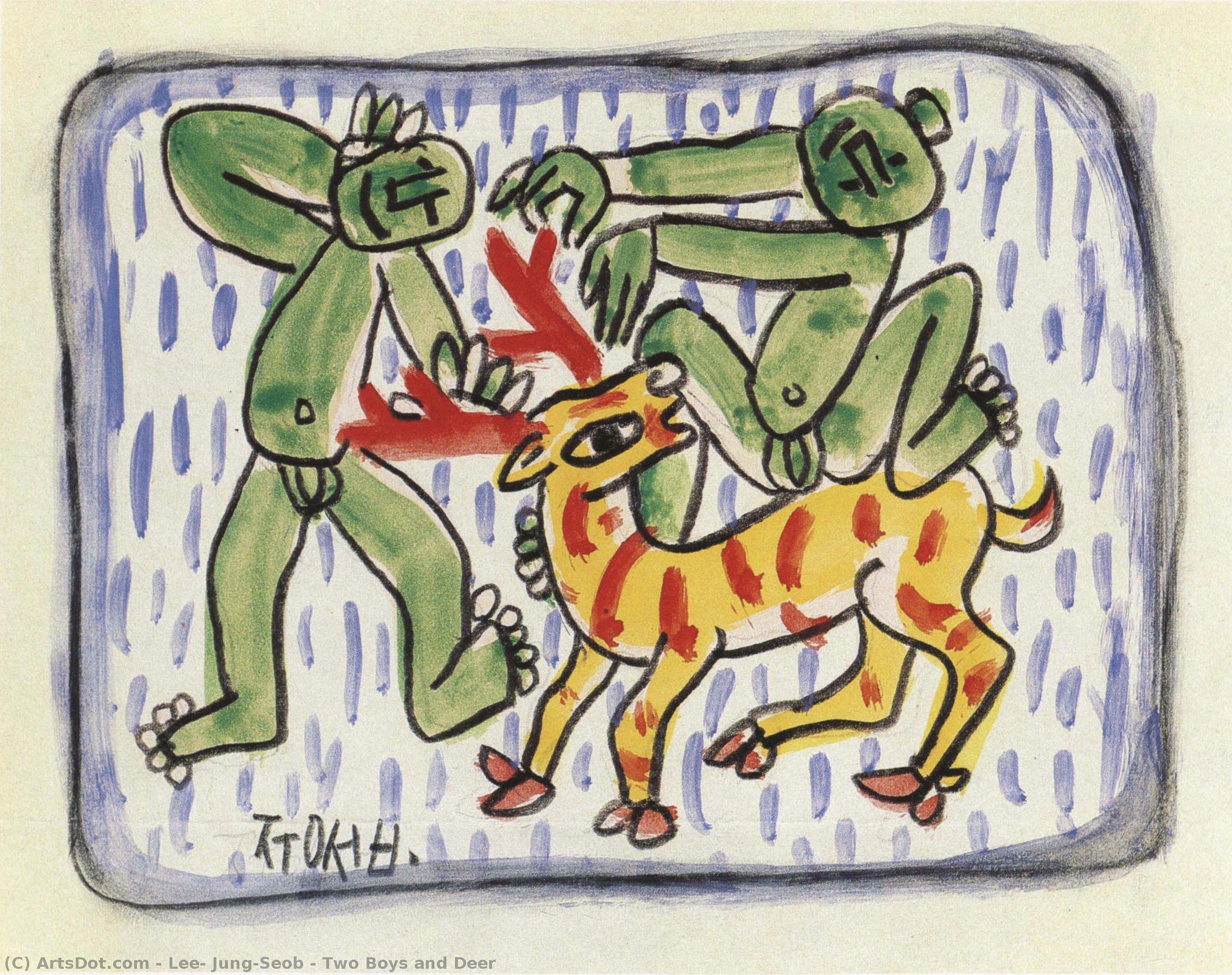
幻灯片播放Two Boys and Deer
 Acrylic On Canvas
- WallArt
- Korean Modernism
 17.0 x 13.0 cm
 韩国国立中央博物馆
 展开详情
展开详情
购买高分辨率增强版数字图像,其品质远超在线预览。
每一份文件都由我们的内部专家使用先进工具与专业的后期润色技术精心打造。我们确保每一张图像都具备卓越的清晰度、精准的色彩还原度以及细腻的细节表现。
最终文件将在 72 小时内通过电子邮件交付,并针对专业、编辑及印刷用途进行了优化。其品质与顶级设计工作室、出版社和画廊所信赖的标准完全一致。
每份数字图像订单均包含
专业数字图像交付,品质保障
选择 OriginalUniqueArt.com,您获得的不仅仅是一张图像——您收到的是经过专业级增强、精雕细琢的数字艺术作品,并享有满意保证。以下是您的订单中自动包含的所有内容:

邮件快速送达
您的高分辨率数字图像文件将在下单后 72 小时内通过电子邮件发送给您 —— 即可立即使用。

AI 增强型数字文件
您的艺术品经过专业优化,结合先进的 AI 技术与人工修饰,确保呈现极致的细节、清晰度与色彩准确度。

终身免费重发服务
不小心删除了文件或找不到了?没关系——我们将随时为您免费重发。

无需进口费用,始终如一
即刻拥有您的艺术作品,无需支付任何关税、税费或运费——数字下载始终免税。

色彩精准保证
我们通过专业工具与色彩管理技术,确保您的数字图像尽可能真实地还原原作色彩。

60天满意保证
如果您对所购买的数字图像不满意,我们将在60天内为您进行修改或退还100%的款项——无需任何解释。

100% 退款保证
如果不满意?在收到数字文件后的60天内,我们为您提供全额退款——无需任何理由。

批量订单优惠
购买 3 张图片可享 10% 折扣 - 购买 5 张可享 15% 折扣 - 购买 10+ 张可享 20% 折扣。非常适合创意项目、画廊和机构使用。
藏品详情
A Moment Frozen in Time: Lee Jung-Seob’s “Two Boys and Deer”
Lee Jung-Seob's "Two Boys and Deer" isn’t merely a painting; it’s a poignant distillation of Korean life, memory, and the quiet dignity of rural existence. Completed in 1953, this watercolor captures a fleeting scene – two young men, likely brothers, engaged in a simple act of tending to a deer near a small stream. Yet, within this seemingly straightforward depiction lies a profound depth of emotion and a subtle commentary on the changing landscape of Korea during a turbulent era. The painting’s power resides not just in its subject matter but also in Lee's masterful use of color and light, creating an atmosphere both serene and subtly melancholic.
The scene unfolds within a meticulously rendered Korean countryside – rolling hills, dense foliage, and the reflective surface of a stream. The figures are dressed in muted greens and browns, blending seamlessly with their surroundings, suggesting a deep connection to the land. Lee’s technique is remarkably delicate; each brushstroke seems to capture the ephemeral quality of light filtering through the trees. Notice how he employs wet-on-wet watercolor techniques, allowing colors to bleed and blend naturally, creating an impressionistic effect that softens the edges and imbues the scene with a sense of hazy nostalgia. The deer itself, rendered with surprising detail despite its secondary role, embodies a quiet grace and vulnerability – a symbol often associated with innocence and connection to nature in Korean art.
The Artist’s Biography: A Life Shaped by Conflict
Lee Jung-Seob (1916-1956) was a pivotal figure in the development of Korean modernism, tragically cut short by his untimely death. Born in Pyeongannamdo during Japanese rule, he witnessed firsthand the struggles for independence and endured the devastation of the Korean War. His early life, marked by privilege and artistic training, abruptly shifted with the war’s arrival, forcing him to abandon his family home and relocate to Jeju Island. This displacement profoundly impacted his work, imbuing it with a sense of loss and longing – themes that resonate powerfully in “Two Boys and Deer.” Lee's artistic journey was fueled by a desire to capture the essence of Korean life, often focusing on rural scenes and everyday subjects, reflecting a deep respect for tradition and a yearning for a simpler existence.
His artistic influences were diverse, drawing from both traditional Korean painting styles and Western modernism. He studied at Teikoku Art School in Japan, where he experimented with Fauvist techniques before returning to Korea and developing his own distinctive style characterized by bold colors, expressive brushwork, and a focus on capturing the emotional resonance of his subjects. Lee’s work is often considered part of the “Korean School” movement, which sought to establish a uniquely Korean artistic identity in the aftermath of Japanese colonialism.
Symbolism and Emotional Resonance
Beyond its surface depiction, "Two Boys and Deer" carries layers of symbolic meaning. The deer itself represents purity, gentleness, and connection to nature – values deeply ingrained in Korean culture. The two boys, seemingly engaged in a quiet ritual, could symbolize the continuity of tradition or perhaps the anxieties surrounding the future as Korea navigated a period of immense social and political upheaval. Some art historians interpret their interaction as a subtle commentary on the changing roles of men within Korean society during this era.
The painting’s overall mood is one of quiet contemplation, tinged with melancholy. The muted colors, soft lighting, and understated details create an atmosphere of wistful remembrance – a feeling that echoes the sense of loss experienced by many Koreans following the war. Lee Jung-Seob masterfully uses these elements to evoke a powerful emotional response in the viewer, inviting us to reflect on themes of memory, identity, and the enduring beauty of the Korean landscape.
A Legacy Preserved: Reproductions and Artistic Significance
Today, “Two Boys and Deer” is held within the National Museum of Korea in Seoul, a testament to Lee Jung-Seob’s artistic legacy. High-quality reproductions are available, allowing art lovers worldwide to experience the beauty and emotional depth of this remarkable painting. When selecting a reproduction, consider the archival quality of the materials used – ensuring that the colors remain vibrant and true over time. This piece offers not only aesthetic pleasure but also a valuable window into Korean history and culture, reminding us of the resilience and enduring spirit of its people.
艺术家简介
韩国油画大师
李仲燮,这位卓越的韩国艺术家,凭借其摄人心魄的油画作品,在艺术界留下了不可磨灭的印记。1916年出生于韩国平安南道,李仲燮的艺术生涯充满了创新精神,并与他的文化传承有着深厚的情感纽带。艺术贡献
李仲燮最为人所熟知的是他的标志性杰作《白牛》,这件作品见证了他对油画颜料精湛的驾驭能力。这部传世之作与其他作品一同,展现了他将韩国传统元素与现代技法完美融合的独特风格。- 代表作品:
- 作品收藏博物馆:
- 韩国国立中央博物馆(首尔,韩国)
传承与影响
1956年李仲燮在首尔的逝世,虽然标志着一个时代的终结,但也为后世韩国艺术家铺平了道路。他的艺术影响力在许多当代韩国画家的作品中依然清晰可见。探索更多李仲燮的艺术世界: https://OriginalUniqueArt.com/@/lee-jung-seob | 在 OriginalUniqueArt 发现他丰富的画作收藏。了解其他著名艺术家: /zh/art/list/ | 在 OriginalUniqueArt 浏览伟大艺术家的名录。
李仲燮
1916 - 1956 , 韩国
基本信息
- Artistic Movement Or Style: 现代韩国艺术
- Artists Or Movements Influenced By This Artist: ['野兽派']
- Artists Who Influenced This Artist: ['高句丽墓壁画']
- Date Of Birth: 1916年4月10日
- Date Of Death: 1956年9月6日
- Full Name: 李仲燮
- Nationality: 韩国
- Notable Artworks:
- 白牛
- 家人与鸽子
- 男孩、鱼与蟹
- Place Of Birth: 韩国平安南道

