

 实景预览
实景预览
 发送
发送 分享
分享
 详情
详情 指南
指南

 下载图片
下载图片
 相似作品
相似作品 X射线
X射线 幻灯片播放
幻灯片播放 统计数据
统计数据Square-shaped White Porcelain


 阅读全文
阅读全文
艺术微喷/版画
博物馆级艺术微喷或帆布版画,制作高效,并提供多种饰面选择。 ( 订购此收藏品的纯手工复刻画作 切换至数字图像销售渠道)




































您可以从与原作比例一致的预设尺寸中进行选择。

您可以输入自定义尺寸,以适配特定的画框或空间。如果您选择的尺寸与原图比例不符,我们将对作品进行裁剪,或通过镜像填充/纯色填充边缘的方式来扩展图像。在开始制作之前,我们会向您发送一份数字效果图供您确认。
请注意,屏幕上的预览并不能反映实际的裁剪或扩展效果。只有效果图才能准确展示最终的构图。
虽然我们提供定制尺寸,但为了保持原图比例,我们建议您从预设列表中选择尺寸。


 玻璃选项仅适用于110厘米以下的尺寸。

Square-shaped White Porcelain
艺术微喷/版画
复刻品尺寸说明
-


总计金额
$ 80
艺术家简介
A Life Poised Between Worlds
Lee Bang-ja, a name resonating with the delicate balance of cultural and political tides, was born Princess Masako of Nashimoto in Tokyo in 1901. Her life unfolded as an extraordinary tapestry woven with threads of Japanese royalty, Korean history, and a profound dedication to the art of porcelain. To understand Lee Bang-ja is to glimpse a pivotal moment in East Asian history—a period marked by shifting empires, complex allegiances, and the enduring power of artistic expression. From her privileged upbringing within the Japanese Imperial Family, she received an education befitting her station, yet destiny charted a course that would lead her far beyond the confines of courtly life. In 1920, a significant turning point arrived with her marriage to Lee Eun, initiating her journey towards Korea and a future inextricably linked to its fate. This union was not merely personal; it foreshadowed an even more momentous connection – her marriage in 1926 to Crown Prince Euimin, the last crown prince of the Korean Empire. As she became Crown Princess of Korea, Lee Bang-ja found herself at the very heart of a nation navigating turbulent times under Japanese colonial rule. Her position was inherently complex, embodying both privilege and constraint within a rapidly changing political landscape.Porcelain as a Sanctuary
Amidst the weight of her royal duties and the historical currents swirling around her, Lee Bang-ja discovered solace and purpose in the art of ceramics. She devoted herself to porcelain production, not merely as a pastime but as a deeply considered artistic pursuit. Her work is characterized by an elegant simplicity, a quiet refinement that speaks volumes through subtle forms and understated glazes. It’s evident she was profoundly influenced by traditional Chinese artistic principles, particularly those governing monochrome palettes. White porcelain became her favored medium, allowing her to explore the nuances of form and texture with remarkable sensitivity. Pieces like ‘Square-shaped White Porcelain’ exemplify this aesthetic—a vase that isn't simply an object but a meditation on space, light, and the enduring beauty of natural forms. The delicate landscape motifs subtly incorporated into her work further reveal this connection to Chinese artistry, hinting at a broader cultural dialogue. Examining details from her 'Blue-and-White Porcelain Bottle', one can appreciate the meticulous hand-painting and refined understanding of porcelain decoration that defined her style. These weren’t merely decorative flourishes; they were expressions of a cultivated sensibility honed through dedicated practice.A Unique Artistic Voice
While formal documentation of Lee Bang-ja's artistic training remains scarce, the quality of her work speaks to an innate talent nurtured by diligent study and unwavering dedication. She didn’t seek ostentation or elaborate embellishment; instead, she carved out a unique niche within Korean art by blending her royal heritage with traditional Chinese ceramic forms. Her pieces possess a quiet dignity, an understated beauty that sets them apart from more flamboyant styles. This is not to say her work lacks technical skill—quite the contrary. The precision of her brushwork, the flawless execution of her glazes, and the harmonious proportions of her vessels demonstrate a mastery of the medium. However, it’s the emotional resonance of her art – its sense of serenity and contemplative grace – that truly distinguishes it. ‘Square-shaped White Porcelain’ and 'Blue-and-White Porcelain Bottle' stand as testaments to this skill, showcasing not only technical proficiency but also a profound artistic vision. Her work isn’t about grand statements; it’s about the subtle power of beauty to transcend circumstance and offer moments of quiet reflection.Legacy of Transition and Cultural Exchange
Lee Bang-ja's life is inextricably linked to a period of profound transformation in Korean history—the twilight years of the Korean Empire and the subsequent era of Japanese colonial rule. She became, in essence, a symbol of this transition, embodying both the fading grandeur of a bygone era and the complexities of cultural exchange under duress. As an artist, she contributed significantly to the preservation and continuation of traditional Chinese ceramic techniques within the Korean artistic landscape, ensuring that these skills weren’t lost amidst political upheaval. Her dual identity—a princess from both Japan and Korea—offers a unique perspective on the intricate web of relationships between the two nations during the early 20th century. While her art may not be widely celebrated, it represents an important intersection of royalty, artistry, and historical circumstance. It is a reminder that even within the confines of political power, individual expression can flourish, offering glimpses of beauty and resilience in times of change. Her story continues to resonate today, prompting reflection on themes of identity, cultural heritage, and the enduring power of art to bridge divides.
Lee Bang-ja
1901 - 1989 , Japan
快速概览
- Artistic Movement Or Style: Traditional porcelain
- Artists Who Influenced This Artist: ['Chinese ceramic artists']
- Date Of Birth: 1901
- Date Of Death: 1989
- Full Name: Lee Bang-ja
- Nationality: Japanese, Korean
- Notable Artworks:
- Square-shaped White Porcelain
- Blue-and-White Porcelain Bottle
- Place Of Birth: Tokyo, Japan
相关文章

Frederick Richard Lee: Capturing Victorian Domestic Life on Canvas
Explore the captivating Victorian genre paintings of Frederick Richard Lee. Discover his life, style, influences & legacy. Expert insights for collectors and art enthusiasts at OriginalUniqueArt.
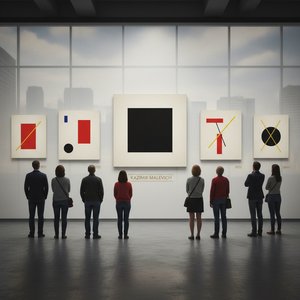
Kazimir Malevich: Pioneering Suprematism & the Quest for Non-Objective Art
Explore the revolutionary art of Kazimir Malevich & his groundbreaking Suprematism movement. Discover the origins, core principles, and lasting impact of this pivotal force in modern abstract painting.
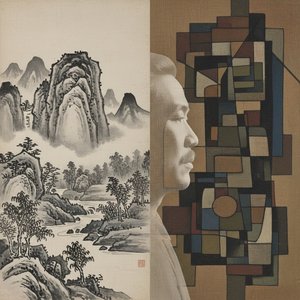
Yi Eungro: Bridging East & West in the Landscape of Korean Modernism
Explore the captivating world of Yi Eungro (Lee Ungno), a pivotal figure in Korean modernism. Discover his unique fusion of Eastern and Western artistic traditions, abstract masterpieces, and lasting legacy. A must-read for discerning art collectors.
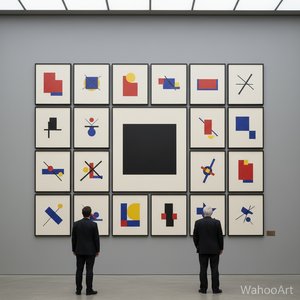
卡济米尔·马列维奇:25幅颠覆艺术认知的杰作 | OriginalUniqueArt
探索卡济米尔·马列维奇25幅至上主义杰作!深入了解抽象艺术的起源、黑色正方形背后的故事,以及如何用现代艺术提升您的家居装饰。OriginalUniqueArt.com提供博物馆级艺术复制品,点亮您的空间。立即在线探索完整系列!
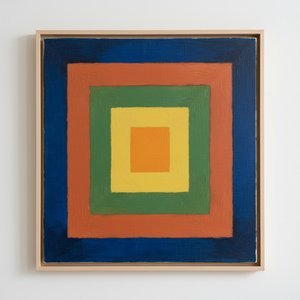
Josef Albers: A Homage to Color Interaction & the Foundations of Visual Perception
Explore Josef Albers's groundbreaking color theory & the 'Homage to the Square' series. Discover how his work revolutionized visual perception and influenced modern art movements like Minimalism & Op Art. Learn about his Bauhaus roots & lasting legacy.