- 首页

- 数字图像作品
- latifa echakhch
- Skin

 Preview
 购买版画
购买版画 分享
分享 分享
分享
 详情
详情

 下载
下载
 相似作品
相似作品 X射线
X射线 幻灯片播放
幻灯片播放Skin


 展开详情
展开详情
购买高分辨率增强版数字图像,其品质远超在线预览。
每一份文件都由我们的内部专家使用先进工具与专业的后期润色技术精心打造。我们确保每一张图像都具备卓越的清晰度、精准的色彩还原度以及细腻的细节表现。
最终文件将在 72 小时内通过电子邮件交付,并针对专业、编辑及印刷用途进行了优化。其品质与顶级设计工作室、出版社和画廊所信赖的标准完全一致。
每份数字图像订单均包含
专业数字图像交付,品质保障
选择 OriginalUniqueArt.com,您获得的不仅仅是一张图像——您收到的是经过专业级增强、精雕细琢的数字艺术作品,并享有满意保证。以下是您的订单中自动包含的所有内容:

邮件快速送达
您的高分辨率数字图像文件将在下单后 72 小时内通过电子邮件发送给您 —— 即可立即使用。

AI 增强型数字文件
您的艺术品经过专业优化,结合先进的 AI 技术与人工修饰,确保呈现极致的细节、清晰度与色彩准确度。

终身免费重发服务
不小心删除了文件或找不到了?没关系——我们将随时为您免费重发。

无需进口费用,始终如一
即刻拥有您的艺术作品,无需支付任何关税、税费或运费——数字下载始终免税。

色彩精准保证
我们通过专业工具与色彩管理技术,确保您的数字图像尽可能真实地还原原作色彩。

60天满意保证
如果您对所购买的数字图像不满意,我们将在60天内为您进行修改或退还100%的款项——无需任何解释。

100% 退款保证
如果不满意?在收到数字文件后的60天内,我们为您提供全额退款——无需任何理由。

批量订单优惠
购买 3 张图片可享 10% 折扣 - 购买 5 张可享 15% 折扣 - 购买 10+ 张可享 20% 折扣。非常适合创意项目、画廊和机构使用。
艺术家简介
A Cartography of Memory: The World Within Latifa Echakhch’s Installations
Latifa Echakhch, born in 1974 in El Khnassa, Morocco, is an artist whose work resonates with a quiet power—a power derived not from grand gestures but from the meticulous accumulation of detail and the evocative resonance of everyday objects. Her journey as an artist has been one of navigating cultural boundaries, personal histories, and the complex interplay between public space and individual experience. Echakhch’s installations are less about presenting definitive statements than they are about creating environments that invite contemplation, prompting viewers to question their own perceptions of belonging, identity, and the weight of collective memory. Growing up in Morocco before relocating to France for her studies, she developed a keen sensitivity to the subtle shifts in cultural context and the ways in which objects can carry layers of meaning beyond their immediate function. This early exposure informs much of her practice, where seemingly mundane items—pharmaceutical bottles, rugs, furniture—become vessels for exploring broader socio-political narratives.From Personal Narrative to Public Space
Echakhch’s artistic development has been marked by a gradual expansion from intensely personal explorations to increasingly ambitious interventions in public space. Early works often focused on the domestic sphere, utilizing found objects and materials to reconstruct fragmented memories of her childhood home and Moroccan culture. These pieces weren't nostalgic recreations but rather deconstructed environments—spaces that hinted at absence, displacement, and the challenges of translation. She began to explore themes of migration and exile, not through direct representation, but by focusing on the traces left behind: the remnants of lives lived, the objects that bear witness to journeys undertaken. This shift towards public space allowed Echakhch to engage with a wider audience and address more overtly political concerns. Her installations often occupy architectural spaces—abandoned buildings, museums, or even city squares—transforming them into sites of collective reflection. A key element in her work is the deliberate use of scale; she frequently creates environments that are both immersive and disorienting, challenging viewers’ sense of spatial orientation and prompting a heightened awareness of their own bodies within the artwork.The Language of Absence and the Politics of Display
A defining characteristic of Echakhch's work is her masterful use of absence as a powerful artistic tool. She doesn’t necessarily *show* trauma or conflict, but rather creates spaces that evoke its presence—spaces filled with echoes of loss, displacement, and the fragility of identity. This is often achieved through the strategic removal or fragmentation of objects, leaving behind voids that speak volumes about what has been lost or suppressed. Her installations frequently incorporate elements of Islamic art and architecture, not as a celebration of cultural heritage but as a means of questioning its representation within Western contexts. She challenges conventional notions of authenticity and originality by appropriating and recontextualizing traditional motifs, highlighting the complexities of cultural exchange and the politics of display. The use of materials like rugs, for example, is particularly significant; they are not merely decorative elements but rather symbols of domesticity, tradition, and the often-unacknowledged labor that goes into their creation. Echakhch’s work also engages with the history of colonialism, subtly addressing its lasting impact on both Morocco and France.Recognition and Lasting Impact
Latifa Echakhch has received widespread critical acclaim for her innovative installations and thought-provoking explorations of socio-political themes. Her participation in the Venice Biennale in 2013 brought her work to an international audience, solidifying her reputation as a leading contemporary artist. That same year, she was awarded the prestigious Marcel Duchamp Prize, further recognizing her significant contribution to the field of contemporary art.- Her installations have been exhibited in major museums and galleries around the world
- She has received numerous awards and fellowships for her work
- Echakhch’s work is held in prominent public and private collections
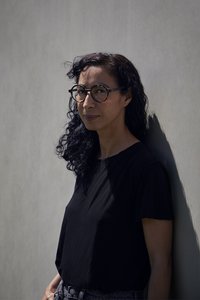
latifa echakhch
1974 - , Morocco
基本信息
- Artistic Movement Or Style: Contemporary installation art
- Date Of Birth: 1974
- Full Name: Latifa Echakhch
- Nationality: Moroccan-French
- Place Of Birth: El Khnassa, Morocco

