

 实景预览
实景预览
 分享
分享 分享
分享
 详情
详情 指南
指南

 下载作品
下载作品
 相似作品
相似作品 X射线
X射线 幻灯片播放
幻灯片播放 Q&A
Q&A 统计数据
统计数据Composition (Cross and Circle)\n\nComposition (Cross and Circle)
 Acrylic On Canvas
- WallArt
- Constructivism
 1923
1923 7.0 x 11.0 cm
 波士顿美术馆
 展开全文
展开全文
艺术微喷/版画
博物馆级艺术微喷或帆布版画,制作高效,并提供多种饰面选择。 ( 订购纯手工绘制画作 切换至数字图像销售渠道)




P118B ¥10

P118H ¥10

P118W ¥10

P438Z ¥10

P508JH ¥12

P508YH ¥12

P805H ¥10

P805Z ¥10

P919BZ ¥10

P919G ¥10

P919XJ ¥10

P959ZH ¥10

P968JZ ¥12

W106C ¥8

W218G ¥10

W218JH ¥8

W218Y ¥10

W307PJ ¥10

W316G ¥10

W316PJ ¥8

W316Y ¥10

W398PJ ¥8

W4111J ¥10

W500HY ¥15

W500JH ¥15

W692G ¥12

W849H ¥8

W940BG ¥15

W953PJ ¥8




您可以从与原作比例一致的预设尺寸中进行选择。

请输入您所需的宽度和高度,以适配您的画框或墙面。由于印刷品只能进行裁剪,无法超出原图尺寸,因此若比例不一致,画面的一部分将会被裁切。在正式印刷之前,我们会为您发送一份数字效果图供您确认。本页面显示的图片并非最终裁剪后的效果——只有效果图才能展示真实的裁剪情况。


 玻璃选项仅适用于110厘米以下的尺寸。

Composition (Cross and Circle)\n\nComposition (Cross and Circle)
艺术微喷/版画
复刻品尺寸
-


最终结算价
¥ 537
Composition (Cross and Circle): A Pioneer’s Vision of Geometric Abstraction
László Moholy-Nagy's "Composition (Cross and Circle)" stands as a cornerstone of Constructivism, embodying the movement’s radical embrace of industrial materials and geometric abstraction. Created in 1923 during his pivotal time at the Bauhaus school in Weimar, Germany, this deceptively simple painting—measuring just 7 x 11 cm—commands considerable artistic significance despite its diminutive size. It resides within the Museum of Fine Arts in Boston, a testament to its enduring appeal and scholarly recognition.- Style: Constructivism – Rejecting Impressionism’s focus on subjective perception, Constructivism championed objectivity and rationality, prioritizing geometric forms—primarily intersecting lines and circles—to represent reality.
- Technique: Executed in black ink on white paper, Moholy-Nagy utilized a precise linework technique to delineate the cross and circle shapes. The stark contrast between black and white amplifies the visual impact, emphasizing the purity of form and minimizing any illusionistic depth.
- Historical Context: Bauhaus emerged as an avant-garde architectural school founded in 1919 with a mission to fuse art, craft, and technology. Moholy-Nagy’s involvement reflected this broader ambition—to reimagine the role of artists within society by exploring new mediums and methodologies.
- Influence: Moholy-Nagy drew inspiration from Suprematism, pioneered by Kazimir Malevich, which similarly prioritized geometric abstraction as a pathway to spiritual enlightenment.
- Beyond Aesthetics: The painting’s impact extends beyond its visual qualities. It represents a crucial step in the evolution of art toward embracing technological advancements and questioning traditional artistic conventions.
常见问题与解答
"Composition (Cross and Circle)\n\nComposition (Cross and Circle)" 的艺术风格与其创作时代有何关联?
拉斯洛·莫霍利-纳吉 的《Composition (Cross and Circle)\n\nComposition (Cross and Circle)》 属于 Constructivism 流派,创作于其作者的 现代主义 时期。
我可以在全屏幻灯片模式下观看“Composition (Cross and Circle)\n\nComposition (Cross and Circle)”吗?
您可以在作品的幻灯片展示页面上观看“Composition (Cross and Circle)\n\nComposition (Cross and Circle)”的幻灯片展示。
原件"Composition (Cross and Circle)\n\nComposition (Cross and Circle)"的尺寸是多少?
"Composition (Cross and Circle)\n\nComposition (Cross and Circle)" 原作尺寸为 7 x 11 cm。在选择复制品尺寸时,参考原作尺寸会非常有帮助。
艺术家简介
拉斯洛·莫霍利-纳吉:现代艺术与包豪斯的先驱
- 出生:匈牙利,巴奇-卡亚拉 (1895年)
- 逝世:1946年
拉斯洛·莫霍利-纳吉(László Moholy-Nagy)是一位具有深远影响力的匈牙利画家、摄影师、雕塑家及设计师。他最为人所熟知的是对包豪斯学校的卓越贡献,以及他在构成主义、字体设计、摄影和动力艺术领域的开创性探索。他的艺术哲学核心在于将技术与工业融入艺术之中,倡导一种拥抱现代世界的全新创造力视野。
早年生活与艺术启蒙
- 早年岁月与家族:他出生于匈牙利巴奇博罗德的一个犹太家庭,原名拉斯洛·魏斯(László Weisz),后来改用了莫霍利-纳吉这个姓氏。他的表亲是享誉世界的指挥家乔治·索尔蒂爵士(Sir Georg Solti)。
- 教育与战争经历:他最初在布达佩斯学习法律,随后参加了第一次世界大战,并在战争中身受重伤。这段时期,通过《Jelenkor》等期刊以及围绕拉约什·卡萨克(Lajos Kassák)创办的《Ma》杂志的“行动派”圈子,他开始接触到前卫艺术运动。
- 早期艺术训练:退伍后,他师从匈牙利野兽派艺术家罗伯特·贝雷尼(Róbert Berény),展现出对现代艺术趋势的早期兴趣。此外,他也曾短暂地支持过匈牙利苏维埃共和国。
- 核心影响:莫霍利-纳吉深受构成主义和至上主义的影响,这些运动强调几何抽象与工业材料的使用,其痕迹在他后期的作品中清晰可见。
包豪斯岁月与“新视觉”
- 加入包豪斯:1923年,莫霍显纳吉加入了德国魏玛的包豪斯学校,最初与约瑟夫·阿尔伯斯(Josef Albers)共同教授基础课程,并最终取代约翰内斯·伊顿(Johannes Itten)担任金属工作室的主管。
- 转向包豪斯的新方向:他的到来标志着包豪斯从表现主义向更具构成主义色彩和设计导向风格的转变,这与学校最初的宗旨高度契合。
- “新视觉”(Neues Sehen):莫霍利-纳吉最著名的成就之一是提出了“新视觉”这一概念。他主张利用相机揭示人类肉眼无法察觉的现实层面,这一理念成为了他摄影与艺术实验的基石。
- 光致影(Photograms):他开创了光致影技术——通过将物体直接放置在感光纸上而非使用相机来成像——展示了摄影领域极具创新性的方法。
- 材料与技术的实验:莫霍利-纳吉在雕塑和设计中大胆运用金属、有机玻璃和电光源等工业材料,体现了他对艺术与技术融合的坚定信念。
重大成就与创新突破
- 《电舞台的光学装置》(Light-Space Modulator):这部完成于1930年的动力雕塑作品,利用运动部件和投射光线在周围表面创造出动态图案,被视为动力艺术和光影艺术的先驱。
- 摄影与电影:他的摄影作品深入探索了抽象、纹理与运动,经常运用蒙太奇和实验性光影等非传统技法。同时,他也涉足了电影创作领域。
- 教学传承:作为包豪斯的教育者,以及后来在芝加哥创立的新包豪斯(New Bauhaus)的导师,莫霍利-纳吉深刻影响了几代艺术家与设计师。
- 舞台设计与广告:除了纯艺术实践,他还为戏剧制作设计布景并创作广告活动,这种多才多艺完美诠释了他的设计哲学。
历史地位与深远意义
- 现代艺术的先驱:拉斯洛·莫霍利-纳吉是20世纪现代艺术的关键人物,他成功地在绘画、雕塑、摄影与工业设计之间架起了一座桥梁。
- 对包豪斯设计的贡献:他对包豪斯学校的贡献对于塑造其课程体系和美学风格至关重要,并对全球的设计教育产生了持久的影响。
- 技术集成的倡导者:他强调将技术融入艺术的观点,预示了当代艺术实践中的许多发展趋势。
- “新视觉”的遗产:他的“新视觉”概念至今仍在激励着艺术家和摄影师通过创新技法去探索感知与表现的可能性。

拉斯洛·莫霍利-纳吉
1895 - 1946 , 匈牙利
艺术家简介
- Artistic Movement Or Style: 构成主义, 包豪斯
- Artists Or Movements Influenced By This Artist:
- 玛丽安·勃兰特
- 乔治·凯佩斯
- 安多尔·魏宁格
- Artists Who Influenced This Artist: ['罗伯特·贝雷尼']
- Date Of Birth: 1895
- Date Of Death: 1946
- Full Name: 拉斯洛·莫霍利-纳吉
- Nationality: 匈牙利
- Notable Artworks:
- 小构图
- 花
- 群众心理病态
- 无题
- 风暴
- 光影摄影法
- Place Of Birth: 匈牙利,巴奇-卡亚拉
相关文章

Beyond Form & Color: Geometric Abstraction's Evolution in 20th/21st Century Art
Explore the evolution of geometric abstraction from Cubism to contemporary art. Discover key artists like Malevich & Mondrian, investment insights, and expert collecting advice at OriginalUniqueArt.

Neo-Abstract Art: The High-Impact Evolution of Modern Visual Energy and Geometric Sophistication
Discover the power of Neo-Abstract art. Explore how bold geometric forms and high-impact visual energy are redefining modern design. Learn to curate sophisticated, high-energy spaces with the latest trends in contemporary abstraction and structural color.

几何抽象艺术十大杰作:定义现代家居装饰的经典之作
探索几何抽象艺术的十大杰作!康定斯基、蒙德里安等大师作品,色彩构成与非具象之美。OriginalUniqueArt.com提供博物馆级艺术复制品,为您的家居带来现代艺术灵感。立即在线探索完整系列!
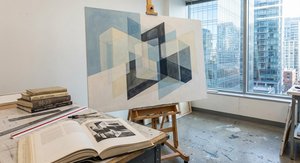
Beyond Form & Color: Geometric Abstraction's Enduring Legacy in Art History
Explore the captivating world of geometric abstraction! Discover its origins, key artists like Malevich & Mondrian, and why this movement remains highly valued by art collectors today. Expert insights at OriginalUniqueArt.

Kandinsky's Masterpieces: 25 Paintings That Define Abstract Art | OriginalUniqueArt
Journey through Wassily Kandinsky's 25 most iconic abstract paintings. Explore his revolutionary use of color, form & spiritual expressionism. Find museum-quality Kandinsky reproductions and elevate your home decor with OriginalUniqueArt.com. Discover all masterpieces on OriginalUniqueArt.com!