- 首页

- 油画复制品
- Lasar Segall
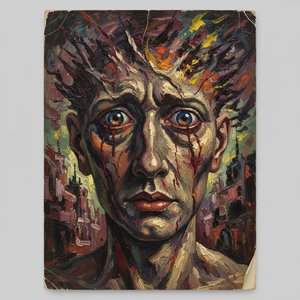
- Lucy with Flower

 Preview
 购买版画
购买版画 分享
分享 分享
分享
 详情
详情

 下载
下载
 相似作品
相似作品 X射线
X射线 幻灯片播放
幻灯片播放Lucy with Flower
 Expressionism
 1942
1942 56.0 x 47.0 cm
 展开详情
展开详情




































从与原作比例一致的预设尺寸中进行选择。

您可以输入自定义尺寸,以适配特定的画框或空间。如果所选尺寸与原图比例不符,我们将通过裁剪作品或添加手绘元素来扩展画面。数字样稿将在制作开始前发送给您确认。
请注意,屏幕预览无法准确反映实际的裁剪或扩展效果,只有样稿才能真实呈现最终的构图。
虽然我们提供定制尺寸服务,但为了保留原作比例,建议您从预设列表中选择尺寸。
下单后,OriginalUniqueArt.com 团队将通过电子邮件联系客户获取具体要求,并提供效果预览图。


 玻璃选项仅适用于110厘米以下的尺寸。

Lucy with Flower
复制材质
复制品尺寸
-


最终总价
-
艺术家简介
A Life Forged in Displacement: The Journey of Lasar Segall
Lasar Segall’s life was a testament to the power of art born from displacement and suffering, a narrative etched onto canvas with raw emotion and innovative technique. Born on July 21, 1891, in Vilnius, Lithuania—then part of the Russian Empire—Segall inherited a profound connection to his Jewish heritage through his father, a Torah scribe. This early immersion in tradition would become a recurring undercurrent throughout his artistic explorations, even as he navigated a world increasingly defined by upheaval and change. His formative years were steeped in the anxieties of a society grappling with political unrest and religious persecution, themes that would later dominate his work. The seeds of an artist acutely sensitive to human vulnerability were sown early, nurtured by a childhood shadowed by uncertainty.From Berlin to Brazil: A Blossoming Artistic Voice
At fifteen, Segall embarked on a journey that would irrevocably shape his artistic trajectory, moving to Berlin in 1906 to study at the Königliche Akademie der Künste. This immersion into the vibrant German art scene proved pivotal, exposing him to new ideas and techniques while simultaneously solidifying his commitment to self-expression. He continued his studies in Dresden, becoming a “Meisterschüler” at the Kunstakademie, where he began developing a distinctive style characterized by troubled figures inhabiting claustrophobic spaces, their features often exaggerated to convey profound emotional distress. These early works were not merely representations of form; they were visceral expressions of alienation and suffering, influenced by African tribal art and foreshadowing the Expressionist movement that would soon claim him as one of its own. Segall’s involvement with the Dresden Secession Gruppe in 1919, alongside artists like Otto Dix and Conrad Felixmüller, marked a significant step toward artistic independence and a rejection of conventional norms. However, the turbulence of post-war Europe fueled his desire for a new beginning. In 1923, he made the momentous decision to relocate to São Paulo, Brazil, joining siblings who had already established themselves in the country. This move proved transformative, not only offering him refuge but also exposing him to a culture brimming with vibrant colors, diverse influences, and a unique energy that would infuse his art with new life.Brazilian Rhythms and Modernist Visions
Brazil became more than just a haven for Segall; it was a catalyst for artistic reinvention. He quickly embraced the country’s multifaceted identity, drawing inspiration from its bustling cities, lush landscapes, and diverse population. The red-light districts of Rio de Janeiro, the lives of plantation workers, and the vibrant energy of the favelas all found their way onto his canvases. His participation in the pivotal Semana de Arte Moderna (Modern Art Week) in 1922 solidified his position as a leading figure in the Brazilian modernist movement, challenging traditional artistic conventions and paving the way for a new era of creative expression. While retaining elements of Expressionism, Segall’s style evolved towards a more Cubist-influenced approach, reflecting the dynamic forms and bold colors of Brazilian life. He became a Brazilian citizen, fully immersing himself in the cultural landscape while continuing to explore universal themes of human suffering, displacement, and identity.A Legacy of Empathy and Social Commentary
The mature phase of Segall’s career was marked by a deepening exploration of portraiture, landscapes imbued with social commentary, and a continued commitment to portraying the marginalized and oppressed. His portraits, such as “Portrait of Lucy” (1937) and “Lucy with Flower” (1942), are particularly poignant, capturing not just physical likeness but also the inner lives and emotional complexities of his subjects. These works demonstrate an extraordinary ability to convey empathy and understanding through expressive brushwork and a keen sensitivity to human emotion. His landscapes often served as vehicles for social critique, reflecting on the realities of poverty, inequality, and injustice in Brazil. Throughout his life, Segall remained deeply connected to his Jewish heritage and experiences as an immigrant, themes that consistently resurfaced in his art. He died on August 2, 1957, leaving behind a rich artistic legacy that continues to resonate with audiences today. The Museu Lasar Segall in São Paulo, housed in his former residence and studio, stands as a testament to his enduring influence and provides invaluable insight into the life and work of this remarkable artist—a pivotal figure who bridged European traditions with Brazilian realities, leaving an indelible mark on the landscape of modern art. His work remains a powerful reminder of the importance of empathy, social consciousness, and artistic integrity.
Lasar Segall
1891 - 1957 , Lithuania
艺术家简介
- Artistic Movement Or Style: Expressionism, Modernism
- Artists Or Movements Influenced By This Artist: ['Brazilian modern artists']
- Artists Who Influenced This Artist: ['African tribal art']
- Date Of Birth: July 21, 1891
- Date Of Death: August 2, 1957
- Full Name: Lasar Segall
- Nationality: Lithuanian-Brazilian
- Notable Artworks:
- Lucy with Flower
- Portrait of Lucy
- Place Of Birth: Vilnius, Lithuania
相关文章
Masterful Portraits: 10 Artworks That Define a Genre | OriginalUniqueArt
Explore 10 iconic portrait paintings – from Mona Lisa to Van Gogh’s self-portraits. Discover the stories behind these masterpieces, artistic techniques & find museum-quality art reproductions for your home at OriginalUniqueArt.com.
Moïse Kisling: Rediscovering the Parisian Expressionist Soul of a Forgotten Master
Discover the captivating life and art of Moïse Kisling, a key figure in the School of Paris. Explore his expressive portraits, influences, and lasting legacy with OriginalUniqueArt.
Jorge José Castillo Casalderrey: A Spanish Abstract Expressionist's Evolving Vision
Explore the captivating world of Jorge José Castillo Casalderrey, a leading Spanish Abstract Expressionist. Discover his unique style, market value & legacy. Expert insights for discerning collectors.
Earthy Hues & Masterpieces: Top 10 Paintings with 'Mushroom' Tones |
Explore 10 iconic paintings with captivating 'mushroom' tones! Discover Van Gogh, Monet & Rembrandt’s masterpieces—earthy palettes, rich history & artistic techniques. Find museum-quality art reproductions and curated decor ideas at
内省的呐喊:探索表现主义绘画持久的遗产与现代回响
深入探索表现主义绘画的起源、核心理念与持久影响。从《呐喊》到德国桥社,了解艺术史上的重要运动,并获取专业的收藏和鉴赏建议。OriginalUniqueArt.com为您提供高品质油画复制及定制服务。


