

 实景预览
实景预览
 发送
发送 分享
分享
 详情
详情 指南
指南

 下载图片
下载图片
 相似作品
相似作品 X射线
X射线 幻灯片播放
幻灯片播放 统计数据
统计数据John Feeney


 阅读全文
阅读全文
艺术微喷/版画
博物馆级艺术微喷或帆布版画,制作高效,并提供多种饰面选择。 ( 订购此收藏品的纯手工复刻画作 切换至数字图像销售渠道)




































您可以从与原作比例一致的预设尺寸中进行选择。

请输入您所需的宽度和高度,以适配您的画框或墙面。由于印刷品只能进行裁剪,无法超出原图尺寸,因此若比例不一致,画面的一部分将会被裁切。在正式印刷之前,我们会为您发送一份数字效果图供您确认。本页面显示的图片并非最终裁剪后的效果——只有效果图才能展示真实的裁剪情况。


 玻璃选项仅适用于110厘米以下的尺寸。

John Feeney
艺术微喷/版画
复刻品尺寸说明
-


总计金额
¥ 537
The Artist and His Style
Lance Calkin was a British painter known for his portraits and landscapes. His style is characterized by realism and attention to detail, which is evident in the John Feeney painting. The subject of the painting, John Feeney, is depicted with a stern expression, showcasing the artist's ability to capture the essence of his subjects.The Painting's Composition and Style
The painting's composition is simple yet effective, with John Feeney placed centrally in the frame. The use of oil on canvas allows for a level of depth and texture that adds to the overall impact of the painting. The artist's use of color is also noteworthy, with a muted palette that adds to the somber tone of the painting.- The painting is available for purchase as a handmade oil painting reproduction on OriginalUniqueArt.com
- More information about the artist and his works can be found on OriginalUniqueArt.com
- The original painting is housed at the Birmingham Museums and Art Gallery, which can be visited in person to see the painting up close
The John Feeney painting by Lance Calkin is a must-see for anyone interested in portrait painting and British art. Its captivating composition and attention to detail make it a standout piece that is sure to impress.
问答详情
在哪里可以找到关于“John Feeney”的指南?
"John Feeney" 的指南位于作品的 指南 页面 —— 这是一份可打印的信息单,展示了该作品及其说明、署名以及详细信息表(艺术家、日期、媒介、原尺寸、馆藏)。
“John Feeney”中的色彩呈现出多少光泽感?
Lance Calkin 的《John Feeney》 的亮度为 Dark。亮度描述了色彩呈现出的反射光量。
Lance Calkin 的《John Feeney》 是在何时创作的?
Lance Calkin 的《John Feeney》创作于1906年。
艺术家简介
The Quiet Dignity of a Victorian Master
In the golden, twilight era of the nineteenth century, few artists captured the somber elegance and social gravity of British life as intimately as Lance Calkin. Born in London in 1859, Calkin was a product of both musical heritage and rigorous academic discipline. As the son of a musician, he likely developed an early sensitivity to rhythm and harmony—qualities that would later manifest in the balanced compositions and tonal precision of his oil paintings. His formal journey through the prestigious Slade School of Fine Art and the Royal Academy Schools provided him with a formidable foundation in classical principles, instilling a lifelong devotion to anatomical accuracy and the subtle interplay of light and shadow.
By 1895, Calkin had firmly established his professional presence by joining the Royal Institute of Painters in Oil Colours. This period marked his emergence as a significant voice within the British art community, a time when portraiture served not merely as a record of likeness but as a profound statement of character and social standing. His work was never characterized by the loud or the flamboyant; instead, he mastered the art of the understated. Through a meticulous application of paint, Calk in sought to reveal the inner essence of his subjects, using minute shifts in expression and posture to convey a sense of moral seriousness and quiet dignity that resonated with the Victorian ideals of his era.
A Legacy Captured in Oil and Ink
The breadth of Calkin’s oeuvre is a testament to his versatility as a chronicler of his time. While he is most celebrated for his portraits, his repertoire extends into historical scenes and poignant social commentaries that capture the tension of a changing world. His ability to navigate between the formal rigidity of high-society portraiture and the raw emotion of historical events allowed him to document the Victorian zeitgeist with unparalleled depth.
Among his most notable contributions to the art historical record are works that highlight his technical mastery and thematic range:
- The Portrait of Arthur Wellesley Peel, First Viscount Peel: A definitive example of Calkin’s ability to utilize tonal gradation to bestow a sense of nobility and permanence upon his subjects.
- Reverend E. F. Witts (1884–1886): In this depiction of the Rector of Upper Slaughter, Calkin demonstrates a profound capacity for spiritual solemnity, using light to evoke a sense of divine grace.
- John Feeney: A 1906 masterpiece that showcases his skill in capturing the weight of industrial-era prominence through realistic textures and a commanding presence.
- The Patchwork Quilt (1887): An exploration of domesticity and texture that reveals his ability to find beauty in the intricate details of everyday life.
- Boer War: Wounded Soldiers Awaiting Medical Help: A departure from formal portraiture, this watercolor demonstrates his capacity for empathy and his ability to document the harrowing realities of conflict with a delicate yet powerful hand.
Historical Significance and Enduring Influence
Lance Calkin’s significance lies in his role as a visual historian. He did not merely paint faces; he painted the soul of an empire at its peak and during its transition into modernity. His work serves as a bridge between the rigid traditions of the Royal Academy and the burgeoning realism that would come to define much of late nineteenth-century art. By eschewing dramatic artifice in favor of truthful representation, he provided a window into the psychological landscape of the Victorian gentleman, the clergyman, and the common soldier alike.
Though his career spanned the turn of the century, the enduring power of his paintings lies in their timelessness. The meticulous detail with which he rendered fabric, skin, and light ensures that his subjects remain vibrant and present to the modern viewer. Today, as we look back upon the works of Calkin, we find more than just historical artifacts; we find a profound meditation on human dignity, captured through the steady, masterful hand of an artist who understood that the greatest truths are often found in the quietest moments.

Lance Calkin
1859 - 1936
快速概览
- Artistic Movement Or Style: Victorian Portraiture
- Artists Or Movements Influenced By This Artist: ['Arthur Wellesley Peel']
- Artists Who Influenced This Artist: ['Henry Sigismund Uhlrich']
- Date Of Birth: 1859
- Date Of Death: 1936
- Full Name: Lance Calkin
- Nationality: British
- Notable Artworks: ['John Feeney']
- Place Of Birth: London, England
相关文章

The Enduring Legacy of Oil on Canvas: Technique, History & Aesthetic Impact
Explore the rich history & techniques of oil painting – from Renaissance masters to Impressionism. Discover pigments, layering methods, and why this timeless medium endures. Expert insights for artists & art enthusiasts.

Oil on Canvas Masters: 10 Paintings That Redefined Art History |
Journey through art history with our guide to 10 legendary oil on canvas masterpieces! Explore iconic works by Van Gogh, Monet & Rembrandt. Find museum-quality reproductions and elevate your home decor at . Discover all masterpieces online.

Oil on Canvas: A Historical & Technical Exploration of a Timeless Artistic Medium
Explore the rich history & enduring techniques of oil painting on canvas. Discover the science behind its longevity, conservation practices, and contemporary relevance. Expert insights for art enthusiasts.
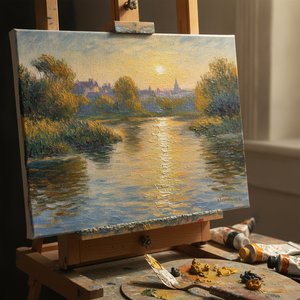
The Soul of Impressionism: Why Oil on Canvas Captures Eternal Light and Timeless Emotion
Discover the enchanting alchemy of Impressionism. Explore how the mastery of oil on canvas, through glazing and impasto, captures eternal light and emotion. Perfect for lovers of Monet and Van Gogh seeking the profound depth of hand-painted fine art.

画布上的流光溢彩:油画技法、历史沿革与当代实践
深入探索油画技法的历史沿革,从文艺复兴到卡拉瓦乔的革命性创新。了解多层涂布技术如何塑造色彩与光影,并洞悉当代油画实践中的传统与突破。OriginalUniqueArt为您提供专业的艺术品咨询和定制服务。