
 实景预览
实景预览
 发送
发送 分享
分享
 详情
详情 指南
指南

 下载图片
下载图片
 相似作品
相似作品 X射线
X射线 幻灯片播放
幻灯片播放 统计数据
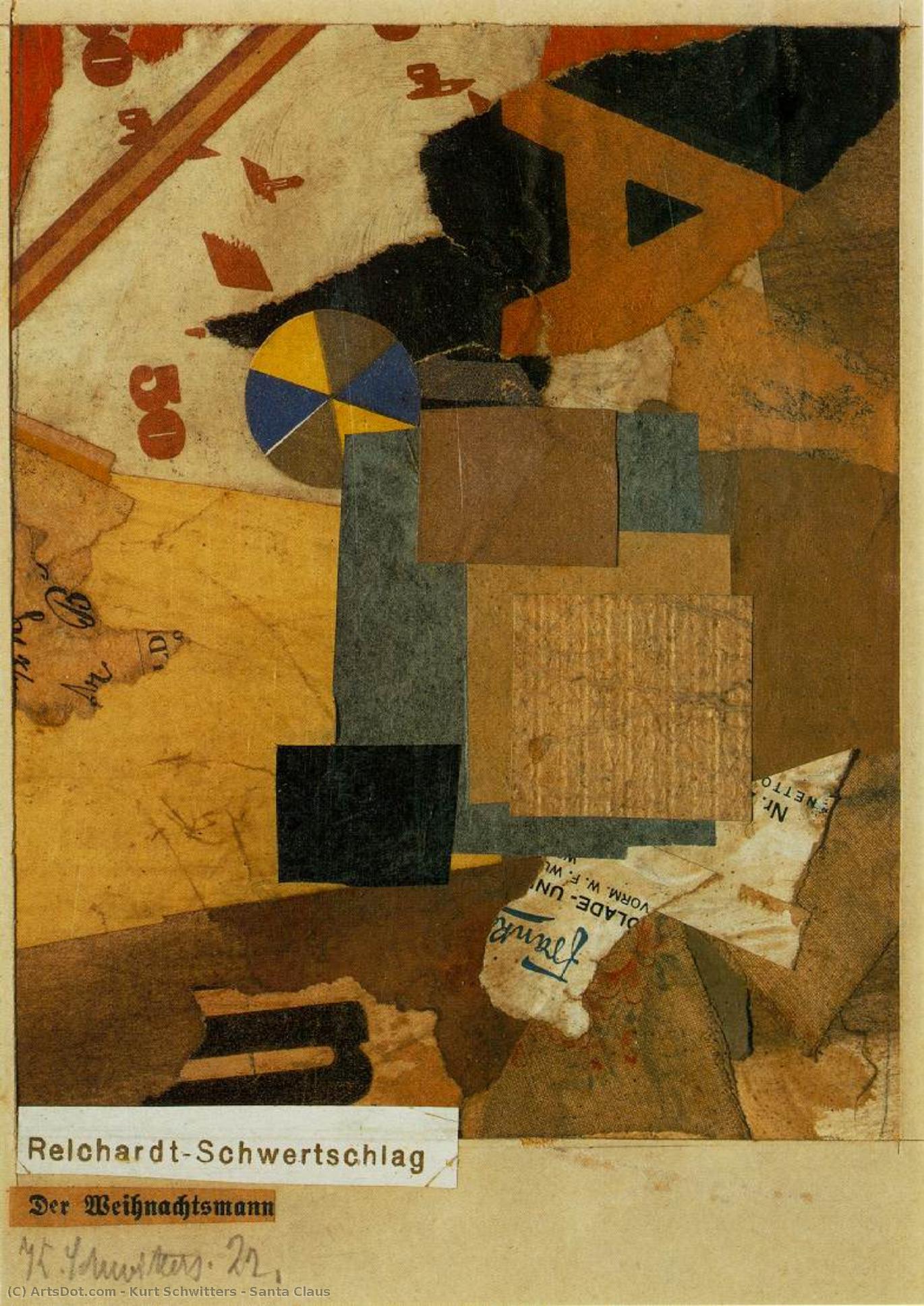
统计数据Santa Claus


 阅读全文
阅读全文
手工油画复制品
由我们的艺术家按需定制,为您提供您所选尺寸及画框的布面手工油画。 ( 切换至版画销售渠道 切换至数字图像销售渠道)




P118B ¥10

P118H ¥10

P118W ¥10

P438Z ¥10

P508JH ¥12

P508YH ¥12

P805H ¥10

P805Z ¥10

P919BZ ¥10

P919G ¥10

P919XJ ¥10

P959ZH ¥10

P968JZ ¥12

W106C ¥8

W218G ¥10

W218JH ¥8

W218Y ¥10

W307PJ ¥10

W316G ¥10

W316PJ ¥8

W316Y ¥10

W398PJ ¥8

W4111J ¥10

W500HY ¥15

W500JH ¥15

W692G ¥12

W849H ¥8

W940BG ¥15

W953PJ ¥8




您可以从与原作比例一致的预设尺寸中进行选择。

请输入您需要的宽度和高度,以适配您的画框或墙面。由于作品为手工绘制,若您选择不同的尺寸比例,艺术家可能会在画面边缘多画一些或稍作裁剪 —— 由您决定。在开始绘画之前,我们会为您发送一份数字效果图供您确认。本页面上展示的图片并非最终实物 —— 只有效果图才能反映真实结果。
下单后,OriginalUniqueArt.com 团队将通过电子邮件联系客户获取具体要求,并提供效果预览图


 玻璃选项仅适用于110厘米以下的尺寸。

Santa Claus
复制品材质
复刻品尺寸说明
-


总计金额
¥ 2019
The Composition of Fragments
The artwork Santa Claus consists of cut-and-pasted colored and printed papers applied to paper, finished with a cardstock border. The surface is an assembly of irregular shapes, including rectangles and triangles, that overlap in a non-linear arrangement. A palette of brown, yellow, and red dominates the visual field, punctuated by patches of blue and black. Within this arrangement, specific textual elements are visible, such as the number 30 and individual letters like A and B. These fragments appear to be sourced from various printed materials, including scraps that resemble advertisements or newspapers. The texture of the piece varies across its surface, with some areas appearing smooth while others show the rougher edges of torn paper. Small imagery, resembling birds or flying creatures, is integrated into the layers of the collage.
Technique and Historical Context
Created in 1922, this work belongs to the Dada Collage movement. The method involves the use of found objects and discarded materials, a practice Kurt Schwitters referred to as Merz. This technique emerged from the use of fragments like tickets and paper scraps to build new structures from existing debris. The physical state of the piece shows visible creases and folds, suggesting the age of the paper components. The arrangement lacks a central focal point, instead directing the eye across the intersecting shapes through a process of fragmentation. This approach to construction reflects the era's response to the societal shifts following World War I, where traditional academic training was replaced by an aesthetic of reconstruction using broken parts.
Materiality and Presence
The physical presence of the work is defined by its materiality and the way light interacts with the layered paper. The cardstock border provides a clean edge that contains the chaotic internal elements. Because the pieces are layered, the artwork possesses a literal depth, where certain fragments partially obscure others. This layering creates a sense of accumulation. While the title Santa Claus is present on the museum label, the visual content does not depict a recognizable figure of the character; rather, it relies on the abstract tension between the disparate colored shapes and the printed text to establish its visual logic. The work is held in the collection of the Museum of Modern Art (MoMA) in New York City.
问答详情
Kurt Schwitters 的《Santa Claus》 的创作年代与艺术风格是什么?
"Santa Claus"创作于1922年,属于Dada Collage运动时期的作品。其创作年代与艺术流派确立了该作品在艺术史上的地位。
我该如何获取Kurt Schwitters 的《Santa Claus》的数字文件?
您可以在 数字图像 页面直接购买 “Santa Claus” 的 高分辨率数字图像下载。
Kurt Schwitters 的《Santa Claus》 的色彩饱和度如何?
"Santa Claus" 的色调饱和度为 Clear Color Presence。
艺术家简介
Kurt Schwitters: A Life in Merz
Early Life and Education
- Born: June 20, 1887, in Hanover, Germany.
- Schwitters was the only child of Eduard and Henriette Schwitters. His father co-owned a ladies' clothing shop.
- The family’s financial situation improved after selling the business in 1898, allowing them to live off rental income from properties they acquired.
- He studied art at the Dresden Academy from 1909-1915 alongside artists like Otto Dix and George Grosz, though he seemingly remained unaware of their work at the time.
- Schwitters suffered his first epileptic seizure in 1901, which later exempted him from military service for a period during World War I.
Artistic Development and the Birth of Merz
- Initially, Schwitters worked in a post-impressionist style. His early work reflected this influence.
- The devastation of World War I profoundly impacted his artistic direction. He felt traditional academic training was irrelevant in the face of societal collapse.
- “In the war, things were in terrible turmoil…everything had broken down and new things had to be made out of the fragments; and this is Merz.”
- Around 1918, he began creating abstract collages using found objects – scraps of paper, tickets, and other discarded materials.
- The term “Merz” itself came from a fragment of text (“Commerz und Privatbank”) cut from an advertisement and incorporated into one of his early works, *Das Merzbild* (1918-19).
Key Works and Artistic Styles
- Merz Pictures: These collages are arguably Schwitters’ most famous contribution. They represent a radical departure from traditional art, embracing chance and the aesthetics of everyday life.
- Merzbau: A monumental architectural construction within his home in Hanover, continuously evolving over decades. It was a three-dimensional embodiment of Merz principles – a labyrinthine space filled with niches, grottoes, and found objects.
- Assemblage & Installation Art: Schwitters pioneered these forms, blurring the boundaries between painting, sculpture, and architecture.
- He also worked in poetry, sound, graphic design, and typography, exploring a wide range of artistic media.
Influences and Connections
- Early influences included post-impressionism, but he quickly moved beyond these conventions.
- He came into contact with members of the Berlin avant-garde – Raoul Hausmann, Hannah Höch, and Hans Arp – through Herwarth Walden’s *Der Sturm* gallery.
- While associated with Dadaism, Schwitters maintained a distinct artistic identity. He was initially rejected by some Dadaists for his ties to expressionism.
Later Life and Legacy
- Facing increasing persecution under the Nazi regime due to his “degenerate art,” Schwitters fled Germany in 1937.
- He spent time in Norway and England, continuing to create Merz works despite challenging circumstances. He was briefly interned as an enemy alien during World War II.
- Died: January 8, 1948, in Ambleside, England.
- Kurt Schwitters’ work profoundly influenced subsequent generations of artists, particularly those involved in Pop Art, Minimalism, and Conceptual Art.
- His innovative use of found objects and his exploration of the relationship between art and everyday life continue to resonate with contemporary audiences.
Historical Significance
- Schwitters’ Merz aesthetic challenged traditional notions of artistic beauty and authorship.
- He expanded the definition of art by incorporating non-art materials and blurring the lines between different disciplines.
- His work remains a powerful testament to the creative potential of fragmentation, reconstruction, and the embrace of chance.

Kurt Schwitters
1887 - 1948
快速概览
- Name: Kurt Schwitters
- Movement:
- Dadaism
- Constructivism
- Surrealism
- Merz
- Birth Date: June 20, 1887
- Death Date: 1948
- Birth Place: Hanover, Germany
- Nationality: German
- Date Of Birth: 1887
- Date Of Death: 1948
- Notable Works:
- Merz pictures
- Merzbau
相关文章

Dadaism Unveiled: The Beautiful Chaos of Art's Most Rebellious Movement
Explore the profound rebellion of Dadaism. Discover how this avant-garde movement emerged from the chaos of WWI to redefine art through absurdity, anti-logic, and a legacy that shaped Surrealism and Pop Art. A deep dive into the beautiful chaos of art history for the true enthusiast.

Mastering Digital Collage: An Expert Guide to Layering Art, Texture, and Imagination
Elevate your digital artistry with our expert guide to mastering collage. Learn professional techniques for layering textures, blending imagery, and creating profound visual narratives through advanced digital composition and modern creative workflows.
达达主义:二十世纪初反艺术革命与理性颠覆的美学探索
深入探索二十世纪初达达主义的反艺术革命,解读杜尚现成品背后的哲学思辨与康德理性批判的影响。OriginalUniqueArt为您提供专业的艺术品鉴赏、定制复制及收藏咨询服务。
Digital Collage Unleashed: How to Remix Reality into High-Impact Pop Art
Master the art of digital collage. Discover how to remix pop culture icons, glitch aesthetics, and vibrant textures into high-impact Pop Art for modern urban spaces. Elevate your collection with bold, trend-setting visual strategies from the experts in contemporary graphic art.

Beyond the Canvas: The High-Impact World of Modern Collage Art & The Future of Visual Remix Culture
Explore the high-impact world of modern collage art. From Glitch Pop to mixed media, discover how layering textures and pop culture icons creates bold, trend-setting aesthetics for contemporary urban interiors.