

 效果预览
效果预览
 购买手绘画作
 分享
分享 分享
分享
 详情
详情

 下载
下载
 相似作品
相似作品 X射线
X射线 幻灯片播放
幻灯片播放Calligraphy


 展开详情
展开详情




































从与原作比例一致的预设尺寸中进行选择。

您可以输入自定义尺寸,以适配特定的画框或空间。如果您选择的尺寸与原图比例不符,我们将对作品进行裁剪,或通过镜像填充/纯色填充边缘的方式来扩展图像。在开始制作之前,我们会向您发送一份数字效果图供您确认。
请注意,屏幕上的预览并不能反映实际的裁剪或扩展效果。只有效果图才能准确展示最终的构图。
虽然我们提供定制尺寸,但为了保持原图比例,我们建议您从预设列表中选择尺寸。


 玻璃选项仅适用于110厘米以下的尺寸。

Calligraphy
艺术微喷/版画
复制品尺寸
-


最终总价
$ 80
艺术家简介
A Brushstroke Across Eras: The Life and Art of Kiwon, Yoo Hanji
Kiwon, Yoo Hanji (兪漢芝, 綺園, 1760-1834) emerges from the annals of Korean history as a quintessential *wenren* – a scholar-official artist deeply embedded in the cultural and intellectual currents of his time. Born in Korea during the late Joseon dynasty, a period marked by both artistic flourishing and socio-political upheaval, Yoo Hanji wasn’t merely a calligrapher; he was a vessel through which the spirit of an era found expression. His life unfolded against a backdrop of Neo-Confucian ideals, where mastery of calligraphy was considered not just an art form but a testament to moral cultivation and refined sensibility. He dedicated his existence to perfecting this ancient practice, ultimately becoming celebrated for his exceptional skill in all script styles, with particular renown bestowed upon his fluid and evocative “sea style” (haeche), reminiscent of waves crashing against the shore.The Scholar’s Path: Cultivating Mind and Brush
Yoo Hanji's journey began within the established framework of Joseon society – a rigorous education steeped in Confucian classics. This foundation wasn’t simply about acquiring knowledge; it was about shaping character, fostering inner harmony, and developing an acute awareness of tradition. The *wenren* ideal demanded a holistic approach to life, where art, poetry, music, and calligraphy were interwoven with ethical conduct and political engagement. While details surrounding his early life remain somewhat scarce, it’s clear that Yoo Hanji embraced this ethos wholeheartedly. He wasn't simply replicating forms; he was internalizing the principles they represented. His dedication led him to master a diverse range of calligraphic scripts – from the formal *kaishu* (regular script) to the dynamic *xingshu* (semi-cursive script) and the expressive *caoshu* (cursive script). However, it was his mastery of the *haeche* style that truly distinguished him. This particular style, characterized by its bold strokes, rhythmic flow, and suggestion of natural movement, allowed Yoo Hanji to convey a sense of both power and grace.The Sea Style and Artistic Legacy
The “sea style” calligraphy for which Yoo Hanji is so highly regarded wasn’t merely a technical achievement; it was an artistic statement. The ocean held profound symbolic weight in Korean culture, representing vastness, resilience, and the cyclical nature of life. By imbuing his calligraphy with this imagery, Yoo Hanji imbued his work with layers of meaning. His brushstrokes weren't simply lines on paper; they were echoes of waves, currents, and the boundless energy of the sea itself. This style allowed him to express a range of emotions – from quiet contemplation to passionate intensity – with remarkable subtlety and nuance. He is particularly remembered for his album, aptly titled ‘Un Album Coréen’ (A Korean Album), which showcases the breadth of his talent and serves as a testament to his artistic vision. The album isn't just a collection of calligraphy; it’s a window into the mind of a scholar-artist grappling with the complexities of his world.Historical Significance: A Representative Voice of the Late Joseon
Yoo Hanji lived during a period of significant transition in Korea, as the Joseon dynasty faced internal challenges and external pressures. His art, while rooted in tradition, also reflects a growing awareness of individual expression and a desire to push boundaries. He wasn’t necessarily advocating for radical change, but his work embodies a spirit of intellectual curiosity and artistic innovation that was characteristic of the late Joseon period. As a *wenren*, he played a crucial role in preserving and transmitting cultural values while simultaneously exploring new avenues of creative expression. His calligraphy continues to be studied and admired today not only for its technical brilliance but also for its historical significance – it offers valuable insights into the aesthetic sensibilities, intellectual climate, and socio-political context of 18th and 19th century Korea.Further Exploration
- Key Style: *Haeche* (Sea Style) Calligraphy – characterized by bold, flowing strokes evoking the movement of waves.
- Notable Work: ‘Un Album Coréen’ – a collection showcasing Yoo Hanji's diverse calligraphic skills and artistic vision.
- Cultural Context: Late Joseon Dynasty (1760-1834) – a period of artistic flourishing amidst socio-political change.
- Artistic Identity: *Wenren* – Scholar-official artist embodying Confucian ideals and refined sensibility.

kiwon, yoo hanji
1760 - 1834 , South Korea
艺术家简介
- Artistic Movement Or Style: Sea Style Script
- Date Of Death: 1834
- Full Name: Kiwon, Yoo Hanji
- Nationality: Korean
- Notable Artworks: ['Un Album Coréen']
- Place Of Birth: Korea
相关文章
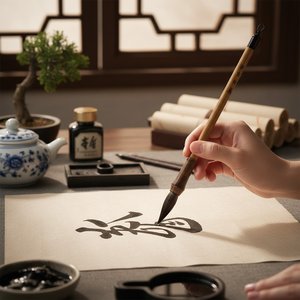
The Timeless Beauty of Chinese Calligraphy: An Exploration of Ink, Spirit, and the Art of the Brush
Embark on a profound journey through the soul of Chinese calligraphy. Explore the historical mastery of ink, brush, and script, from ancient Zhuanshu to elegant running script, and discover how this timeless art form reflects the enduring spirit of classical East Asian aesthetics.
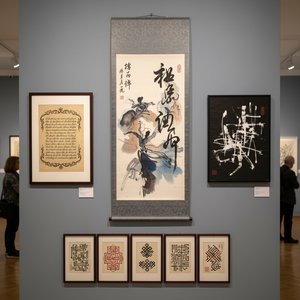
The Elegance of Line: Discovering the Timeless Beauty of Calligraphy Artworks
Explore the profound beauty of calligraphy art. From the fluid running script of Chinese masters to historical ink masterpieces, discover how the elegance of line transforms spaces with timeless grace and scholarly sophistication.
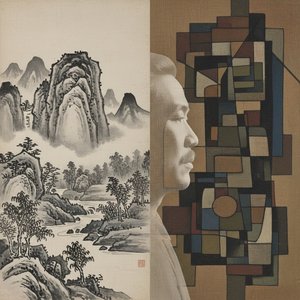
Yi Eungro: Bridging East & West in the Landscape of Korean Modernism
Explore the captivating world of Yi Eungro (Lee Ungno), a pivotal figure in Korean modernism. Discover his unique fusion of Eastern and Western artistic traditions, abstract masterpieces, and lasting legacy. A must-read for discerning art collectors.
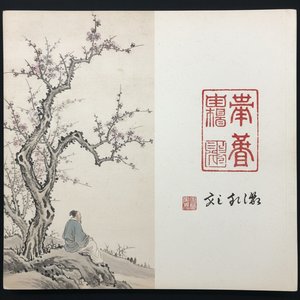
Xie Zhiliu: A Legacy of Ink Wash Painting & Modern Chinese Literati Tradition
Explore the legacy of Xie Zhiliu, a master of Chinese ink wash painting & prominent figure in modern art. Discover his techniques, influences, and contributions to literati tradition. A guide for discerning collectors.

Alfred East: Pioneering Plein Air & Evoking Atmospheric Landscapes
Explore the life & work of Alfred East, a pioneer of British plein air painting. Discover his techniques for capturing atmospheric landscapes, Barbizon influences, and lasting legacy. Learn more at OriginalUniqueArt.

