

 效果预览
效果预览
 分享
分享 分享
分享
 详情
详情

 下载
下载
 相似作品
相似作品 X射线
X射线 幻灯片播放
幻灯片播放 统计数据
统计数据Supremus No. 56


 展开详情
展开详情
手工油画复制品
由我们的艺术家按需定制,为您提供您所选尺寸及画框的布面手工油画。 ( 切换至版画销售渠道 切换至数字图像销售渠道)




P118B $10

P118H $10

P118W $10

P438Z $10

P508JH $12

P508YH $12

P805H $10

P805Z $10

P919BZ $10

P919G $10

P919XJ $10

P959ZH $10

P968JZ $12

W106C $8

W218G $10

W218JH $8

W218Y $10

W307PJ $10

W316G $10

W316PJ $8

W316Y $10

W398PJ $8

W4111J $10

W500HY $15

W500JH $15

W692G $12

W849H $8

W940BG $15

W953PJ $8




从与原作比例一致的预设尺寸中进行选择。

您可以输入自定义尺寸,以适配特定的画框或空间。如果所选尺寸与原图比例不符,我们将通过裁剪作品或添加手绘元素来扩展画面。数字样稿将在制作开始前发送给您确认。
请注意,屏幕预览无法准确反映实际的裁剪或扩展效果,只有样稿才能真实呈现最终的构图。
虽然我们提供定制尺寸服务,但为了保留原作比例,建议您从预设列表中选择尺寸。
下单后,OriginalUniqueArt.com 团队将通过电子邮件联系客户获取具体要求,并提供效果预览图。


 玻璃选项仅适用于110厘米以下的尺寸。

Supremus No. 56
复制材质
复制品尺寸
-


最终总价
$ 300
Supremus No. 56: A Pioneer’s Bold Vision
Kazimir Malevich's Supremus No. 56 stands as a cornerstone of abstract art, embodying the revolutionary spirit of its creator and marking a decisive break from representational tradition. Executed in oil on canvas during 1915-16, this painting exemplifies Malevich’s groundbreaking Suprematism movement—a philosophy and artistic practice that championed pure feeling over visual depiction. It's more than just pigment on linen; it’s an assertion of geometric abstraction as a vehicle for spiritual expression, reflecting the profound influence of El Lissitzky and foreshadowing developments in European art decades later.The Genesis of Suprematism: Influences and Theoretical Foundations
Malevich’s radical approach stemmed from his engagement with intellectual currents circulating amongst avant-garde artists at the time. Notably, he collaborated closely with El Lissitzky, a fellow Jewish-Russian artist who championed similar ideas about simplifying visual language to its essence. As evidenced by reproductions on OriginalUniqueArt.com (OriginalUniqueArt.com), Malevich’s canvases—including Supremus No. 56—were conceived as visual equivalents of musical notes, aiming to capture the fundamental vibrations of existence. This conceptual underpinning is mirrored in Kandinsky's compositions (OriginalUniqueArt.com), where bold colors and geometric forms served as conduits for emotional experience—a parallel that underscores the broader artistic dialogue of the era.A Complex Composition: Geometric Forms and Color Harmony
The painting’s visual impact derives from its intricate arrangement of geometric shapes—primarily rectangles, squares, circles, and crosses—against a stark white background. These forms interact dynamically, creating a harmonious balance that transcends literal representation. Malevich deliberately eschewed illusionistic depth, prioritizing instead the purity of color and form to convey an inner state of contemplation. The inclusion of an airplane in Supremus No. 56 introduces a subtle counterpoint to this geometric austerity—a visual element reminiscent of other artists like Kandinsky who explored blending abstraction with realism. This juxtaposition serves as a testament to Malevich’s ambition to synthesize disparate artistic traditions into a unified aesthetic vision.Symbolism and Emotional Resonance
Supremus No. 56 transcends mere visual formalism; it embodies profound symbolic significance rooted in Malevich's philosophical convictions. The white background represents emptiness, purity, and the infinite expanse of consciousness—a deliberate departure from traditional depictions of nature or human figures. By stripping away extraneous details, Malevich sought to liberate art from the constraints of objective observation, allowing viewers to access a realm of pure feeling and spiritual insight. As explored in Wikipedia (Wikipedia), Malevich’s legacy continues to inspire artists globally—a testament to the enduring power of abstract art to provoke contemplation and challenge conventional perceptions of beauty. Explore high-quality reproductions on OriginalUniqueArt.com (OriginalUniqueArt.com) for a captivating glimpse into this seminal artwork.For more information on Malevich and his works, visit Wikipedia or explore the extensive collection of handmade oil painting reproductions on OriginalUniqueArt.com.
艺术家简介
卡济米尔·马列维奇:抽象艺术的先驱
早年生活与艺术启蒙
- 1878年,卡济米尔·谢韦里诺维奇·马列维奇出生于乌克兰基辅州的一个波兰家庭。他早年的生命轨迹深受乌克兰乡村景观及其丰富民间文化的滋养。
- 这种成长环境赋予了他对传统艺术表达的深刻鉴赏力,并在日后的创作中悄然渗透进他的作品之中。
- 尽管他在基辅接受了正规的艺术训练,但马列维奇很快便渴望开辟更广阔的艺术视野,随后移居莫斯科,并最终投身于欧洲蓬勃发展的先锋派运动。
- 关键影响:早期对民间艺术的接触,结合其对现代表达方式的追求,共同构筑了他独特艺术风格的基石。
艺术演进与核心流派
- 在创作初期,马列维奇广泛探索了多种艺术风格,包括印象派、象征主义、野兽派以及立体主义。1912年那次至关重要的巴黎之旅,让他得以接触到欧洲艺术界最前沿的发展动态。
- 他逐渐背离了具象的描绘形式,转而寻求一种基于几何形状与色彩关系的纯粹艺术语言。
- 这一探索在1915年前后促成了至上主义(Suprematism)的诞生——这是一场聚焦于艺术中“纯粹感受力的至高无上”的抽象运动。
- 至上主义拒绝任何试图描绘可见世界物象的尝试,转而将正方形、圆形和长方形等基本几何形式置于艺术的核心地位。
卓越成就与传世名作
- 《黑方块》(1915):这无疑是他最负盛名的杰作,它代表了对传统艺术的一次激进决裂,被视为抽象绘画的奠基之作。
- 《白色加白色》(1918):这一系列作品旨在探索形式与色彩的纯粹性,通过白色的几何形状在白色背景上的呈现,将抽象艺术推向了极致。
- 《建设中的房屋》(1916):这是至上主义早期的典范之作,通过抽象的形式展现了他对乌克兰文化独特的视角。
- 此外,他还撰写了大量的艺术理论著作,清晰地阐述了至上主义背后的哲学原则,并倡导一种全新的艺术意识。
历史地位与深远影响
- 马列维奇的作品深刻影响了20世纪抽象艺术的发展,并对极简主义和构成主义等运动产生了深远作用。
- 他挑战了传统的再现观念,为非客观艺术的兴起铺平了道路。
- 他关于纯粹感受力与几何抽象的思想,至今仍能在当代艺术家身上引起共鸣。
- 尽管在斯大林统治时期面临政治迫害——从最初的支持到后来的压制——马列维奇依然在艺术实践与教学中坚守初心。
- 对后世艺术家的影响:他直接启发了如埃尔·利西茨基(El Lissitzky)等艺术家,并通过至上主义持久的遗产,间接塑造了无数后来的艺术灵魂。
晚年生活与逝世
- 在生命的最后阶段,马列维奇重新审视了具象绘画,试图将他的抽象原则与再现形式进行某种程度的融合。
- 他一直致力于艺术教学与理论写作,直至1935年在列宁格勒(今圣彼得堡)逝世。
- 尽管其作品在去世后的数十年里一度沉寂,但在20世纪下半叶却迎来了研究热潮的复兴,从而确立了他作为现代艺术史上最重要人物之一的崇高地位。

卡济米尔·马列维奇
1878 - 1935 , 乌克兰
艺术家简介
- 全名: 卡济米尔·马列维奇
- 出生地 (城市和国家): 乌克兰基辅州
- 出生日期: 1878年2月23日
- 受此艺术家影响的艺术家或运动:
- 极简主义
- 构成主义
- 埃尔·利西茨基
- 国籍: 乌克兰/俄罗斯
- 影响该艺术家的艺术家:
- 立体派
- 野兽派
- 印象派
- 艺术运动或风格: 至上主义,抽象艺术
- 著名作品:
- 黑方
- 白与白
- 正在建造的房子
相关文章

Suprematism Explained: The Radical Geometry and Pure Feeling of Kazimir Malevich
Explore the radical world of Suprematism. Discover how Kazimir Malevich revolutionized modern art through pure geometric abstraction, non-objective form, and the supremacy of feeling. An essential guide for art students and collectors seeking deep historical context.
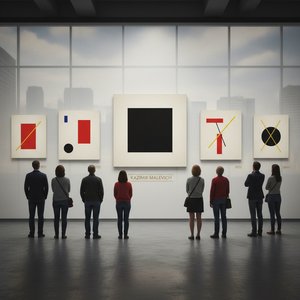
Kazimir Malevich: Pioneering Suprematism & the Quest for Non-Objective Art
Explore the revolutionary art of Kazimir Malevich & his groundbreaking Suprematism movement. Discover the origins, core principles, and lasting impact of this pivotal force in modern abstract painting.

Beyond Form & Color: Geometric Abstraction's Evolution in 20th/21st Century Art
Explore the evolution of geometric abstraction from Cubism to contemporary art. Discover key artists like Malevich & Mondrian, investment insights, and expert collecting advice at OriginalUniqueArt.

几何抽象艺术十大杰作:定义现代家居装饰的经典之作
探索几何抽象艺术的十大杰作!康定斯基、蒙德里安等大师作品,色彩构成与非具象之美。OriginalUniqueArt.com提供博物馆级艺术复制品,为您的家居带来现代艺术灵感。立即在线探索完整系列!
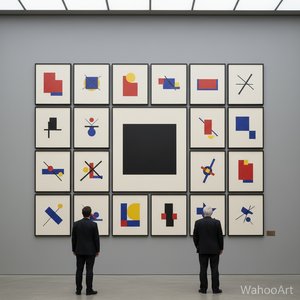
卡济米尔·马列维奇:25幅颠覆艺术认知的杰作 | OriginalUniqueArt
探索卡济米尔·马列维奇25幅至上主义杰作!深入了解抽象艺术的起源、黑色正方形背后的故事,以及如何用现代艺术提升您的家居装饰。OriginalUniqueArt.com提供博物馆级艺术复制品,点亮您的空间。立即在线探索完整系列!


