
 效果预览
效果预览
 购买手绘画作
 分享
分享 分享
分享
 详情
详情

 下载
下载
 相似作品
相似作品 X射线
X射线 幻灯片播放
幻灯片播放Allegory
 Oil On Canvas
- WallArt
- Dutch Golden Age
 1663
1663 116.0 x 97.0 cm
 斯泰恩斯博物馆艺术馆
 展开详情
展开详情




P118B $10

P118H $10

P118W $10

P438Z $10

P508JH $12

P508YH $12

P805H $10

P805Z $10

P919BZ $10

P919G $10

P919XJ $10

P959ZH $10

P968JZ $12

W106C $8

W218G $10

W218JH $8

W218Y $10

W307PJ $10

W316G $10

W316PJ $8

W316Y $10

W398PJ $8

W4111J $10

W500HY $15

W500JH $15

W692G $12

W849H $8

W940BG $15

W953PJ $8




从与原作比例一致的预设尺寸中进行选择。

您可以输入自定义尺寸,以适配特定的画框或空间。如果您选择的尺寸与原图比例不符,我们将对作品进行裁剪,或通过镜像填充/纯色填充边缘的方式来扩展图像。在开始制作之前,我们会向您发送一份数字效果图供您确认。
请注意,屏幕上的预览并不能反映实际的裁剪或扩展效果。只有效果图才能准确展示最终的构图。
虽然我们提供定制尺寸,但为了保持原图比例,我们建议您从预设列表中选择尺寸。


 玻璃选项仅适用于110厘米以下的尺寸。

Allegory
艺术微喷/版画
复制品尺寸
-


最终总价
$ 80
藏品详情
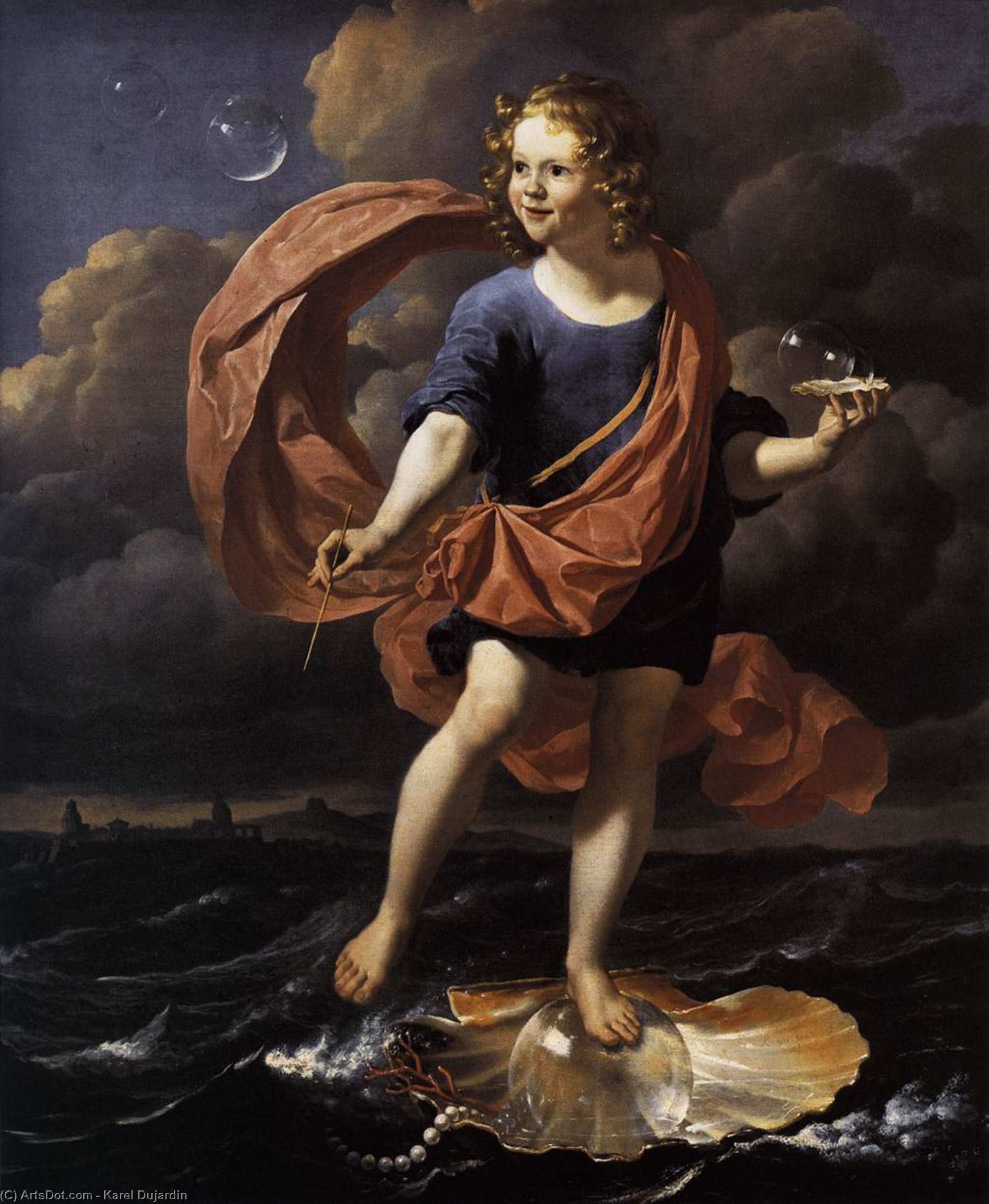
Karel Dujardin’s “Allegory”: A Fleeting Beauty Captured in Light
Karel Dujardin's "Allegory," painted in 1663, is more than just a picturesque scene; it’s a poignant meditation on the ephemeral nature of life and beauty. Born in Amsterdam during the height of the Dutch Golden Age, Dujardin was a master of capturing fleeting moments – particularly those involving light, animals, and idyllic landscapes. This particular work, housed within the National Gallery in London, exemplifies his signature style: a delicate balance between realism and idealized vision, imbued with a subtle melancholy that speaks to the transience of all things.
The painting depicts a young boy, dressed in a vibrant blue tunic and a flowing pink cloak, standing on the back of what appears to be a large sea creature – perhaps a whale or dolphin. He holds a small wand aloft, releasing a flurry of iridescent bubbles into the air. The backdrop is a hazy, cloudy sky, lending an atmospheric quality that enhances the sense of dreamlike serenity. Scattered throughout the scene are other figures, engaged in various activities—a woman tending to flowers, a man sailing a boat, and others enjoying the leisurely pace of life by the water’s edge. The inclusion of these secondary figures subtly underscores the central theme: a shared appreciation for beauty amidst the inevitable passage of time.
A Symbol of Transience: The Bubbles as Metaphor
At first glance, “Allegory” might seem simply a charming depiction of childhood play and a beautiful landscape. However, Dujardin deliberately employs symbolism to elevate the scene beyond mere representation. The bubbles themselves are the key to unlocking the painting’s deeper meaning. In 17th-century Dutch art, blowing bubbles was a well-established motif, representing the fleeting nature of life – much like the delicate spheres themselves. Each bubble rises briefly into the air before bursting, mirroring the transient beauty and joy that characterize human existence.
The boy’s posture—relaxed, almost carefree—suggests an acceptance of this ephemeral quality. He isn't striving to hold onto the bubbles; he simply enjoys their brief appearance. This mirrors a philosophical stance: embracing the present moment rather than clinging to illusions of permanence. The artist masterfully uses light and shadow to further emphasize this theme. The soft, diffused sunlight bathes the scene in a gentle glow, creating an atmosphere of tranquility while simultaneously reminding us that all beauty is ultimately subject to decay.
Dujardin’s Technique: Light, Color, and Detail
Dujardin's skill lies not only in his ability to capture a fleeting moment but also in his meticulous technique. He was known for his incredibly detailed renderings of animals and landscapes, often employing a technique called “grisaille,” where he would build up layers of thin paint to create subtle gradations of tone and texture. This is evident in the rendering of the sea creature’s skin, the delicate folds of the boy's clothing, and the shimmering surface of the bubbles themselves.
The color palette is restrained yet luminous—primarily blues, greens, and browns—creating a sense of harmony and balance. Dujardin expertly utilizes light to model forms and create depth, drawing the viewer’s eye into the scene. The subtle variations in tone suggest a mastery of chiaroscuro, a technique that employs strong contrasts between light and dark to heighten drama and create a sense of realism.
A Window into 17th-Century Dutch Life
"Allegory" offers a fascinating glimpse into 17th-century Dutch life. The scene is populated with figures engaged in typical activities—fishing, sailing, gardening—reflecting the prosperity and leisure enjoyed by many during this period. The inclusion of these everyday details grounds the allegorical theme in a tangible reality, making it all the more poignant. Dujardin’s work also reflects the influence of Italianate art, particularly the idealized landscapes favored by artists working in Rome at the time.
Today, “Allegory” remains a captivating masterpiece—a testament to Dujardin's artistic skill and his profound understanding of human nature. It serves as a beautiful reminder that even the most fleeting moments of beauty are worth cherishing, and that embracing the transience of life is an essential part of finding joy and fulfillment.
艺术家简介
沉浸于光影与风景的一生
卡雷尔·杜雅尔丹(Karel Dujardin),这个名字在荷兰黄金时代大师的殿堂中回响着柔和而深远的力量。他于1626年出生于阿姆斯特禄——尽管也有记录显示为1622年。他的生命轨迹展开于荷兰艺术史前所未有的繁荣时期,然而他的成名之路并非一蹴而就,而是在严谨的学习与广泛的游历中,才逐渐绽放出才华的光芒。关于他早年生活的细节仍隐匿在时间的迷雾之中,但艺术界普遍公认,他曾师从尼古拉斯·贝尔切姆(Nicolaes Berchem),这位画家以描绘充满动物的田园风光而闻名。这段师承关系对杜雅尔丹而言至关重要,它赋予了他对自然主义的深刻理解,以及捕捉光影与大气细微变化的敏锐眼光。然而,杜雅尔丹的艺术征途并未止步于阿姆斯特丹的工作室;他那颗冒险的心驱使着他前往罗马,并加入了“Bentvueghels”社团——这是一个由荷兰和佛兰德画家组成的群体,他们崇尚波希米亚式的生活方式,并常以讽刺性的绰号自居。在罗马,他被称为“Barba di Bequo”或“山羊胡”,这个绰号很可能源于他独特的面部特征,也正是在这里,他的艺术语言开始真正走向成熟。意大利风情与艺术风格的交融
在意大利的岁月深刻地塑造了他的艺术风格。他并非仅仅在复制所见到的风景,而是将这些异国景观与荷兰传统的风俗画传统相融合,创造出一种独特的艺术语汇,令阿尔卑斯山两端的观众都为之倾倒。他的画作以细腻的笔触和描绘日常生活场景的卓越能力为特征——无论是充满生机的乡村景象、劳作中的农民,还是宁静的田园牧歌。他拥有一种捕捉光影变幻的天赋,使画布充满了温暖与写实感。尽管受到了意大利大师的影响,但杜雅尔丹并未流于简单的模仿;他通过荷兰式的审美视角过滤了这些外来影响,使得作品既具有感染力,又根植于真实的观察。例如,《给红牛挤奶的妇女》展现了他以惊人精度描绘乡村生活的技巧,而《树荫下的家畜》则展示了他捕捉静谧瞬间的能力,突显了人与自然之间和谐共生的关系。他对意大利文化的接触在《意大利旅店的休憩》等作品中也清晰可见,他将荷兰风俗画的传统与充满意境的意大利式布景天衣无缝地结合在一起。超越题材:肖像画与自我审视
虽然杜雅尔丹以风景画和风俗画闻名遐迩,但他的艺术领域远不止于此。他也涉足肖像画创作,展现了作为一名艺术家多才多艺的一面。著名的群像作品《阿姆斯特丹纺织工之家与新工厂的董事们(1669年)》揭示了他在大规模构图中捕捉个体神韵的功力,这不仅展示了他的技术精湛,更体现了他对人物性格的敏锐洞察。而或许能为观众提供最亲密、最直接窥见艺术家内心世界的作品,莫过于他的《自画像(1662年)》。这件作品建立起观众与杜雅尔丹本人之间的直接纽带,让人们得以凝视笔触背后的那个人,并深入了解他的性格与艺术愿景。这是一场关于静谧沉思的研究,展现了一位全身心投入于技艺、并清醒认识到自己在时代艺术版图中地位的艺术家形象。传承与历史意义
卡雷尔·杜雅尔丹的艺术遗产早已超越了荷兰黄金时代的范畴。他的作品因其精湛的技术、动人的氛围以及对日常生活的深刻描绘而持续受到后世的赞赏。他虽不像伦勃朗或维米尔那样具有革命性的地位,但他的贡献依然举足轻重——他通过细致入微的观察和大师级的技法,提炼并完善了一种特定的艺术流派。他的画作被收藏于世界各地的顶级博物馆中,包括海牙的莫里茨皇家美术馆和伦敦的国家美术馆,这足以证明其持久的魅力与艺术价值。杜雅尔丹的影响力在后世那些试图捕捉自然之美与平凡人尊严的艺术家身上清晰可见。他代表了一个崇尚观察、匠心与生命静谧时刻的时代——这份遗产至今仍在观众心中激起共鸣。他完美诠释了荷兰黄金时代对细节的极致追求以及对日常存在的赞美,留下了一系列作品,为我们开启了一扇通往那个逝去世界的迷人窗口。
卡雷尔·杜雅尔丹
1626 - 1678 , 荷兰
艺术家简介
- Artistic Movement Or Style: 荷兰黄金时代绘画
- Artists Who Influenced This Artist:
- 尼古拉斯·贝尔切姆
- 伦勃朗·范·莱因
- Date Of Birth: 1626年9月27日
- Date Of Death: 1678年
- Full Name: 卡雷尔·杜雅尔丹
- Nationality: 荷兰
- Notable Artworks:
- 给红牛挤奶的妇女
- 树荫下的农场动物...
- 在意大利旅店休息
- 自画像 (1662)
- 斯皮恩豪斯和新工作坊的摄政者...
- Place Of Birth: 荷兰,阿姆斯特丹
相关文章

Golden Light & Dutch Skies: The Timeless Magic of Dutch Golden Age Landscapes
Discover the breathtaking beauty of Dutch Golden Age landscapes. Explore the mastery of light, chiaroscuro, and 17th-century realism through an expert art history lens, celebrating the enduring legacy of the Dutch Masters for discerning collectors and art lovers.

荷兰黄金时代:十幅定义艺术史的巨作 | OriginalUniqueArt
探索荷兰黄金时代的艺术巅峰! 伦勃朗、维米尔等大师名作,带您领略巴洛克艺术的辉煌。高清画作、博物馆级品质,点亮您的家居空间。OriginalUniqueArt.com 提供精选艺术复制品和定制装饰方案。立即在线探索全系列!

Golden Light & Dutch Skies: Bringing the Magic of Dutch Golden Age Landscapes into Your Home
Transform your home with the breathtaking light of Dutch Golden Age landscapes. Discover how hand-painted oil reproductions of masterworks like Ruisdael and Vermeer bring timeless elegance, atmosphere, and soulful texture to modern interiors. Elevate your space with museum-quality art.
Nicolaes Berchem: Dutch Golden Age Pastoralism & the Evolution of Landscape Painting
Explore the captivating world of Nicolaes Berchem, a leading Dutch Golden Age painter. Discover his idyllic landscapes, masterful technique & lasting influence on art history. Learn more at OriginalUniqueArt.
Charles Leickert: Capturing the Dutch Golden Age Light – A Comprehensive Study of Technique, Context, and Legacy
Explore the captivating winter landscapes of Charles Leickert, a master of Dutch Golden Age light & atmosphere. Discover his techniques, symbolism, and lasting legacy – a comprehensive study for art enthusiasts and collectors.

