 切换至版画销售渠道
 展开全文
展开全文







































 对于任何边长超过 105 厘米(约 41 英寸)的艺术品或复制品,画框将以拆解后的组件形式发货。此方法可确保安全送达并防止运输过程中的损坏。


St. Agnes in Prison: A Study in Dramatic Light and Spiritual Suffering
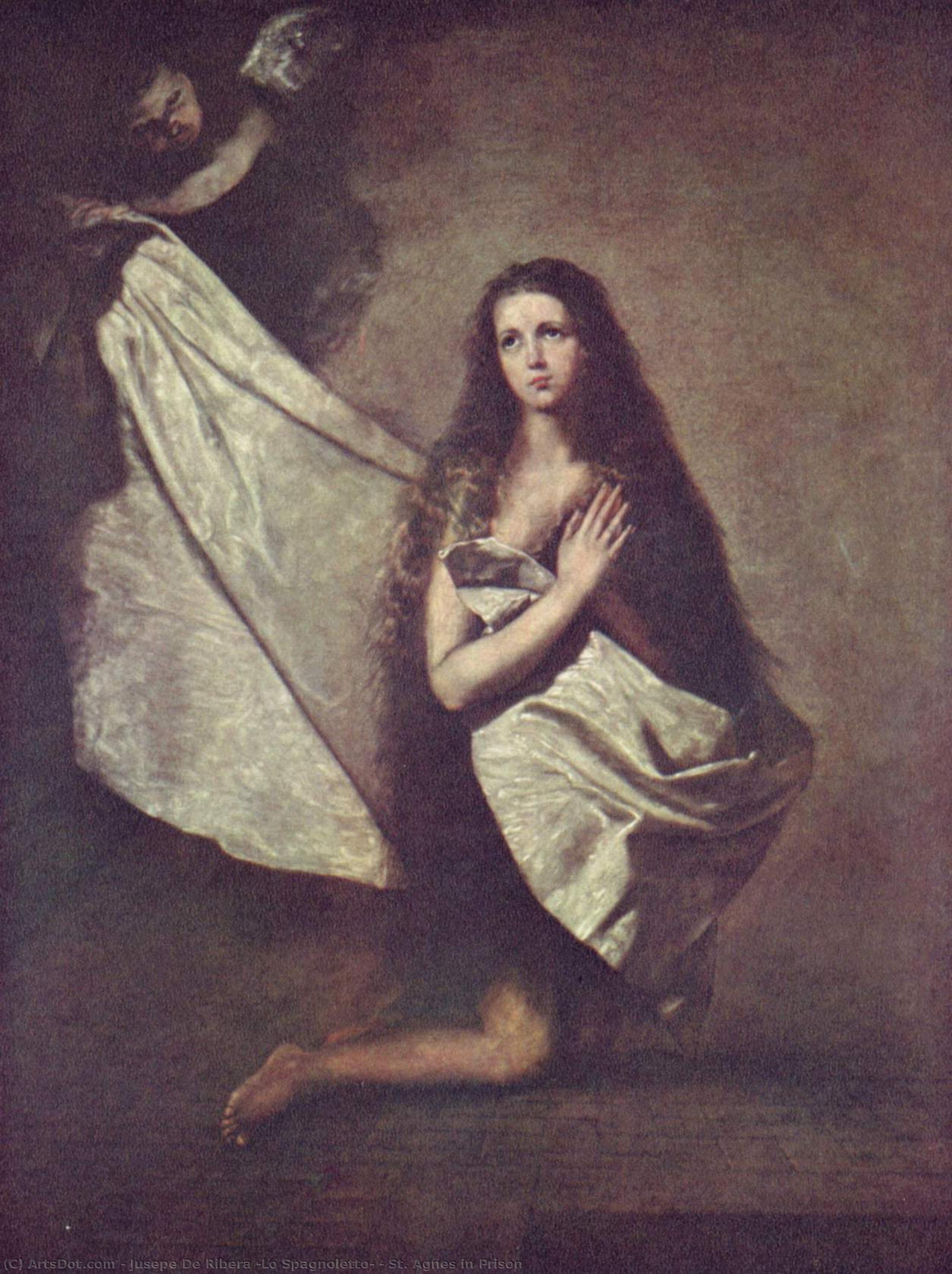
Jusepe de Ribera’s “St. Agnes in Prison,” painted in 1641, is not merely a depiction of a biblical scene; it's a profound exploration of faith, endurance, and the agonizing beauty of spiritual suffering. Created during the height of the Baroque period, this arresting work transcends simple narrative to become a visceral experience for the viewer, drawing upon Ribera’s mastery of tenebrism – a technique he honed in Naples where light and shadow are employed with almost brutal intensity.
The subject itself, St. Agnes, a young virgin martyred for her unwavering faith, is rendered with an unflinching realism that was characteristic of Ribera's style. She kneels on the cold stone floor, her body partially exposed, a stark contrast to the opulent garments she once wore – remnants of a life stripped away by persecution. The composition immediately commands attention; the darkness surrounding Agnes is almost palpable, punctuated only by the single shaft of light illuminating her face and hands, highlighting her serene expression amidst profound distress. This dramatic use of chiaroscuro isn’t merely stylistic; it serves to amplify the emotional weight of the scene, forcing us to confront the raw vulnerability of a saint enduring unimaginable hardship.
The Baroque Palette: Shadow and Sacrifice
Ribera's artistic choices are deeply rooted in the Baroque aesthetic. The painting is dominated by deep browns, blacks, and grays – colors associated with mourning, sacrifice, and the mysteries of faith. These somber hues create a claustrophobic atmosphere, mirroring Agnes’s confinement and her internal struggle. The limited use of color, particularly the stark white of her garments against the oppressive darkness, serves to isolate her figure and draw our focus entirely onto her face – an expression of quiet acceptance and unwavering devotion. The artist's meticulous attention to detail, evident in the textures of the fabric, the rough stone floor, and the delicate folds of Agnes’s clothing, further enhances the realism and immediacy of the scene.
The presence of the angel figure in the background is equally significant. Rather than offering comfort or intervention, this ethereal being seems to bear witness to Agnes's suffering, holding a large cloth – perhaps representing her former life, now discarded – with an expression of solemn contemplation. The angel’s form is deliberately indistinct, shrouded in shadow and rendered with a ghostly quality that reinforces the painting’s themes of spiritual transcendence and the eternal nature of faith.
Symbolism and Spiritual Resonance
Beyond its immediate visual impact, “St. Agnes in Prison” is rich in symbolic meaning. The act of imprisonment itself represents the suppression of faith and the persecution faced by those who adhere to their beliefs. The exposed body of St. Agnes symbolizes her willingness to sacrifice everything for her convictions – a potent reminder of the ultimate cost of spiritual commitment. The bird she holds, often interpreted as a symbol of hope or resurrection, offers a glimmer of solace amidst the darkness.
Ribera’s choice to depict Agnes in such a vulnerable state was deliberate. He wasn't interested in glorifying martyrdom; instead, he sought to capture the raw emotional reality of suffering and the enduring strength of the human spirit. The painting invites viewers to contemplate not only St. Agnes’s plight but also their own capacity for resilience and faith in the face of adversity.
A Legacy of Dramatic Realism
“St. Agnes in Prison” stands as a testament to Jusepe de Ribera's extraordinary talent and his profound understanding of human emotion. His masterful use of tenebrism, combined with his meticulous attention to detail and his ability to imbue his subjects with psychological depth, cemented his place as one of the most important artists of the Baroque era. Reproductions of this powerful work continue to resonate with audiences today, offering a timeless meditation on faith, suffering, and the enduring beauty of the human spirit.
常见问题与解答
“St. Agnes in Prison”中的色彩呈现出多少光泽感?
"St. Agnes in Prison" 的色彩呈现出 Soft Shadow 的亮度。
里贝拉 (Lǐbèi Lā) 的《St. Agnes in Prison》 描绘了怎样的场景,又传达了怎样的意境?
里贝拉 (Lǐbèi Lā) 的《St. Agnes in Prison》 将 saint agnes, prison, martyrdom, angel, tenebrism, baroque, faith, devotion 与 Dramatic 的氛围完美融合。
在里贝拉 (Lǐbèi Lā)的创作生涯中,"St. Agnes in Prison"处于怎样的地位?
"St. Agnes in Prison" 是 里贝拉 (Lǐbèi Lā) Tenebrist Baroque 时期的代表作,其创作主题涵盖了 caravaggio’s tenebrism, religious drama, spanish baroque, catholic piety, martyrdom narratives, spiritual suffering, neapolitan school, dramatic realism。
 实景预览
实景预览
 分享
分享 分享
分享
 详情
详情 指南
指南

 下载作品
下载作品
 相似作品
相似作品 X射线
X射线 幻灯片播放
幻灯片播放 Q&A
Q&A 统计数据
统计数据