切换至版画销售渠道
 展开全文
展开全文







































 对于任何边长超过 105 厘米(约 41 英寸)的艺术品或复制品,画框将以拆解后的组件形式发货。此方法可确保安全送达并防止运输过程中的损坏。


A Symphony of Shadow and Suffering
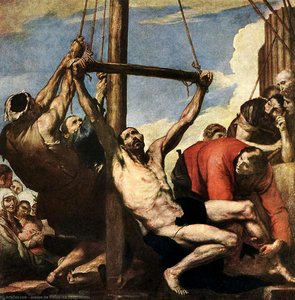
In the profound depths of Jusepe de Ribera’s 1637 masterpiece, Apollo and Marsyas, we are invited into a moment of divine retribution and visceral human agony. The canvas serves as a stage for one of Greek mythology's most harrowing tales: the contest between the god Apollo and the satyr Marsyas. As the viewer approaches this work, they are immediately struck by the dramatic tension that vibrates through the composition. Ribera, the master of the Spanish Baroque, does not merely depict a myth; he captures the very essence of consequence. The scene is anchored by the striking contrast between the celestial grace of Apollo and the earthbound, tormented form of Marsyas, creating a narrative arc that moves from musical elegance to brutal physical reality.
The technique employed here is a masterclass in tenebrism, a style characterized by intense shadows and piercing highlights. Ribera uses light not just to illuminate, but to sculpt the figures out of an encroaching darkness. This chiaroscuro effect lends a three-dimensional weight to Marsyas’s body, making his vulnerability feel palpably real. The way the light catches the tension in the muscles and the texture of the skin evokes a sense of raw, unvarnished realism that was Ribera's hallmark. For the collector or interior designer, this painting offers a profound focal point—a piece that commands attention through its ability to manipulate light and shadow, bringing a sophisticated, moody elegance to any curated space.
The Weight of Hubris and Divine Order
Beyond the visual spectacle lies a complex layer of symbolism regarding the dangers of pride. Marsyas, driven by hubris, believed his musical prowess could rival that of the gods. In this painting, the act of Apollo playing the lyre while standing atop the defeated satyr serves as a chilling metaphor for the restoration of divine order through overwhelming force. The presence of onlookers in the periphery adds a layer of voyeuristic intensity, suggesting that the lessons of humility are often witnessed by the world. This interplay between the divine and the mortal creates an emotional resonance that transcends time, touching upon universal themes of justice, ego, and the inevitable fall of those who overreach.
For those seeking to incorporate fine art into a modern or classical interior, Apollo and Marsyas provides more than just decoration; it provides a conversation. The painting’s ability to evoke empathy for the fallen while maintaining a sense of awe for the divine makes it an intellectually stimulating addition to a collection. Whether displayed in a study filled with leather-bound books or as a bold statement piece in a contemporary gallery-style room, this reproduction captures the soul of the Baroque era—a period where art was used to provoke thought, stir the emotions, and remind us of the beautiful, terrifying complexity of the human experience.
常见问题与解答
什么样的摆放方式最适合 里贝拉 (Lǐbèi Lā) 的《Apollo and Marsyas》 的画幅?
凭借其Landscape的形态,建议将《Apollo and Marsyas》复制品用于装饰Living Room。
"Apollo and Marsyas" 属于 里贝拉 (Lǐbèi Lā) 艺术生涯中的哪个时期?
"Apollo and Marsyas" 展现了 里贝拉 (Lǐbèi Lā) 在 Mature Baroque 时期的艺术风格。
对于 里贝拉 (Lǐbèi Lā) 的《Apollo and Marsyas》,有哪些推荐的用途和陈列空间?
针对 里贝拉 (Lǐbèi Lā) 的《Apollo and Marsyas》,我们为您提供以下两项建议:用途为 (Accent),适宜空间为 (Living Room)。
 实景预览
实景预览
 分享
分享 分享
分享
 详情
详情 指南
指南

 下载作品
下载作品
 相似作品
相似作品 X射线
X射线 幻灯片播放
幻灯片播放 Q&A
Q&A 统计数据
统计数据