切换至版画销售渠道
 展开全文
展开全文







































 对于任何边长超过 105 厘米(约 41 英寸)的艺术品或复制品,画框将以拆解后的组件形式发货。此方法可确保安全送达并防止运输过程中的损坏。


A Snapshot of Rural Life: Jules Dupré’s “La Petite Charrette”
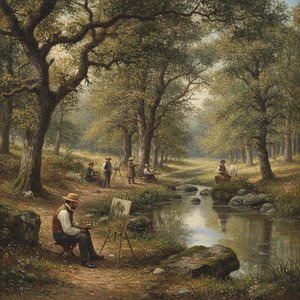
Jules Dupré's "La Petite Charrette" isn’t merely a depiction of a rural scene; it’s a carefully constructed evocation of a bygone era, a poignant glimpse into the quiet rhythms and enduring beauty of French countryside life in the 19th century. Painted with an almost palpable sense of tranquility, the artwork transports us to a world where time seems to slow, and the simple act of pulling a cart along a dusty road becomes imbued with significance. Dupré, a key figure within the Barbizon School, deliberately eschewed the romanticized idealism often associated with landscape painting, instead choosing to capture the raw, unvarnished reality of peasant life – its hardships, its dignity, and its deep connection to the land.
The Language of Light and Line: Composition and Technique
The composition of “La Petite Charrette” is masterfully balanced, utilizing a horizontal format to emphasize the expansive landscape. The winding dirt road acts as a powerful linear element, drawing the viewer’s eye into the scene and establishing a sense of depth. A towering oak tree dominates the upper right corner, its branches reaching skyward like protective arms – a symbol of strength, resilience, and perhaps even a silent witness to generations of rural life. Dupré employs an academic realist style, meticulously rendering each element with careful attention to detail. Notice the short, broken brushstrokes used to suggest the rough texture of the road, contrasting sharply with the smoother application in the distant hills. The subtle variations in tone create a remarkable sense of depth and atmosphere, mimicking the effects of atmospheric perspective – a technique perfected by artists like Constable.
- Color Palette: Dominated by earthy browns, greens, and yellows, reflecting the natural hues of the French countryside.
- Brushwork: A blend of short, broken strokes for texture and smoother application for distance.
- Linear Elements: The winding road serves as a primary guide through the composition.
Symbolism and Emotional Resonance
Beyond its realistic depiction, “La Petite Charrette” resonates with deeper symbolic meaning. The simple act of pulling a cart represents labor, sustenance, and connection to the land – fundamental aspects of peasant life. The quiet solitude of the scene evokes feelings of tranquility, simplicity, and perhaps even a touch of melancholy. Dupré wasn’t simply painting a landscape; he was capturing a mood, an atmosphere, and a way of life that was slowly disappearing in the face of industrialization. The distant hills, rendered with subtle atmospheric perspective, suggest both the vastness of the countryside and the enduring connection between humanity and nature.
A Legacy of Barbizon: Historical Context
Jules Dupré’s work is inextricably linked to the Barbizon School, a movement that championed direct observation and emotional resonance in landscape painting. Rejecting the idealized landscapes favored by earlier generations, the Barbizon artists sought to capture the raw beauty and inherent drama of nature as they experienced it. Dupré's focus on depicting the realities of peasant life—the hard work, the simple pleasures, and the profound connection to the land—aligns perfectly with the Barbizon School’s core values. His paintings offer a valuable window into 19th-century France, providing insights into the lives and perspectives of those who shaped its rural landscape.
常见问题与解答
朱尔·杜普雷 的《La petite charrette》 的版权是否允许进行复制?
《La petite charrette》的原作收藏于卢浮宫,该作品属于属于公有领域 —— 其版权已过期。
“La petite charrette”中的色彩呈现出多少光泽感?
朱尔·杜普雷 的《La petite charrette》 的记录亮度为 Soft Shadow。
针对 朱尔·杜普雷 的《La petite charrette》,建议采用怎样的打印尺寸与方向?
对于“La petite charrette”,建议的打印设置尺寸为 Medium,方向为 Landscape。
 实景预览
实景预览
 分享
分享 分享
分享
 详情
详情 指南
指南

 下载作品
下载作品
 相似作品
相似作品 X射线
X射线 幻灯片播放
幻灯片播放 问答
问答 统计数据
统计数据