
![Pas Mèche [nothing Doing] — 朱尔·巴斯蒂安-勒帕热 (zhū'ěr Bāsìdìān-lèpàzhé)](/media/artworks/images-full/0a/a4/0aa443b038cfee7a0eeae71195adba8a.jpg)
 实景预览
实景预览
 发送
发送 分享
分享
 详情
详情 指南
指南

 下载图片
下载图片
 相似作品
相似作品 X射线
X射线 幻灯片播放
幻灯片播放 统计数据
统计数据Pas Mèche [Nothing Doing]


 阅读全文
阅读全文
艺术微喷/版画
博物馆级艺术微喷或帆布版画,制作高效,并提供多种饰面选择。 ( 订购此收藏品的纯手工复刻画作 切换至数字图像销售渠道)




P118B ¥10

P118H ¥10

P118W ¥10

P438Z ¥10

P508JH ¥12

P508YH ¥12

P805H ¥10

P805Z ¥10

P919BZ ¥10

P919G ¥10

P919XJ ¥10

P959ZH ¥10

P968JZ ¥12

W106C ¥8

W218G ¥10

W218JH ¥8

W218Y ¥10

W307PJ ¥10

W316G ¥10

W316PJ ¥8

W316Y ¥10

W398PJ ¥8

W4111J ¥10

W500HY ¥15

W500JH ¥15

W692G ¥12

W849H ¥8

W940BG ¥15

W953PJ ¥8




您可以从与原作比例一致的预设尺寸中进行选择。

请输入您所需的宽度和高度,以适配您的画框或墙面。由于印刷品只能进行裁剪,无法超出原图尺寸,因此若比例不一致,画面的一部分将会被裁切。在正式印刷之前,我们会为您发送一份数字效果图供您确认。本页面显示的图片并非最终裁剪后的效果——只有效果图才能展示真实的裁剪情况。


 玻璃选项仅适用于110厘米以下的尺寸。
![Pas Mèche [Nothing Doing]](/static/images/originaluniqueart/artworks/painting.a1e74a1cb7dc.png)
Pas Mèche [Nothing Doing]
艺术微喷/版画
复刻品尺寸说明
-


总计金额
¥ 538
A Moment Frozen in Rural France: Jules Bastien-Lepage’s *Pas Mèche*
Jules Bastien-Lepage's *Pas Mèche* (Nothing Doing), painted in 1882, isn’t merely a portrait; it’s a carefully constructed tableau of rural life imbued with a quiet dignity and an unspoken narrative. The painting depicts a young boy, likely a barge worker, standing on the edge of a small village road, his gaze direct and unwavering. He is a figure of remarkable composure amidst what appears to be a mundane scene – a worn brown jacket, raggedy trousers, and large, unlaced boots speak to a life of hard work and simple means. Yet, within this apparent ordinariness lies a profound sense of observation and a subtle suggestion of melancholy. Bastien-Lepage, a pivotal figure in the transition from Realism to Naturalism, masterfully captures not just an image but also a feeling—a poignant awareness of time passing and the quiet realities of peasant existence. The title itself, *Pas Mèche*, is a French slang phrase meaning “Nothing Doing,” hinting at a state of weary resignation or perhaps simply a moment’s pause before returning to labor.The Naturalist Approach: Light, Texture, and Observation
Bastien-Lepage's artistic approach was deeply rooted in the tenets of Naturalism, a movement that sought to depict life as it truly was—without idealization or romantic embellishment. He achieved this through meticulous observation and a masterful understanding of light and texture. Unlike the polished surfaces favored by earlier academic painters, Bastien-Lepage employed loose, visible brushstrokes, allowing the canvas to breathe and revealing the materiality of his subjects. The paint itself seems almost tactile—one can practically feel the roughness of the boy’s clothing and the weathered surface of the road beneath his feet. He utilized a muted palette dominated by earthy browns, greens, and greys, reflecting the colors of the rural landscape he so faithfully rendered. Crucially, Bastien-Lepage spent considerable time *en plein air* (outdoors), directly observing his subjects in their natural environment, ensuring an unparalleled level of accuracy and authenticity in his depictions. This commitment to direct observation is evident in the boy’s posture, the way the light falls across his face, and the subtle details of the surrounding village.Symbolism Within Simplicity: The Tools of Labor
Beyond the immediate depiction of the boy, *Pas Mèche* is rich with symbolic elements. The fishing rod clutched in his hand immediately establishes his profession—a barge worker who would have been responsible for guiding and controlling the boats navigating the canals and rivers of France. The horn slung across his back was a vital tool for communication, alerting lockmasters to the approach of a boat. These seemingly simple objects – the rod, the horn, the worn boots – represent not just labor but also a connection to tradition, community, and the rhythms of rural life. The boy’s direct gaze is particularly significant; it suggests an awareness beyond his years, perhaps a recognition of the limitations imposed upon him by his circumstances. His stillness conveys a quiet dignity—a refusal to be defined solely by his humble profession.A Legacy of Rural Realism
Jules Bastien-Lepage’s *Pas Mèche* stands as a cornerstone of French Naturalist painting, profoundly influencing generations of artists. His ability to capture the essence of rural life with such honesty and sensitivity resonated deeply with audiences seeking an alternative to the idealized depictions prevalent in academic art. Born in 1848 and tragically dying at just thirty-six, Bastien-Lepage’s brief but impactful career left behind a body of work that continues to captivate viewers today. *Pas Mèche* exemplifies his signature style—a blend of meticulous observation, evocative light, and a profound understanding of the human condition. It's a painting that invites contemplation, prompting us to consider the lives of those who labor unseen and the quiet beauty found in the most unassuming corners of the world. Reproductions of *Pas Mèche* offer a valuable opportunity to bring this poignant work into any interior space, serving as a reminder of France’s rich artistic heritage and the enduring power of simple, honest representation.问答详情
在 朱尔·巴斯蒂安-勒帕热 (Zhū'Ěr Bāsìdìān-Lèpàzhé) 的《Pas Mèche [Nothing Doing]》 中,艺术流派与时代背景是如何交汇的?
朱尔·巴斯蒂安-勒帕热 (Zhū'Ěr Bāsìdìān-Lèpàzhé) 的《Pas Mèche [Nothing Doing]》 属于 Naturalist Painting 流派,创作于其作者的 19世纪 时期。
针对我的房间,"Pas Mèche [Nothing Doing]" 应该打印成什么尺寸?
朱尔·巴斯蒂安-勒帕热 (Zhū'Ěr Bāsìdìān-Lèpàzhé) 的《Pas Mèche [Nothing Doing]》 的推荐搭配:在 Living Room 中悬挂尺寸为 Medium 的版画。
在哪里可以找到关于“Pas Mèche [Nothing Doing]”的指南?
朱尔·巴斯蒂安-勒帕热 (Zhū'Ěr Bāsìdìān-Lèpàzhé) 的《Pas Mèche [Nothing Doing]》 的 指南 页面提供了一份可打印的两页式学生资料单:包含作品及其身份信息表、将其置于艺术家生平中的年代轴、艺术家的其他作品、经测量的色板,以及四种格式的即用型引用文献。
艺术家简介
朱尔·巴斯蒂安-勒帕热:自然主义先驱
朱尔·巴斯蒂安-勒帕热是19世纪末法国绘画界的一位关键人物,连接了成熟的现实主义传统和新兴的印象派运动。他于1848年出生在法国默兹地区的达姆维利耶这个小村庄,他的艺术轨迹深深植根于法国乡村的风景和生活之中。这种与家乡的联系不仅仅是传记性的;它成为了他艺术的核心本质,赋予了他的画布一种深刻的真实感,引起了那些寻求更诚实地描绘周围世界观众的共鸣。尽管他的职业生涯短暂而富有成效,但由于1884年年仅三十六岁就去世,他在自然主义的发展中留下了不可磨灭的印记,并影响了欧洲各地的艺术家。从乡村根源到艺术训练
巴斯蒂安-勒帕热最初的艺术教育来自他的父亲,他自己也是一位画家,发现了并培养了他儿子的天赋。年轻的朱尔用速写本记录着乡村的研究,以敏锐的目光捕捉了农村生活的节奏。这种早期沉浸在自然世界中的经历将成为他作品的一个决定性特征。1867年,他在巴黎美术学院接受正规训练,师从亚历山大·卡巴内尔——一位著名的学院派画家,以其精致的技巧和历史题材而闻名。虽然掌握了沙龙系统要求的技能,但巴斯蒂安-勒帕热同时渴望摆脱它的束缚。1870年普法战争爆发中断了他的学业,导致他作为志愿兵服役。这次经历加上随后的疾病使他回到达姆维利耶,这进一步坚定了他描绘他最了解的人们——他的家乡的农民和劳动者的生活。自然主义的兴起与巴斯蒂安-勒帕热的风格
战争结束后回到巴黎后,巴斯蒂安-勒帕热开始展出一些作品,这些作品预示着他从传统的学院派绘画风格中脱离。他的风格以一种复杂的绘画应用为特征——小的、有意的笔触构建起纹理和形状——并结合了一种以温暖、自然色调为主的调色板。他拥抱了* plein air *绘画,直接在自然环境中工作,捕捉光线和氛围的转瞬即逝的效果。这种对观察和真实性的奉献精神使他与新兴的自然主义运动保持一致,该运动旨在描绘生活本来的样子,不带理想化或浪漫色彩。《干草收割》(1877年)于1879年在沙龙展出,成为一个分水岭时刻,确立了巴斯蒂安-勒帕热作为这一新艺术方向的领导者。这幅画对农村工人的现实描绘以及它对乡村风景的明亮刻画征服了评论家和观众。他不仅仅是在记录农民的生活;他是在提升它,赋予他的主题尊严和尊重。主要作品与持久影响
巴斯蒂安-勒帕热的成功超出了类型场景的范围。他的肖像画获得了相当大的赞誉,特别是《我祖父的肖像》(1874年),这幅画很早就获得了认可,以及对著名女演员莎拉·伯恩哈特(1879年)的一幅引人注目的肖像——一项委托任务使他进一步出名。他还以自然主义感处理历史题材,正如他的画作《圣女贞德》所示,现藏于奥赛博物馆。这件作品将圣女贞德描绘得不是一个神话般的英雄人物,而是一个扎根于她乡村起源的年轻女子,反映了巴斯蒂安-勒帕热致力于在社会和历史背景中描绘人物。到1883年,他的影响力已经非常广泛,评论家观察到欧洲各地的艺术家都在模仿他的风格——证明了他愿景的力量。他的作品与乔治·克劳森和汤姆·罗伯茨等英国画家产生了共鸣,他们将他自然主义的元素融入到自己对农村生活的描绘中。朱尔·巴斯蒂安-勒帕热的遗产不仅在于他绘画的美丽和情感深度,还在于他在艺术变革中的作用。 他为后代艺术家铺平了道路,探索了代表周围世界的新方式,挑战了传统规范并拥抱了一种更诚实和真实的方法来创作艺术。 他的作品是法国现实主义向现代艺术过渡的关键时刻的有力证明。
朱尔·巴斯蒂安-勒帕热 (Zhū'Ěr Bāsìdìān-Lèpàzhé)
1848 - 1884 , 法国
快速概览
- Artistic Movement Or Style: 自然主义画派
- Artists Or Movements Influenced By This Artist: ['印象派']
- Artists Who Influenced This Artist:
- 现实主义运动
- 乔治·克劳森
- 汤姆·罗伯茨
- Date Of Birth: 1848年
- Date Of Death: 1884年
- Full Name: 朱尔·巴斯蒂安-勒帕热
- Nationality: 法国国籍
- Notable Artworks (List Of Titles):
- 我的祖父肖像
- 圣女贞德
- 干草收割
- 十月-收获土豆
- 丰收时节
- Place Of Birth (City And Country): 法国达姆维利耶
相关文章

Echoes of Rural Life: Art's Enduring Representations of the Countryside
Explore the rich history of rural life in art! Discover masterpieces from Millet to Mauve & beyond. Learn about Realism, Barbizon School & find inspiration for your home with OriginalUniqueArt.

Léon Augustin L'Hermitte: Capturing the Soul of French Rural Life
Discover the captivating realist paintings of Léon Augustin L'Hermitte, masterfully depicting French rural life. Explore his technique, influences & legacy – a cornerstone of 19th-century art.

The Enduring Legacy of Oil on Canvas: Technique, History & Aesthetic Impact
Explore the rich history & techniques of oil painting – from Renaissance masters to Impressionism. Discover pigments, layering methods, and why this timeless medium endures. Expert insights for artists & art enthusiasts.

Oil on Canvas: A Historical & Technical Exploration of a Timeless Artistic Medium
Explore the rich history & enduring techniques of oil painting on canvas. Discover the science behind its longevity, conservation practices, and contemporary relevance. Expert insights for art enthusiasts.
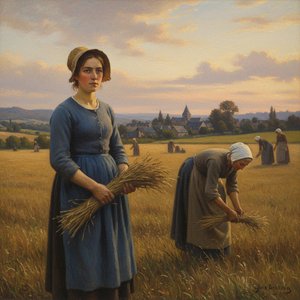
Jules Breton: Capturing the Poetic Soul of French Rural Life
Explore the captivating world of Jules Breton, master of French Realism. Discover his iconic paintings of rural life, learn about his artistic journey, and find high-quality reproductions to elevate your art collection at OriginalUniqueArt.