
 实景预览
实景预览
 分享
分享 分享
分享
 详情
详情 指南
指南

 下载作品
下载作品
 相似作品
相似作品 X射线
X射线 幻灯片播放
幻灯片播放 问答
问答 统计数据
统计数据The Smoker

- 130.0 x 96.0 cm


 展开全文
展开全文
艺术微喷/版画
博物馆级艺术微喷或帆布版画,制作高效,并提供多种饰面选择。 ( 订购纯手工绘制画作 切换至数字图像销售渠道)




P118B ¥10

P118H ¥10

P118W ¥10

P438Z ¥10

P508JH ¥12

P508YH ¥12

P805H ¥10

P805Z ¥10

P919BZ ¥10

P919G ¥10

P919XJ ¥10

P959ZH ¥10

P968JZ ¥12

W106C ¥8

W218G ¥10

W218JH ¥8

W218Y ¥10

W307PJ ¥10

W316G ¥10

W316PJ ¥8

W316Y ¥10

W398PJ ¥8

W4111J ¥10

W500HY ¥15

W500JH ¥15

W692G ¥12

W849H ¥8

W940BG ¥15

W953PJ ¥8




您可以从与原作比例一致的预设尺寸中进行选择。

请输入您所需的宽度和高度,以适配您的画框或墙面。由于印刷品只能进行裁剪,无法超出原图尺寸,因此若比例不一致,画面的一部分将会被裁切。在正式印刷之前,我们会为您发送一份数字效果图供您确认。本页面显示的图片并非最终裁剪后的效果——只有效果图才能展示真实的裁剪情况。


 玻璃选项仅适用于110厘米以下的尺寸。

The Smoker
艺术微喷/版画
复刻品尺寸
-


最终结算价
¥ 543
The Smoker: A Fragmented Portrait of Modern Life
Juan Gris’s “The Smoker,” painted in 1913, isn't merely a depiction of a man enjoying a cigarette; it’s a meticulously constructed meditation on perception, fragmentation, and the burgeoning anxieties of early 20th-century modernity. Created during his pivotal period as a pioneer of Synthetic Cubism alongside Pablo Picasso, this work embodies the movement’s radical departure from traditional representation, offering instead a fractured, multi-faceted view of its subject – a Spanish painter and sculptor named Juan Gris himself.
The painting immediately draws the eye with its dynamic composition. A man, identified through preparatory sketches as Frank Haviland, an American patron of the arts, is presented in a series of interlocking planes and geometric shapes. He’s captured mid-action, puffing on a cigarette, yet his form is simultaneously broken down into its constituent parts – a sharp nose, a tilted head, a fragmented shirt collar – all arranged within a vibrant, almost chaotic, space. This deliberate fragmentation reflects the Cubist principle of depicting objects from multiple viewpoints at once, challenging the viewer’s ability to grasp a single, unified image. The use of *papier collé*, or collage elements—newspaper clippings and other fragments—further enhances this sense of deconstruction, layering textures and visual information onto the canvas.
A Symphony of Color and Technique
Gris masterfully employs a carefully calibrated palette of greens, blues, reds, and oranges to create a visually arresting effect. These bold colors aren’t simply decorative; they contribute significantly to the painting's dynamism and sense of movement. Notice how the smoke itself is rendered in swirling bands of color, adding another layer of complexity to the composition. The technique is equally sophisticated: Gris utilizes short, broken brushstrokes—a hallmark of Synthetic Cubism—to build up the forms and create a palpable sense of depth. The interplay between hard-edged geometric shapes and softer, more organic elements generates a fascinating tension within the painting.
Historical Context and Artistic Significance
“The Smoker” was created during a period of intense artistic experimentation and intellectual ferment in Paris. The rise of Cubism—and its subsequent iterations like Synthetic Cubism—represented a fundamental shift away from traditional representational art, reflecting a broader cultural questioning of established norms and values. Gris’s work stands as a crucial bridge between the analytical rigor of early Cubism (exemplified by Picasso and Braque) and the more expressive, collage-based approach that would characterize the movement's later stages. It was painted during a period when Gris was deeply engaged with his circle of artistic friends—Picasso, Matisse, Apollinaire—and exploring new ways to represent reality through abstraction.
Symbolism and Emotional Resonance
Beyond its formal innovations, “The Smoker” is rich in symbolic meaning. The act of smoking itself can be interpreted as a metaphor for contemplation, introspection, or even the anxieties associated with modern life. The fragmented figure suggests a sense of alienation and detachment—a feeling that resonates powerfully within the context of an increasingly complex and rapidly changing world. The inclusion of Haviland’s attire – a bow tie and top hat – adds a touch of social commentary, hinting at the formality and conventions of the era while simultaneously undermining them through the painting's fractured perspective. Ultimately, “The Smoker” is not simply a portrait; it’s a poignant exploration of human experience in the face of modernity.
This captivating artwork is now housed at the Thyssen-Bornemisza Museum in Madrid, Spain, offering art enthusiasts a chance to witness firsthand this seminal piece of modern art. Reproductions are available through OriginalUniqueArt.com and other reputable sources, allowing you to bring this iconic image into your own space.
常见问题与解答
"The Smoker" 采用了什么技法,创作于何时?
"The Smoker"创作于1913年,采用了Acrylic On Paper技法。材质与日期说明了原作的创作方式及时间。
"The Smoker" 是否属于公有领域作品?
胡安·格里斯 的《The Smoker》 属于 属于公有领域 —— 其版权已过期。此版权状态决定了该作品图像的复制方式。
在胡安·格里斯反复探讨的主题中,"The Smoker"处于怎样的地位?
胡安·格里斯 的创作主题常涉及 picasso’s cubist influence, parisian avant-garde scene, geometric abstraction explored, friendship, patronage reflected, early synthetic cubism;而《The Smoker》则聚焦于 cubism, smoking, portrait, geometric, collage, paris, 1913。
艺术家简介
西班牙立体主义的先驱:胡安·格里斯的一生与艺术
1887年,何塞·维克托里亚诺·冈萨雷斯-佩雷斯出生于马德里。这位日后以胡安·格里斯之名闻名的艺术家,开启了一段将他置于二十世纪早期最重要的艺术家行列的旅程。他的最初道路并非直接通往画布和画笔;他在艺术与科学学校学习工程学,展现出一种分析思维,这种思维后来深刻影响了他的艺术方法。即使在这些形成期的岁月里,创造力的火花也在闪烁——为当地期刊贡献素描暗示着蓬勃的视觉天赋。1905年,他采用了化名胡安·格里斯,这个名字蕴含着一种新的身份和目标感,因为他开始在何塞·莫雷诺·卡尔博内罗的指导下进行正式绘画研究。这标志着一个关键的转变,将他带上了一条艺术创新的道路。巴黎觉醒与立体主义的拥抱
1906年,格里斯搬迁到巴黎,这座城市当时充满了艺术活力。格里斯沉浸在这种充满活力的氛围中,与亨利·马蒂斯、乔治·布拉克和费尔南·莱热等杰出人物建立了友谊。他最初为《L'Assiette au Beurre》等出版物创作讽刺插图,磨练了他的观察技能并培养了敏锐的视觉智慧。然而,巴勃罗·毕加索的磁性吸引力证明了特别有影响力。大约在1910年,格里斯开始认真致力于绘画,远离漫画,转向新兴的立体主义语言。这并非简单的模仿;他着手提炼形式和空间の本質,寻求一种新的视觉秩序。他的早期探索以有意偏离传统表现为特征,拥抱抽象作为捕捉现实潜在结构的一种手段。知觉的几何:风格与关键作品
胡安·格里斯的艺术创作以其卓越的清晰度和智力严谨性为特征。他不仅仅是解构物体;他以一种经过深思熟虑的精确度重建它们,强调几何形状和精心考虑的调色板。这种方法导致了他所谓的“水晶时期”,体现在杰作如《窗前静物》和《拉维尼安广场》(1915)中。这些作品展示了平面和角度之间非凡的互动,创造出一种深度和立体感,同时挑战着传统的透视概念。1913年之后,格里斯全身心地拥抱合成立体主义,率先使用*papier collé*——拼贴画——将报纸剪报和纹理纸等现实材料融入他的作品中。这种技术为他的作品增添了另一层复杂性和触觉感,模糊了绘画与雕塑之间的界限。《吉他在海前》(1925)就是一个例子,证明了他简化的形式和对立体主义原则的坚持,而《向巴勃罗·毕加索致敬》(1912)则标志着他在先锋艺术世界中日益受到认可。遗产与持久影响
胡安·格里斯对立体主义的贡献超越了单纯的风格创新;他为这一运动带来了独特的智力深度和结构清晰度。他超越了解析阶段,转向一种更加有组织和合成的方法,强调秩序和精确性。他的作品深刻影响了阿梅代·奥赞方和夏尔-爱德华·雅内雷(勒·柯布西耶)倡导的纯粹主义风格,主张回归古典形式和构图原则。格里斯对几何形状、和谐色彩和日常物品融入其艺术创作的强调,使他成为二十世纪的关键人物。他的遗产继续激励着当今的艺术家,证明了立体主义的持久力量以及胡安·格里斯的远见卓识——一位重塑我们对感知和表现理解的西班牙大师。他的作品不仅仅是绘画,更是对现实本质的深刻思考。 他是一位真正的创新者,为后世艺术的发展奠定了坚实的基础。
胡安·格里斯
1887 - 1927 , 西班牙
艺术家简介
- Artistic Movement Or Style: 立体主义, 综合立体主义
- Artists Or Movements Influenced By This Artist:
- 纯粹主义
- 阿梅代·奥赞凡
- 勒·柯布西耶
- Artists Who Influenced This Artist:
- 巴勃罗·毕加索
- 亨利·马蒂斯
- 乔治·布拉克
- Date Of Birth: 1887年3月23日
- Date Of Death: 1927年5月11日
- Full Name: 何塞·维克托里亚诺·冈萨雷斯-佩雷斯
- Nationality: 西班牙国籍
- Notable Artworks (List Of Titles):
- 吉他在海前
- 向毕加索致敬
- 磨坊主
- 约瑟特·格里斯夫人肖像
- Place Of Birth (City And Country): 西班牙马德里
相关文章
Cubism Unveiled: How Picasso and Braque Redefined Reality Through Geometric Abstraction
Explore the revolutionary world of Cubism. Discover how masters Pablo Picasso and Georges Braque dismantled reality through geometric abstraction to redefine modern art history.
解构现实:立体主义对二十世纪艺术的革命性影响
深入探索立体主义对二十世纪艺术的革命性影响。了解毕加索、布拉克等大师的作品,分析风格演变及现代建筑中的应用。专业艺术收藏指南与价值评估建议,助您慧眼识佳作!
Cubism's Revolution: 10 Masterpieces That Redefined Modern Art | OriginalUniqueArt
Explore 10 Cubist masterpieces by Picasso, Braque & more! Delve into the history of this revolutionary art movement. Find museum-quality reproductions and elevate your home decor with OriginalUniqueArt. Discover all masterpieces on OriginalUniqueArt.com
Juan Gris: Cubist Deconstruction & Synthesis – A Comprehensive Exploration
Explore the revolutionary art of Juan Gris – a master of Cubism. Discover his unique approach to deconstruction, vibrant Synthetic Cubist works, and lasting influence on modern art. Expert analysis for collectors.
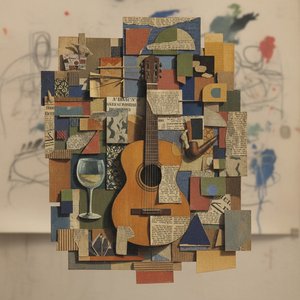
解构现实:立体主义的演变与影响深度探索
深入探索立体主义的演变历程,从对传统绘画的反叛到色彩与材质的重构。了解毕加索、布拉克等大师的关键作品,洞悉其深远影响。OriginalUniqueArt.com提供专业的艺术咨询和高品质油画复制服务。


