切换至版画销售渠道
 展开全文
展开全文







































 对于任何边长超过 105 厘米(约 41 英寸)的艺术品或复制品,画框将以拆解后的组件形式发货。此方法可确保安全送达并防止运输过程中的损坏。


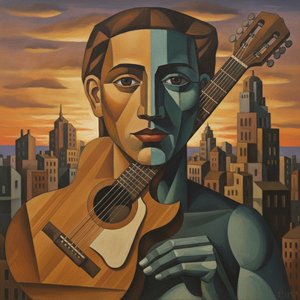
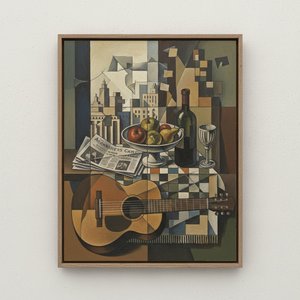
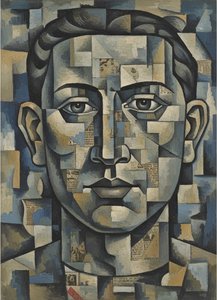
A Fragmented Portrait of Musical Reverie: Exploring Juan Gris’s Harlequin with Guitar
Juan Gris's “Harlequin with Guitar,” completed in 1919, stands as a cornerstone of Synthetic Cubism—a movement that irrevocably altered the landscape of artistic expression. More than just a depiction of a musician, this painting embodies the intellectual and aesthetic ambitions of its time, reflecting a profound engagement with geometric abstraction and a masterful manipulation of color and texture. Created in Paris during Gris’s formative years as an artist, it captures a moment of contemplative stillness amidst the dynamism of Cubist innovation.The Genesis of Geometric Harmony
Gris's approach to Cubism distinguishes him from his contemporaries like Picasso and Braque; he prioritized harmony and balance within fractured forms—a deliberate antithesis to the chaotic fragmentation championed by other artists. This pursuit of equilibrium is immediately apparent in “Harlequin with Guitar.” The central figure, a harlequin musician, isn’t rendered as a conventional portrait but rather dissected into interlocking planes of color and shape. These geometric elements – cubes, cylinders, cones—are juxtaposed against a muted backdrop featuring two additional figures, subtly hinting at an ensemble performance yet maintaining a sense of profound solitude. This careful orchestration speaks to Gris's belief that abstraction could convey emotion just as effectively as realism.Technique and Material Considerations
Executed in oil on canvas, “Harlequin with Guitar” exemplifies the Synthetic Cubist technique pioneered by Gris and his peers. Unlike Analytical Cubism’s focus on breaking down objects into constituent parts, Synthetic Cubism incorporates collage—specifically paper fragments—to enrich the visual experience. These paper inclusions aren't merely decorative; they contribute to the overall textural complexity of the painting and subtly disrupt the rigid geometric structure. The artist meticulously applied pigment with a brush, layering colors to achieve luminous effects and creating subtle gradations that heighten the sense of depth.Historical Context: Embracing Modernity’s Disquiet
The painting emerged during a period of intense intellectual ferment—the aftermath of World War I—characterized by anxieties about tradition and an eagerness to embrace new artistic languages. Cubism responded directly to these concerns, rejecting perspectival illusion and embracing the challenge of representing multiple viewpoints simultaneously. Gris's decision to depict a musician wasn’t arbitrary; it served as a deliberate provocation against academic conventions, asserting that art could explore psychological states alongside visual representation. The inclusion of the paper collage underscores this broader cultural preoccupation with experimentation and disruption.Symbolism Beyond Representation
While “Harlequin with Guitar” eschews literal depiction, its symbolism resonates deeply. The harlequin figure itself—a traditional theatrical character—represents adaptability and transformation—themes central to the Cubist project. The guitar symbolizes musical expression and contemplation, mirroring Gris’s own artistic sensibilities. Furthermore, the muted backdrop serves as a counterpoint to the vibrant geometric forms, suggesting an inner world of thought and emotion that transcends outward appearances.Emotional Resonance: A Quiet Intensity
Despite its formal austerity, “Harlequin with Guitar” possesses a palpable emotional intensity. The harlequin’s gaze—directed slightly off-center—captures a moment of introspection, inviting the viewer to contemplate the complexities of human experience. The subtle interplay of color and texture contributes to this feeling of quiet contemplation, creating an artwork that transcends mere visual stimulation and speaks to the profound beauty of geometric abstraction. It remains a testament to Gris’s ability to convey emotion through form—a remarkable achievement within the context of early 20th-century art.常见问题与解答
胡安·格里斯 的《Harlequin with guitar - -》 的形状和尺寸是多少?
胡安·格里斯 的《Harlequin with guitar - -》 是一幅尺寸为 116 x 89 cm 的 Portrait 作品。
“Harlequin with guitar - -”的主题是什么?
"Harlequin with guitar - -" 的描绘主题为 cubism, guitar, harlequin, portrait, geometric, collage, madrid。
胡安·格里斯 的《Harlequin with guitar - -》 的色彩是如何与其情感表达相联系的?
胡安·格里斯 的《Harlequin with guitar - -》 的 Dark 色调与其 Reflective 的情感基调相得益彰。色彩是作品传达情感的表达方式之一。
 实景预览
实景预览
 分享
分享 分享
分享
 详情
详情 指南
指南

 下载作品
下载作品
 相似作品
相似作品 X射线
X射线 幻灯片播放
幻灯片播放 Q&A
Q&A 统计数据
统计数据