

 实景预览
实景预览
 发送
发送 分享
分享
 详情
详情 指南
指南

 下载图片
下载图片
 相似作品
相似作品 X射线
X射线 幻灯片播放
幻灯片播放 统计数据
统计数据Flowers


 阅读全文
阅读全文
艺术微喷/版画
博物馆级艺术微喷或帆布版画,制作高效,并提供多种饰面选择。 ( 订购此收藏品的纯手工复刻画作 切换至数字图像销售渠道)




P118B ¥10

P118H ¥10

P118W ¥10

P438Z ¥10

P508JH ¥12

P508YH ¥12

P805H ¥10

P805Z ¥10

P919BZ ¥10

P919G ¥10

P919XJ ¥10

P959ZH ¥10

P968JZ ¥12

W106C ¥8

W218G ¥10

W218JH ¥8

W218Y ¥10

W307PJ ¥10

W316G ¥10

W316PJ ¥8

W316Y ¥10

W398PJ ¥8

W4111J ¥10

W500HY ¥15

W500JH ¥15

W692G ¥12

W849H ¥8

W940BG ¥15

W953PJ ¥8




您可以从与原作比例一致的预设尺寸中进行选择。

请输入您所需的宽度和高度,以适配您的画框或墙面。由于印刷品只能进行裁剪,无法超出原图尺寸,因此若比例不一致,画面的一部分将会被裁切。在正式印刷之前,我们会为您发送一份数字效果图供您确认。本页面显示的图片并非最终裁剪后的效果——只有效果图才能展示真实的裁剪情况。


 玻璃选项仅适用于110厘米以下的尺寸。

Flowers
艺术微喷/版画
复刻品尺寸说明
-


总计金额
¥ 537
A Symphony of Cubist Geometry
In the vibrant tapestry of early twentieth-century modernism, few works capture the intellectual rigor and sensory richness of Juan Gris quite like his 1914 masterpiece, Flowers. This painting serves as a profound window into the analytical mind of a Spanish visionary who sought to deconstruct reality only to rebuild it with more potent, structural truth. At first glance, the viewer is greeted by a bustling, complex arrangement: a central vase overflowing with blossoms, anchored amidst a sea of scattered books, delicate cups, and the bright, citrusy warmth of oranges. It is a composition that refuses to be ignored, demanding an active gaze that navigates through layers of overlapping planes and intersecting lines.
The painting transcends mere still life, moving into the realm of Synthetic Cubism. Unlike the fragmented, almost monochromatic explorations of his predecessors, Gris utilizes a more structured approach where color and form coalesce to create a sense of rhythmic stability. The objects—the books, the bowls, and the fruit—are not merely depicted; they are architecturally integrated into the canvas. Each element is treated with a mathematical precision that speaks to Gris’s early training in engineering, allowing the viewer to experience the tension between the organic softness of the flowers and the rigid, geometric boundaries of the surrounding objects.
The Poetry of Form and Light
Technically, Flowers is a triumph of balance and tonal harmony. The artist employs a sophisticated palette where the bright, sun-drenched hues of the oranges provide a striking counterpoint to the more muted, earthy tones of the books and ceramics. Through masterful brushwork, Gris creates a tactile quality that invites the eye to linger on the texture of the petals and the smooth glaze of the cups. The light does not simply fall upon the objects; it seems to emerge from within the very intersections of the geometric shapes, creating a luminous depth that breathes life into the static arrangement.
For the discerning collector or interior designer, this piece offers an unparalleled opportunity to introduce a sense of intellectual sophistication and historical weight into a space. The painting’s ability to command attention through its complex composition makes it a perfect focal point for a contemporary gallery, a refined study, or a curated living area. It is more than a decoration; it is a conversation starter that bridges the gap between the classical tradition of the still life and the radical innovations of the modern era.
A Timeless Emotional Resonance
Beyond its formal brilliance, there is an undeniable emotional pulse within this work. There is a certain nostalgic intimacy in the arrangement of everyday items—the remnants of a quiet afternoon spent reading or sharing tea. This sense of domesticity, layered beneath the complex Cubist structure, creates a poignant connection with the viewer. It evokes a feeling of organized chaos, a reflection of the modern human experience where beauty and complexity are inextricably linked.
Owning a high-quality reproduction of this 1914 treasure allows one to inhabit the world of Juan Gris, bringing the spirit of Parisian avant-garde into the home. It serves as a constant reminder of the power of perspective and the enduring allure of finding order within complexity. Whether viewed as an exploration of geometric theory or a celebration of life's simple textures, Flowers remains a breathtaking testament to the transformative power of art.
艺术家简介
西班牙立体主义的先驱:胡安·格里斯的一生与艺术
1887年,何塞·维克托里亚诺·冈萨雷斯-佩雷斯出生于马德里。这位日后以胡安·格里斯之名闻名的艺术家,开启了一段将他置于二十世纪早期最重要的艺术家行列的旅程。他的最初道路并非直接通往画布和画笔;他在艺术与科学学校学习工程学,展现出一种分析思维,这种思维后来深刻影响了他的艺术方法。即使在这些形成期的岁月里,创造力的火花也在闪烁——为当地期刊贡献素描暗示着蓬勃的视觉天赋。1905年,他采用了化名胡安·格里斯,这个名字蕴含着一种新的身份和目标感,因为他开始在何塞·莫雷诺·卡尔博内罗的指导下进行正式绘画研究。这标志着一个关键的转变,将他带上了一条艺术创新的道路。巴黎觉醒与立体主义的拥抱
1906年,格里斯搬迁到巴黎,这座城市当时充满了艺术活力。格里斯沉浸在这种充满活力的氛围中,与亨利·马蒂斯、乔治·布拉克和费尔南·莱热等杰出人物建立了友谊。他最初为《L'Assiette au Beurre》等出版物创作讽刺插图,磨练了他的观察技能并培养了敏锐的视觉智慧。然而,巴勃罗·毕加索的磁性吸引力证明了特别有影响力。大约在1910年,格里斯开始认真致力于绘画,远离漫画,转向新兴的立体主义语言。这并非简单的模仿;他着手提炼形式和空间の本質,寻求一种新的视觉秩序。他的早期探索以有意偏离传统表现为特征,拥抱抽象作为捕捉现实潜在结构的一种手段。知觉的几何:风格与关键作品
胡安·格里斯的艺术创作以其卓越的清晰度和智力严谨性为特征。他不仅仅是解构物体;他以一种经过深思熟虑的精确度重建它们,强调几何形状和精心考虑的调色板。这种方法导致了他所谓的“水晶时期”,体现在杰作如《窗前静物》和《拉维尼安广场》(1915)中。这些作品展示了平面和角度之间非凡的互动,创造出一种深度和立体感,同时挑战着传统的透视概念。1913年之后,格里斯全身心地拥抱合成立体主义,率先使用*papier collé*——拼贴画——将报纸剪报和纹理纸等现实材料融入他的作品中。这种技术为他的作品增添了另一层复杂性和触觉感,模糊了绘画与雕塑之间的界限。《吉他在海前》(1925)就是一个例子,证明了他简化的形式和对立体主义原则的坚持,而《向巴勃罗·毕加索致敬》(1912)则标志着他在先锋艺术世界中日益受到认可。遗产与持久影响
胡安·格里斯对立体主义的贡献超越了单纯的风格创新;他为这一运动带来了独特的智力深度和结构清晰度。他超越了解析阶段,转向一种更加有组织和合成的方法,强调秩序和精确性。他的作品深刻影响了阿梅代·奥赞方和夏尔-爱德华·雅内雷(勒·柯布西耶)倡导的纯粹主义风格,主张回归古典形式和构图原则。格里斯对几何形状、和谐色彩和日常物品融入其艺术创作的强调,使他成为二十世纪的关键人物。他的遗产继续激励着当今的艺术家,证明了立体主义的持久力量以及胡安·格里斯的远见卓识——一位重塑我们对感知和表现理解的西班牙大师。他的作品不仅仅是绘画,更是对现实本质的深刻思考。 他是一位真正的创新者,为后世艺术的发展奠定了坚实的基础。
胡安·格里斯
1887 - 1927 , 西班牙
快速概览
- Artistic Movement Or Style: 立体主义, 综合立体主义
- Artists Or Movements Influenced By This Artist:
- 纯粹主义
- 阿梅代·奥赞凡
- 勒·柯布西耶
- Artists Who Influenced This Artist:
- 巴勃罗·毕加索
- 亨利·马蒂斯
- 乔治·布拉克
- Date Of Birth: 1887年3月23日
- Date Of Death: 1927年5月11日
- Full Name: 何塞·维克托里亚诺·冈萨雷斯-佩雷斯
- Nationality: 西班牙国籍
- Notable Artworks (List Of Titles):
- 吉他在海前
- 向毕加索致敬
- 磨坊主
- 约瑟特·格里斯夫人肖像
- Place Of Birth (City And Country): 西班牙马德里
相关文章
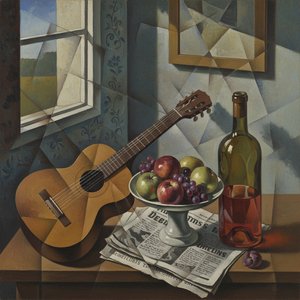
解构现实:立体主义静物艺术的全面探索与永恒魅力
深入探索立体主义静物画的起源、大师作品与艺术影响。OriginalUniqueArt.com提供高品质手绘油画复制品及定制服务,重现经典,提升您的家居艺术品味!
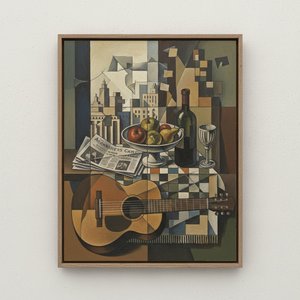
Juan Gris: Cubist Deconstruction & Synthesis – A Comprehensive Exploration
Explore the revolutionary art of Juan Gris – a master of Cubism. Discover his unique approach to deconstruction, vibrant Synthetic Cubist works, and lasting influence on modern art. Expert analysis for collectors.

Cubist Still Life: Redefining Reality Through Fragmented Forms and Geometric Abstraction
Explore the profound evolution of Cubist still life, from Cézanne's structural foundations to the fragmented brilliance of Braque and Léger. Discover how geometric abstraction redefined reality through a sophisticated lens of form, color, and modern artistic mastery.

The Bountiful Still Life: Symbolism & Artistic Representation of Fruit Across Art History
Explore the rich history of still life painting & the symbolism of fruit across art movements. Discover masterpieces from Caravaggio to Cézanne with OriginalUniqueArt – expert guidance & museum-quality reproductions.

保罗·塞尚:25幅大师杰作,重塑现代艺术与家居美学 | OriginalUniqueArt
探索保罗·塞尚25幅经典杰作!深入了解后印象派大师的艺术生涯、独特技法与色彩运用。OriginalUniqueArt提供高清油画复制品,为您的家居带来博物馆级艺术体验。立即发现更多名画,点亮生活空间!


