

 效果预览
效果预览
 分享
分享 分享
分享
 详情
详情 指南
指南

 下载
下载
 相似作品
相似作品 X射线
X射线 幻灯片播放
幻灯片播放 统计数据
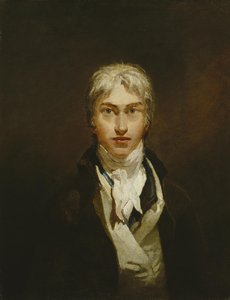
统计数据Self-Portrait
 Acrylic On Canvas
- WallArt
- Neoclassicism
 1799
1799 74.0 x 58.0 cm
 泰特不列颠美术馆
 展开详情
展开详情
手工油画复制品
由我们的艺术家按需定制,为您提供您所选尺寸及画框的布面手工油画。 ( 切换至版画销售渠道 切换至数字图像销售渠道)




P118B $10

P118H $10

P118W $10

P438Z $10

P508JH $12

P508YH $12

P805H $10

P805Z $10

P919BZ $10

P919G $10

P919XJ $10

P959ZH $10

P968JZ $12

W106C $8

W218G $10

W218JH $8

W218Y $10

W307PJ $10

W316G $10

W316PJ $8

W316Y $10

W398PJ $8

W4111J $10

W500HY $15

W500JH $15

W692G $12

W849H $8

W940BG $15

W953PJ $8




从与原作比例一致的预设尺寸中进行选择。

您可以输入自定义尺寸,以适配特定的画框或空间。如果所选尺寸与原图比例不符,我们将通过裁剪作品或添加手绘元素来扩展画面。数字样稿将在制作开始前发送给您确认。
请注意,屏幕预览无法准确反映实际的裁剪或扩展效果,只有样稿才能真实呈现最终的构图。
虽然我们提供定制尺寸服务,但为了保留原作比例,建议您从预设列表中选择尺寸。
下单后,OriginalUniqueArt.com 团队将通过电子邮件联系客户获取具体要求,并提供效果预览图。


 玻璃选项仅适用于110厘米以下的尺寸。

Self-Portrait
复制材质
复制品尺寸
-


最终总价
$ 300
The Enigmatic Gaze: Unveiling Turner’s Self-Portrait
Joseph Mallord William Turner's 1799 self-portrait is not merely a likeness; it’s a carefully constructed window into the mind of a visionary artist grappling with his own identity and the burgeoning Romantic movement. Painted during a pivotal period in his career, this intimate depiction reveals a young Turner at the cusp of artistic greatness – a man both intensely private and boldly experimental. The painting immediately draws the viewer in with its stark simplicity: a dark background that serves to amplify the luminosity of the subject’s face, highlighting his serious, almost melancholic expression. His blonde hair is rendered with a subtle sheen, suggesting a texture that hints at the natural world he would later so masterfully capture. The suit and tie, while indicative of the era, are worn with an understated elegance, hinting at a man comfortable in his own skin – or perhaps acutely aware of the expectations placed upon him.

(Image of Self-Portrait by Joseph Mallord William Turner)
A Study in Light and Shadow – The Language of Romanticism
Turner’s technique is immediately arresting. He employs a masterful use of chiaroscuro—the dramatic contrast between light and dark—to sculpt the subject's features and create a sense of depth. This isn’t simply about rendering form; it’s about conveying mood and atmosphere. The subdued lighting, almost entirely emanating from within the figure himself, suggests introspection and perhaps even a touch of unease. The brushstrokes are loose and expressive, characteristic of Turner’s evolving style, moving away from the rigid academic conventions of his training at the Royal Academy. This deliberate departure signals his commitment to capturing not just what he *saw*, but how he *felt* about what he saw – a core tenet of Romanticism. The dark background isn't merely a void; it’s an active element, pushing the figure forward and emphasizing his presence.
The Symbolism of Self-Representation
Self-portraits were becoming increasingly popular in the late 18th and early 19th centuries, offering artists a means to explore their own identity and artistic process. Turner’s self-portrait is particularly significant because it appears during a period of intense experimentation for him. He was actively rejecting established styles and seeking new ways to represent light, color, and atmosphere. The serious gaze directed at the viewer suggests a man acutely aware of his role as an artist – a conduit between himself and the natural world. Some art historians believe this portrait may have been created in anticipation of his election as an Associate member of the Royal Academy of Arts in 1799, a significant step in his career. The very act of presenting himself to the world through paint becomes a statement about his ambition and artistic vision.
A Legacy of Light – Turner’s Enduring Influence
Turner's self-portrait is more than just a portrait; it’s a foundational document in the history of landscape painting. It foreshadows his later, increasingly abstract explorations of light and atmosphere, anticipating the Impressionist movement by decades. His ability to capture fleeting moments of beauty and drama—the shimmering effects of sunlight on water, the turbulent energy of a storm—continues to resonate with viewers today. Reproductions of this iconic work offer a remarkable opportunity to experience the intensity and emotional power of Turner’s vision, bringing his unique perspective into any space. OriginalUniqueArt offers meticulously crafted hand-painted reproductions that faithfully capture the nuances of light, color, and brushwork, allowing you to own a piece of art history.
艺术家简介
The Luminary of Light: A Journey Through the Life and Art of J.M.W. Turner
Joseph Mallord William Turner, a name synonymous with the sublime power of landscape and the evocative dance of light, remains one of Britain’s most celebrated and influential artists. Born in Covent Garden, London, in 1775, Turner's journey from a barber’s son to a master painter was fueled by an innate talent, relentless dedication, and a visionary spirit that would forever alter the course of art history. From his earliest days sketching architectural details to his later, almost abstract explorations of atmosphere and color, Turner consistently pushed the boundaries of artistic expression. His formal training began at the Royal Academy Schools in 1789, where he quickly distinguished himself as a promising student. However, Turner was not content with merely replicating established styles; he sought to capture the very essence of nature – its raw power, its fleeting beauty, and its inherent drama. Early works reveal a meticulous attention to topographical detail, reflecting the prevailing artistic tastes of the time. Yet, even in these early pieces, hints of his future direction are visible—a sensitivity to light and shadow, a willingness to experiment with color, and an emerging fascination with the sublime. He was particularly drawn to the Romantic movement’s emphasis on emotion and imagination, rejecting the neoclassical preoccupation with reason and order.The Evolution of a Visionary: From Topography to Transcendence
Turner's artistic development was marked by constant experimentation and a growing desire to move beyond mere representation. Influenced by masters like Claude Lorrain and J.M.W. Cozens, he began to infuse his landscapes with a romantic sensibility, emphasizing emotional response over precise depiction. His travels throughout Europe, beginning in 1802, proved pivotal, exposing him to diverse landscapes and inspiring new approaches to composition and color. He wasn’t simply recording what he saw; he was interpreting it through the lens of his own unique vision. These expeditions broadened his artistic horizons and solidified his belief that art should strive for something beyond mere visual accuracy—a profound connection with the natural world and an expression of human emotion. The early 19th century witnessed a shift in Turner's style towards greater expressiveness. His seascapes, in particular, became increasingly dramatic, capturing the fury and majesty of the ocean with unprecedented intensity. Paintings like “The Fighting Temeraire Tugged to Her Last Berth to Be Broken Up” (1839) are not merely depictions of a ship being towed to its final resting place; they are poignant meditations on mortality, loss, and the relentless march of progress. The use of light in this work is particularly striking—a golden sunset casting a melancholic glow over the scene, symbolizing the passing of an era. Turner skillfully employed thick brushstrokes and vibrant colors to convey the turbulent energy of the sea and the solemn beauty of its twilight hours.A Master of Atmosphere: Light, Color, and the Sublime
Turner’s later works are characterized by an almost radical departure from traditional artistic conventions. He increasingly prioritized atmosphere and color over form and detail, creating paintings that seem to dissolve into pure light and energy. Works like “Rain, Steam and Speed – The Great Western Railway” (1844) exemplify this approach—a swirling vortex of color and motion that captures the dynamism of the industrial age. Critics were often baffled by these later works, but their influence on subsequent generations of artists would prove profound. He wasn’t simply painting landscapes; he was attempting to convey the very *feeling* of being in nature – the awe, the wonder, the terror. Turner's groundbreaking technique involved layering translucent washes of color over textured surfaces, achieving an ethereal quality that captured the essence of fleeting moments and subjective perceptions.He was a pioneer in exploring the effects of light and atmosphere, anticipating the Impressionists’ focus on capturing fleeting moments and subjective perceptions. His use of color was equally innovative—bold, vibrant hues applied with loose brushstrokes to create a sense of movement and energy. Turner's willingness to challenge conventions, his relentless experimentation, and his unwavering commitment to artistic vision continue to resonate with artists and art lovers today. He remains a pivotal figure in the development of modern art, a true visionary who transformed the way we see and experience the world around us. His works are housed in major museums worldwide, including the Tate Britain in London, where visitors can immerse themselves in the luminous beauty and profound emotional depth of his extraordinary paintings.
Notable Works & Collections
- The Morning After the Deluge (1843): A powerful depiction of nature’s forces, housed in the Tate Collection, London.
- Chichester Canal (1828): Commissioned by George Wyndham, currently at the Tate Collection.
- Ruins of Tintern Abbey: A stunning watercolor showcasing his mastery of light and atmosphere, found in the Calouste Gulbenkian Museum (Lisboa, Portugal).
- The Fighting Temeraire Tugged to Her Last Berth to Be Broken Up (1839): A poignant masterpiece exploring themes of loss and change.
- Rain, Steam and Speed – The Great Western Railway (1844): Capturing the dynamism of the industrial age with swirling color and motion.
托纳
1775 - 1851 , 英国
艺术家简介
- Artistic Movement Or Style: 浪漫主义
- Artists Or Movements Influenced By This Artist: ['克劳德·洛林']
- Date Of Birth: 1775年4月23日
- Date Of Death: 1851年12月19日
- Full Name: 乔治·马尔洛德·威廉·托纳
- Nationality: 英国
- Notable Artworks:
- 泰梅尔炮船战斗图
- 蒂纳伯爵教堂运河
- 蒂纳伯爵废墟
- Place Of Birth: 伦敦,英国
相关文章

The Enduring Legacy of Oil on Canvas: Technique, History & Aesthetic Impact
Explore the rich history & techniques of oil painting – from Renaissance masters to Impressionism. Discover pigments, layering methods, and why this timeless medium endures. Expert insights for artists & art enthusiasts.

画布上的流光溢彩:油画技法、历史沿革与当代实践
深入探索油画技法的历史沿革,从文艺复兴到卡拉瓦乔的革命性创新。了解多层涂布技术如何塑造色彩与光影,并洞悉当代油画实践中的传统与突破。OriginalUniqueArt为您提供专业的艺术品咨询和定制服务。

The Soul of Impressionism: Why Oil on Canvas Captures Eternal Light and Timeless Emotion
Discover the enchanting alchemy of Impressionism. Explore how the mastery of oil on canvas, through glazing and impasto, captures eternal light and emotion. Perfect for lovers of Monet and Van Gogh seeking the profound depth of hand-painted fine art.
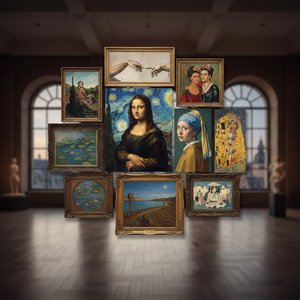
Oil on Canvas Masters: 10 Paintings That Redefined Art History |
Journey through art history with our guide to 10 legendary oil on canvas masterpieces! Explore iconic works by Van Gogh, Monet & Rembrandt. Find museum-quality reproductions and elevate your home decor at . Discover all masterpieces online.

Oil on Canvas: A Historical & Technical Exploration of a Timeless Artistic Medium
Explore the rich history & enduring techniques of oil painting on canvas. Discover the science behind its longevity, conservation practices, and contemporary relevance. Expert insights for art enthusiasts.


