

 效果预览
效果预览
 购买印刷品
购买印刷品 分享
分享 分享
分享
 详情
详情

 下载
下载
 相似作品
相似作品 X射线
X射线 幻灯片播放
幻灯片播放Self Potrait

 展开详情
展开详情




































从与原作比例一致的预设尺寸中进行选择。

您可以输入自定义尺寸,以适配特定的画框或空间。如果所选尺寸与原图比例不符,我们将通过裁剪作品或添加手绘元素来扩展画面。数字样稿将在制作开始前发送给您确认。
请注意,屏幕预览无法准确反映实际的裁剪或扩展效果,只有样稿才能真实呈现最终的构图。
虽然我们提供定制尺寸服务,但为了保留原作比例,建议您从预设列表中选择尺寸。
下单后,OriginalUniqueArt.com 团队将通过电子邮件联系客户获取具体要求,并提供效果预览图。


 玻璃选项仅适用于110厘米以下的尺寸。

Self Potrait
复制材质
复制品尺寸
-


最终总价
$ 300
艺术家简介
A Witness to an Era: The Life and Legacy of Joseph Farington
In the grand tapestry of British art history, few figures possess a dual significance as profound as Joseph Farington. While his brush captured the serene, topographical essence of the English landscape, his pen immortalized the very soul of the eighteenth- and nineteenth-century art world. Born in 1747 in Leigh, Lancashire, Farington was raised in an environment of intellectual rigor, the son of a rector whose influence instilled in him a lifelong devotion to observation. His early years were shaped by both the quietude of rural life and the far-reaching shadows of family tragedy, yet it was his move toward the artistic epicenter of London that would ultimately define his destiny. Under the tutelage of the esteemed Richard Wilson, Farington transitioned from a talented student to a master of detail, learning to translate the rugged beauty of the Lake District and the rhythmic flow of the River Thames onto canvas with an almost scientific precision.
Farington’s artistic evolution was deeply intertwined with the rise of the Royal Academy. As he ascended through the ranks—becoming an Associate in 1783 and a full Royal Academician in 1785—his work became more than mere documentation; it became a romanticized dialogue between man and nature. His landscapes, characterized by their meticulous topographical accuracy, offered a window into a Britain undergoing profound transformation. Whether depicting the haunting ruins of Roslyn Castle or the bustling vitality of Westminster Abbey and Bridge, Farington possessed a unique ability to imbue static scenery with a sense of temporal weight. His technique, rooted in the traditions of his mentor Wilson, utilized light and texture to evoke the atmospheric shifts of the English countryside, making him a pivotal bridge between the classical landscape traditions and the burgeoning Romantic movement.
The Chronicler of the Academy
Beyond the borders of his canvases, Farington’s most enduring contribution to history lies in his voluminous, meticulously kept diaries. To read Farington is to step into the heated corridors of the Royal Academy during its most formative and contentious years. He was not merely a passive observer but an active participant in the institutional politics that shaped British art. His writings provide an unparalleled, often biting, look at the personalities, rivalries, and scandals that defined his contemporaries. From the debates surrounding the presidency of Benjamin West to the social nuances of London’s elite, Farington recorded it all with a sharp, discerning eye.
His diaries serve as a vital primary source for historians, offering insights that no formal gallery catalogue could provide. Through his entries, we encounter the following elements of the era:
- The Intricacies of Artistic Patronage: Detailed accounts of commissions and the economic realities faced by painters of his time.
- Institutional Conflict: The internal struggles within the Royal Academy, including the legendary tensions that led others to label him the "Dictator to the Academy."
- Cultural Shifts: Observations on wider European events, such as the impact of the Napoleonic Wars and the atmosphere of Paris during the Peace of Amiens.
- Social Tapestry: The intersection of art, politics, and high society, capturing the gossip and grandeur of pre-Regency London.
Ultimately, Joseph Farington remains a monumental figure whose importance transcends the medium of his work. As a painter, he preserved the physical landscape of a nation; as a diarist, he preserved its cultural memory. His life was a testament to the power of observation, proving that whether through the delicate application of oil or the rhythmic scratch of a quill, the act of witnessing is one of the highest forms of art.
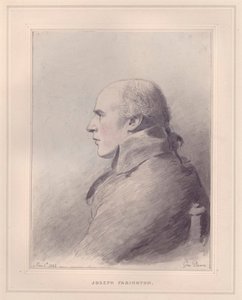
Joseph Farington
1747 - 1821 , United Kingdom
艺术家简介
- Artistic Movement Or Style: Romantic Landscape Painting
- Artists Or Movements Influenced By This Artist: ['Dutch Golden Age']
- Artists Who Influenced This Artist: ['Richard Wilson']
- Date Of Birth: November 21, 1747
- Date Of Death: December 30, 1821
- Full Name: Joseph Farington RA
- Nationality: British
- Notable Artworks:
- The Old Water Tower At York Buildings
- Lancaster From Above The Aqueduct Bridge
- View Of Windermere And Belle Isle From The Station
- Place Of Birth: Leigh, United Kingdom
相关文章
Neo-Classicism's Greatest Hits: 10 Masterpieces for Your Home |
Journey through Neo-Classicism's finest! Explore 10 iconic masterpieces by David, Ingres & Canova. Discover art history, techniques & timeless beauty – perfect for inspiring your home decor. Find museum-quality reproductions at

The Enduring Legacy of Oil on Canvas: Technique, History & Aesthetic Impact
Explore the rich history & techniques of oil painting – from Renaissance masters to Impressionism. Discover pigments, layering methods, and why this timeless medium endures. Expert insights for artists & art enthusiasts.
Romantic Realism's Finest: 10 Masterpieces for Your Home | OriginalUniqueArt
Explore 10 defining masterpieces of Romantic Realism! Discover Courbet, Millet & Daumier's powerful paintings—capturing emotion and social realities. Find museum-quality reproductions for your home at OriginalUniqueArt.com.
Timeless Elegance: The Ultimate Buyer's Guide to Choosing Classical Portraits for Sophisticated Interiors
Discover how to select the perfect classical portrait for your home. Our expert guide explores matching art styles to interiors, choosing between hand-painted oils and Giclée prints, and transforming personal photos into timeless masterpieces with professional artistry.

Oil on Canvas: A Historical & Technical Exploration of a Timeless Artistic Medium
Explore the rich history & enduring techniques of oil painting on canvas. Discover the science behind its longevity, conservation practices, and contemporary relevance. Expert insights for art enthusiasts.

