- 首页

- 油画复制品
- josefina e. bodnar
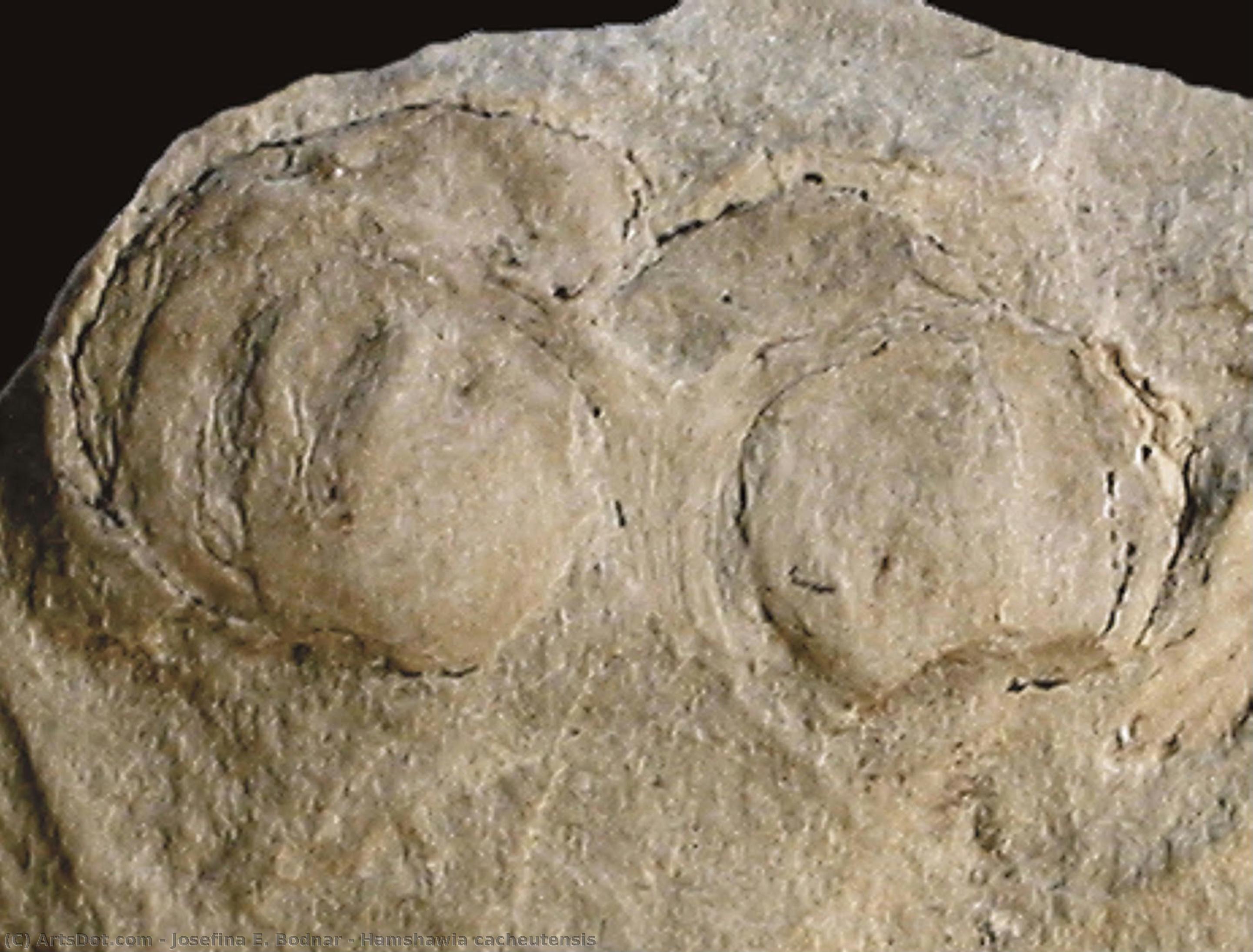
- Hamshawia cacheutensis
 购买版画
购买版画 分享
分享 分享
分享
 详情
详情

 下载
下载
 相似作品
相似作品 X射线
X射线 幻灯片播放
幻灯片播放Hamshawia cacheutensis


 展开详情
展开详情




































从与原作比例一致的预设尺寸中进行选择。

您可以输入自定义尺寸,以适配特定的画框或空间。如果所选尺寸与原图比例不符,我们将通过裁剪作品或添加手绘元素来扩展画面。数字样稿将在制作开始前发送给您确认。
请注意,屏幕预览无法准确反映实际的裁剪或扩展效果,只有样稿才能真实呈现最终的构图。
虽然我们提供定制尺寸服务,但为了保留原作比例,建议您从预设列表中选择尺寸。
下单后,OriginalUniqueArt.com 团队将通过电子邮件联系客户获取具体要求,并提供效果预览图。


 玻璃选项仅适用于110厘米以下的尺寸。

Hamshawia cacheutensis
复制材质
复制品尺寸
-


最终总价
-
艺术家简介
Introduction: A Paleobotanist’s Artistic Vision
Josefina E. Bodnar is a singular figure, blending the rigorous discipline of paleobotany with an extraordinary artistic sensibility. Born in La Plata, Argentina, in 1981, her journey began not within the hallowed halls of art galleries but amidst the fossilized remnants of ancient plant life. This unique foundation—a deep understanding of prehistoric ecosystems and a meticulous eye for detail—forms the bedrock of her captivating artwork, which seeks to resurrect vanished flora with breathtaking accuracy and emotional resonance. Her work isn’t simply reproduction; it's reconstruction – a painstaking process of translating fossil data into vibrant, evocative images that invite viewers to contemplate the lost beauty of Earth’s distant past. Bodnar’s current role as Head of the Laboratory at the Universidad Nacional de La Plata (UNLP) and her ongoing research within the Museo de la Plata further cement her position as a leading voice in the intersection of science and art, demonstrating a commitment to both preserving our planet's botanical heritage and sharing it with the world.Early Life and Scientific Foundations
Bodnar’s fascination with paleobotany began early, nurtured by her upbringing in Argentina – a region rich in fossil deposits. Her academic pursuits led her to specialize in botany and palaeobotany at the Universidad Nacional de La Plata, where she honed her skills in fossil identification, analysis, and reconstruction. This rigorous scientific training is evident in every piece of her artwork; each meticulously rendered plant is grounded in years of research, geological context, and a profound understanding of evolutionary relationships. Her published papers, including the 2021 study on *Neochamberlainia pteridospermoidea*, highlight her dedication to advancing our knowledge of ancient flora and contributing to the scientific community. Beyond academia, Bodnar’s work is deeply rooted in the Museo de La Plata, where she actively participates in research projects and contributes significantly to the museum's collection of fossil plant specimens – a testament to her commitment to both scholarship and public engagement.The Art of Reconstruction: Technique and Process
Bodnar’s artistic process is as fascinating as the subjects she portrays. She doesn’t rely on traditional botanical illustration techniques; instead, she employs a hybrid approach that combines scientific precision with an intuitive understanding of form and color. Her work begins with painstaking analysis of fossil fragments – often incredibly small and fragmented – using advanced imaging technologies like CT scanning to reconstruct three-dimensional models. These digital reconstructions serve as the foundation for her paintings, allowing her to accurately capture the intricate details of ancient plant structures. She then translates these models into vibrant oil paintings, utilizing a layered technique that builds up color and texture gradually, mimicking the natural patterns found in fossilized remains. Crucially, she avoids simply replicating the fossils; instead, she imagines what these plants *looked* like – their coloration, their textures, their overall form – based on her scientific knowledge and artistic intuition. This process results in images that are both scientifically accurate and deeply evocative, transporting viewers back to a time when these plants dominated the landscapes of our planet.Notable Works: Moltenia wardii and Zuberia zuberi
Bodnar’s portfolio showcases a remarkable range of prehistoric flora, each piece offering a unique glimpse into Earth's distant past. *Moltenia wardii*, one of her most celebrated works, exemplifies her ability to capture the delicate beauty of extinct plants. The painting vividly portrays this Cretaceous fern, showcasing its intricate fronds and subtle coloration – a testament to Bodnar’s meticulous attention to detail. Similarly, *Zuberia zuberi*, a fossilized conifer from the Triassic period, demonstrates her skill in rendering complex vascular structures and conveying the plant's ancient presence. These works, along with others like “Neochamberlainia pteridospermoidea,” are not merely reproductions; they are artistic interpretations that breathe life into long-extinct species, inviting viewers to contemplate their evolutionary history and ecological significance. The Museo de La Plata serves as a crucial platform for showcasing these pieces, allowing the public to experience Bodnar’s artistry alongside her scientific research.Legacy and Significance
Josefina E. Bodnar's work transcends the boundaries of art and science, offering a powerful commentary on Earth’s history and our relationship with the natural world. Her unique approach—combining paleobotanical expertise with artistic vision—has garnered significant recognition within both scientific and artistic communities. She is not simply an artist; she is a storyteller, using her paintings to illuminate the lost beauty of ancient plant life and to raise awareness about the importance of preserving our planet’s biodiversity. Her ongoing research at the Museo de La Plata ensures that her work will continue to inspire future generations of scientists and artists alike, fostering a deeper appreciation for the intricate web of life that has shaped our world. Her dedication to both scientific discovery and artistic expression solidifies her position as a vital voice in contemporary art and paleobotany.
josefina e. bodnar
1981 - , Argentina
艺术家简介
- Artistic Movement Or Style: Paleobotany art
- Date Of Birth: 1981
- Full Name: Josefina E. Bodnar
- Nationality: Argentinian
- Notable Artworks:
- Moltenia wardii
- Zuberia zuberi
- Place Of Birth: La Plata, Argentina

