
 效果预览
效果预览
 购买印刷品
购买印刷品 分享
分享 分享
分享
 详情
详情

 下载
下载
 相似作品
相似作品 X射线
X射线 幻灯片播放
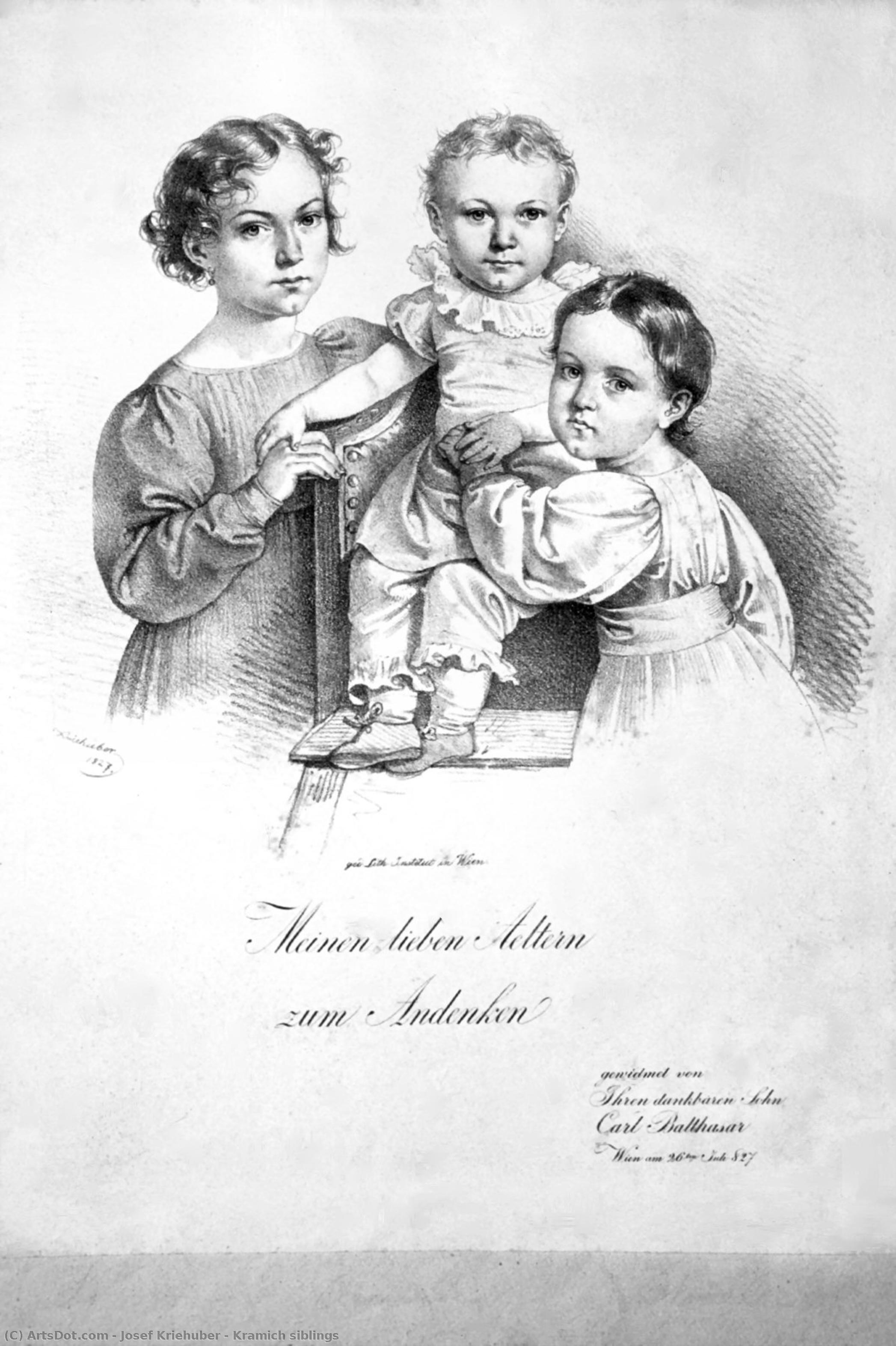
幻灯片播放Kramich siblings


 展开详情
展开详情




P118B $10

P118H $10

P118W $10

P438Z $10

P508JH $12

P508YH $12

P805H $10

P805Z $10

P919BZ $10

P919G $10

P919XJ $10

P959ZH $10

P968JZ $12

W106C $8

W218G $10

W218JH $8

W218Y $10

W307PJ $10

W316G $10

W316PJ $8

W316Y $10

W398PJ $8

W4111J $10

W500HY $15

W500JH $15

W692G $12

W849H $8

W940BG $15

W953PJ $8




从与原作比例一致的预设尺寸中进行选择。

您可以输入自定义尺寸,以适配特定的画框或空间。如果所选尺寸与原图比例不符,我们将通过裁剪作品或添加手绘元素来扩展画面。数字样稿将在制作开始前发送给您确认。
请注意,屏幕预览无法准确反映实际的裁剪或扩展效果,只有样稿才能真实呈现最终的构图。
虽然我们提供定制尺寸服务,但为了保留原作比例,建议您从预设列表中选择尺寸。
下单后,OriginalUniqueArt.com 团队将通过电子邮件联系客户获取具体要求,并提供效果预览图。


 玻璃选项仅适用于110厘米以下的尺寸。

Kramich siblings
复制材质
复制品尺寸
-


最终总价
$ 350
作品详情
The Intimate Chronicle of Viennese Society: Josef Kriehuber’s “Kramich Siblings”
Josef Kriehuber's "Kramich Siblings," created in 1827, isn't merely a portrait; it’s a meticulously rendered window into the heart of early 19th-century Vienna. This monochrome lithograph captures a tender moment between three young children – siblings, likely from a prominent family – offering a rare glimpse into the domestic life and social fabric of a burgeoning urban society. Kriehuber, a pivotal figure in the development of Viennese art, eschewed grand historical narratives or mythological themes, instead dedicating his considerable talent to documenting the everyday realities of his time. His work stands as an unparalleled chronicle of the Biedermeier era, characterized by its emphasis on realism, quiet dignity, and a profound appreciation for the nuances of human connection.
The image itself is dominated by a triangular composition, drawing the eye towards the central focus: a baby nestled securely in the arms of an older boy. The girl, positioned slightly to the left, gazes directly at the viewer with a subtle melancholy—a poignant expression that hints at both innocence and awareness. A small boot rests prominently before them, a detail that anchors the scene in reality and speaks volumes about childhood and family life. Kriehuber’s masterful use of hatching and cross-hatching creates an astonishingly detailed surface texture; one can almost feel the softness of the fabric, the warmth of the children's skin, and the solidity of the boot. The technique lends a remarkable sense of depth and volume to what could have easily been a flat, static image.
The Art of Lithography: A Revolution in Portraiture
Kriehuber’s choice of lithography as his primary medium was revolutionary for its time. Unlike the laborious process of engraving, which required painstakingly etching intricate lines into metal plates, lithography allowed for a significantly faster and more affordable reproduction of images. This democratization of portraiture made it accessible to a wider audience than ever before—a crucial factor in Kriehuber’s prolific career. The technique also demanded a unique artistic sensibility from the artist; he needed to translate his vision onto stone with remarkable precision, carefully controlling the distribution of ink to create tonal variations and subtle gradations of light and shadow.
The choice of monochrome is particularly significant. It strips away any potential distractions, focusing entirely on the emotional impact of the scene. The absence of color forces the viewer to engage with the subjects’ expressions, their gestures, and the overall atmosphere of intimacy. This restraint amplifies the sense of quiet dignity and sentimental value that permeates the image—a hallmark of Biedermeier portraiture.
Symbolism and Social Context
Beyond its immediate visual appeal, “Kramich Siblings” offers a rich tapestry of symbolic meaning rooted in the social context of 19th-century Vienna. The family depicted likely belonged to the upper echelons of Viennese society—a fact subtly conveyed through their clothing and demeanor. The scene itself speaks to the importance of lineage, familial bonds, and the transmission of values from one generation to the next. The baby, cradled in the arms of his older brother, represents the future, while the girl’s melancholic gaze suggests a contemplation of her own place within this family narrative.
Furthermore, Kriehuber's work reflects the broader cultural trends of the Biedermeier period—a time of relative peace and prosperity in Austria following the Napoleonic Wars. The emphasis on domesticity, familial affection, and quiet contemplation mirrored a desire to escape the turmoil of the outside world and find solace within the walls of one’s home.
A Legacy of Detail: Reproductions and Appreciation
Reproductions of “Kramich Siblings” offer art enthusiasts and interior designers alike an opportunity to experience the remarkable artistry of Josef Kriehuber. The meticulous detail, evocative composition, and profound emotional resonance of this lithograph continue to captivate viewers today. When selecting a reproduction, consider the quality of the print—a high-resolution image will faithfully capture the nuances of Kriehuber’s technique and ensure that the full beauty of this intimate chronicle of Viennese society is preserved.
- Artist: Josef Kriehuber
- Date: 1827
- Medium: Lithograph
- Style: Biedermeier
- Subject: Family Portrait
Additional Research Resources:
- Kramich siblings (OriginalUniqueArt)
- Josef Kriehuber (OriginalUniqueArt)
- Josef Kriehuber: A Life Immersed in Viennese Topography – From Lithographic Precision to Romantic Observation
- Josef Kriehuber - 170 obras de arte - litografía - WikiArt.org
- Josef Kriehuber (Wikipedia)
艺术家简介
维也纳社会编年史家:约瑟夫·克里胡伯的生平和艺术
1800年12月14日出生于维也纳的约瑟夫·克里胡伯,在奥地利艺术史上占据着独特的地位。他并非追求宏大的历史叙事或神话寓言,而是将他的艺术视野集中于日常生活的细微之处,通过新兴的石版画媒介,成为了19世纪维也纳社会无与伦比的编年史家。克里胡伯的旅程始于维也纳学院Hubert Maurer的正式训练,但真正定义他职业生涯和遗产的是他对石版画的拥抱。这种创新技术使得图像能够相对快速且经济地复制,从而普及了肖像艺术,并使其比以往任何时候都更容易为更广泛的受众所接受——克里胡伯以坚定不移的奉献精神服务于这些受众。他不仅仅是复制相似性;他正在制作记录地位、个性和一个时代精神的视觉记录。贝德米尔肖像画家:通往一个时代的窗口
克里胡伯的艺术发展在贝德米尔时期(大致1815-1848年)的环境中蓬勃发展。这个时代诞生于拿破仑动荡的余波之中,培养了对家庭、简单和日常生活的关注。这些价值观与克里胡伯的敏感性产生了深刻共鸣。虽然他最初探索过风景石版画,但肖像艺术是他真正才华闪耀的地方。他在整个职业生涯中创作了超过3000幅石版画——一个惊人的数字,既体现了他的技能,也体现了他作品的巨大需求量。他的客户涵盖了维也纳社会的各个阶层:贵族、政府官员、知名人士以及那些仅仅寻求自己或所爱之人的持久形象的人们。克里胡伯的肖像并非理想化的幻想;它们是令人印象深刻的准确表现,蕴含着一种性格和社会地位感。他拥有捕捉不只是外貌相似性,还能捕捉其主题内心世界的能力,使每幅肖像都成为独特的心理研究。他对细节一丝不苟的关注,加上对人类表达方式的微妙理解,使他能够创作出既亲密又具有启示性的肖像。超越相似性:记录维也纳的文化景观
虽然以其肖像画而闻名,但克里胡伯的艺术视野超出了个人表现。他认识到记录城市景观本身的重要性,特别是维也纳普拉特公园充满活力的氛围。他描绘普拉特公园场景的石版画为了解19世纪维也纳生活和文化提供了宝贵的见解。这些不仅仅是如诗如画的景色;它们是社会休闲状态的快照,揭示了当时的时尚、社交互动和娱乐习惯。通过这些研究,克里胡伯将自己转变为视觉历史学家,为后代保存了一个快速变化的城市的景象和声音。他捕捉了普拉特公园的活力和兴奋感,展示了其多样化的景点以及涌向享受它们的人们。这种致力于捕捉维也纳本质的精神巩固了他作为奥地利社会重要观察者的地位。遗产与认可:持久的印象
克里胡伯的影响超出了他大量的作品产出。他在维也纳著名的特雷西亚努姆学院担任教师,培养了未来的艺术家一代,并传授了他的技术专长。1860年,他获得了重要的约瑟夫勋章,以表彰他对奥地利艺术的贡献。然而,在他生命的末期,摄影的兴起对他的职业构成了挑战。随着摄影肖像画变得越来越普及和经济实惠,对石版画肖像的需求下降了,导致他晚年陷入经济困境。尽管如此,克里胡伯一直工作到1876年5月30日去世,留下了一部非凡的作品集,至今仍在吸引和启发着我们。他的遗产不仅在于他创作的肖像数量众多,还在于它们作为19世纪中欧社会视觉记录的历史意义。他的作品收藏在阿尔贝蒂娜博物馆和奥地利国家图书馆,确保了他的艺术将继续受到几代人的赞赏。他的工作仍然证明了观察力的力量以及捕捉人类精神的持久吸引力。影响与艺术风格
确定对克里胡伯产生特定艺术影响具有挑战性;他并没有公然模仿特定的大师或坚持严格的风格学派。然而,他对现实主义的奉献与当时的更广泛的艺术趋势相符,反映了艺术中日益增长的对准确表现形式的渴望。他是同时代其他肖像画家的当代人,但通过其作品的数量和一致性以及他对石版画的掌握而著称。他的风格以一丝不苟的细节、精确的草图技巧以及传达身体相似性和心理深度能力为特征。他并不对宏大的姿态或戏剧性的构图感兴趣;相反,他专注于捕捉表情和个性的微妙细微之处。这种朴素的方法,加上他的技术技能,使他的肖像画成为那些寻求对其自身忠实而讨人喜欢表现的人们所追捧的艺术品。- 技术精湛:克里胡伯在石版画方面的专业知识使他能够实现非凡的细节和色调范围。
- 现实主义与准确性:他的肖像画以其对主题的忠实表现而闻名。
- 心理洞察力:他不仅捕捉了身体相似性,还捕捉了所描绘人物的内在性格。

约瑟夫·克里胡伯
1800 - 1876 , 奥地利
艺术家简介
- Artistic Movement Or Style: 比德迈尔, 写实主义
- Artists Or Movements Influenced By This Artist: ['弗里德里希·克里胡伯']
- Date Of Birth: 1800年12月14日
- Date Of Death: 1876年5月30日
- Full Name: 约瑟夫·克里胡伯
- Nationality: 奥地利国籍
- Notable Artworks:
- 自画像
- 普拉特场景
- 伊丽莎白公主与范妮公主
- Place Of Birth (City And Country): 奥地利维也纳
相关文章

Josef Kriehuber: A Life Immersed in Viennese Topography – From Lithographic Precision to Romantic Observation
Explore the life and work of Josef Kriehuber, a master lithographer who captured 19th-century Vienna. Discover his portraits of nobility, landscapes, & artistic techniques. A guide for collectors & art enthusiasts.
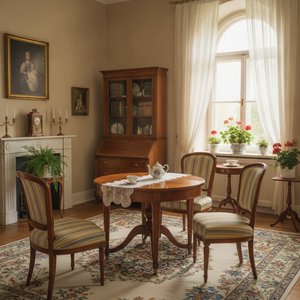
Biedermeier Style: The Art of Comfort, Elegance, and Home Harmony in 19th-Century Europe
Discover the soulful elegance of Biedermeier style. Explore how 19th-century Europe turned to domestic comfort and refined simplicity through art and design. A deep dive into the era of bourgeois sophistication for the true classic art enthusiast.
Biedermeier Style: The Elegant Art of Comfort, Simplicity, and Bourgeois Sophistication
Discover the refined elegance of Biedermeier style. Explore how this 19th-century movement blended simplicity with comfort, shaping the art and design of the middle class through Romanticism and functional beauty. An expert guide for classic art enthusiasts.
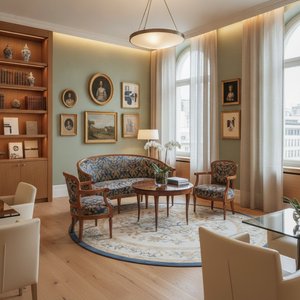
Biedermeier Style Guide: Integrating Elegant, Functional 19th-Century Art into Modern Hotel & Hospitality Interiors
Master the Biedermeier style for hospitality design. Our professional guide explores integrating 19th-century elegance and functional simplicity into modern hotel interiors through expert art procurement and large-scale custom reproductions.

复兴时期的宁静:比德迈尔艺术、社会与内在世界的探索
探索复兴时期的比德迈尔艺术,了解其独特的历史背景、社会影响与对内在世界的细腻描绘。OriginalUniqueArt提供精美油画复制和定制服务,助您重温经典,提升家居品味。

