

 实景预览
实景预览
 发送
发送 分享
分享
 详情
详情 指南
指南

 下载图片
下载图片
 相似作品
相似作品 X射线
X射线 幻灯片播放
幻灯片播放 统计数据
统计数据El Lissitzky, Dessau


 阅读全文
阅读全文
艺术微喷/版画
博物馆级艺术微喷或帆布版画,制作高效,并提供多种饰面选择。 ( 订购此收藏品的纯手工复刻画作 切换至数字图像销售渠道)




P118B ¥10

P118H ¥10

P118W ¥10

P438Z ¥10

P508JH ¥12

P508YH ¥12

P805H ¥10

P805Z ¥10

P919BZ ¥10

P919G ¥10

P919XJ ¥10

P959ZH ¥10

P968JZ ¥12

W106C ¥8

W218G ¥10

W218JH ¥8

W218Y ¥10

W307PJ ¥10

W316G ¥10

W316PJ ¥8

W316Y ¥10

W398PJ ¥8

W4111J ¥10

W500HY ¥15

W500JH ¥15

W692G ¥12

W849H ¥8

W940BG ¥15

W953PJ ¥8




您可以从与原作比例一致的预设尺寸中进行选择。

请输入您所需的宽度和高度,以适配您的画框或墙面。由于印刷品只能进行裁剪,无法超出原图尺寸,因此若比例不一致,画面的一部分将会被裁切。在正式印刷之前,我们会为您发送一份数字效果图供您确认。本页面显示的图片并非最终裁剪后的效果——只有效果图才能展示真实的裁剪情况。


 玻璃选项仅适用于110厘米以下的尺寸。

El Lissitzky, Dessau
艺术微喷/版画
复刻品尺寸说明
-


总计金额
¥ 538
El Lissitzky, Dessau: A Dialogue of Form and Function
The photograph presented here – “El Lissitzky, Dessau” – isn’t merely a portrait; it's a carefully constructed distillation of the spirit of early 20th-century artistic experimentation. Captured around 1930-1932 by Josef Albers, this image offers a glimpse into the world of El Lissitzky, a pivotal figure in the Russian avant-garde who bridged the gap between Suprematism and Constructivism. It’s a document of a man grappling with the fundamental questions of form, space, and communication – concerns that resonate powerfully even today.
Lissitzky, a visionary designer and artist, was deeply influenced by Malevich's radical exploration of pure geometric abstraction. However, Lissitzky moved beyond purely formal exercises, recognizing the potential of art to serve practical purposes—designing exhibition spaces, propaganda posters, and even furniture. Albers’ photograph captures this duality: Lissitzky is both an intellectual explorer and a craftsman, his gaze suggesting a thoughtful engagement with the world around him. The composition itself – two square portraits side-by-side – immediately evokes the principles of Constructivism, emphasizing clarity, order, and geometric relationships. The stark contrast between the black and white tones further amplifies this sense of precision and intellectual rigor.
A Study in Light, Line, and Gesture
Albers’ technical mastery is evident in every detail. The photograph utilizes a classic gelatin silver print process, resulting in a rich tonal range that subtly defines Lissitzky's features. The lighting is soft and diffused, minimizing harsh shadows and allowing the textures of his clothing – a crisp white shirt and dark tie – to emerge with clarity. Notice how Albers has employed fine lines to delineate the contours of Lissitzky’s face, capturing not just his likeness but also the subtle gestures that convey his personality. The sharp edges of the portraits create a sense of immediacy, drawing the viewer into the scene.
The photograph's composition is deceptively simple. The two square images are arranged symmetrically within a rectangular frame, creating a balanced and harmonious visual experience. However, this apparent simplicity belies a deeper level of intentionality. Lissitzky’s profile view – a pose that suggests contemplation or perhaps even conversation – contrasts sharply with his frontal portrait, offering a dynamic interplay between stillness and movement. The subtle smile in the first image hints at an approachable nature, while the profile invites introspection.
Historical Context: Bauhaus and Beyond
To fully appreciate “El Lissitzky, Dessau,” it’s crucial to understand its historical context. Albers himself was a key figure at the Bauhaus school in Germany, where he developed his groundbreaking theories of color interaction and geometric abstraction. The Bauhaus sought to unify art, craft, and technology, believing that design could improve people's lives. Lissitzky, who spent time at the Bauhaus before emigrating to Russia, carried these principles with him, influencing his work as a designer and artist.
Following the Russian Revolution, Lissitzky became involved in creating propaganda for the new Soviet state. He designed posters, book layouts, and exhibition spaces—all aimed at promoting socialist ideals through innovative visual communication. His work reflected the dynamism and optimism of the era, but also the challenges of building a new society from scratch. The photograph captures a moment of quiet reflection amidst this period of intense social and political change.
Symbolism and Emotional Resonance
Beyond its technical merits, “El Lissitzky, Dessau” possesses a subtle symbolic power. The geometric composition—the squares, the lines—represents the rational order that Lissitzky sought to impose on the world. The portrait itself can be interpreted as an exploration of identity and representation – how we perceive ourselves and how others perceive us. Lissitzky’s gaze is direct and unwavering, suggesting a confidence in his own vision.
Ultimately, this photograph transcends its documentary value. It's a testament to the power of art to capture not just appearances but also ideas, emotions, and historical moments. It invites viewers to contemplate the relationship between form and function, intellect and emotion, and the enduring legacy of El Lissitzky’s artistic vision.
问答详情
约瑟夫·阿尔伯斯 的《El Lissitzky, Dessau》 属于哪种艺术流派?
约瑟夫·阿尔伯斯 的《El Lissitzky, Dessau》 所属的艺术流派为 Constructivism。这一分类将该作品置于相关艺术家及艺术作品的语境之中。
约瑟夫·阿尔伯斯 的《El Lissitzky, Dessau》 这件作品的色调是明亮的还是深沉的?
总体而言,"El Lissitzky, Dessau" 的亮度记录为 brilliant。感知亮度描述了作品呈现出的明暗程度。
"El Lissitzky, Dessau" 的创作者是谁?
"El Lissitzky, Dessau" 由 约瑟夫·阿尔伯斯 创作。本页面的信息旨在介绍 约瑟夫·阿尔伯斯 的原作。
艺术家简介
由材质铸就的一生:早年岁月与包豪斯时期的形成
约瑟夫·阿尔伯斯的艺术旅程并非始于名门学院那高雅脱俗的气息,而是源于德国博特罗普他父亲承包业务那务实的世界。出生于1888年的年轻约瑟夫,从底层工作中汲取了对材质的深厚敬畏——木工、水管工、粉刷匠——这些技能从根本上塑造了他的审美感官。这不仅仅是职业训练,更是一场对“创造”本质的沉浸式体验,让他理解了形式是如何具象化的,以及每种媒介所蕴含的固有特性。在全身心投入艺术之前,阿尔伯斯曾担任过五年的教师,磨炼了耐心与教学技巧——这些品质后来成为了他卓越教学生涯的基石。1913年至1915年间,他在柏林皇家艺术学院开始了正式的艺术训练,期间探索了版画、绘画,以及至关重要的彩色玻璃艺术。他早期的委约作品《神秘玫瑰,为我们祈祷》(Rosa Mystica Ora Pro Nobis, 1918)是一扇令人惊叹的彩绘玻璃窗,预示了他终生对光影与色彩交织的痴迷,并暗示了未来即将展开的抽象探索。这部早期作品并非单纯的装饰,它是一场关于光如何“转化”材质的研究,这一主题贯穿了他的整个艺术生涯。包豪斯的熔炉:作为主题的色彩
1922年是一个转折点,阿尔伯斯加入了包豪斯教职队伍,这所革命性的学校致力于统一所有的艺术学科。最初,他负责教授基础课程——《工作教学》(Werklehre,即工作坊实践)——并全身心投入到其核心原则中:功能主义、几何抽象和材质探索。这段时期具有变革意义。阿尔伯斯开始对色彩感知进行系统性的研究,从具象艺术转向了日益抽象的视觉语言。他感兴趣的不仅是色彩“是什么”,更是它们“如何”相互作用,如何彼此影响,以及我们的眼睛如何感知它们。虽然在他早期的作品中可以辨识出保罗·克利和瓦西里·康定斯基等包豪斯大师的影响,但阿尔伯斯开辟了一条独特的道路,他优先选择经验观察而非形而上学的诠释。他并非在色彩中寻求精神真理,而是在细致地记录其物理效应——这种科学的严谨性成为了他艺术方法的标志。这种对感知、对“如何看”而非“看到了什么”的关注,使他脱颖而出,并为他未来的探索奠定了基础。向正方形致敬:感知的实验室
在黑山学院任教期间,他培养了包括罗伯特·劳森伯格和西·托姆布莱在内的一代美国艺术家。随后,在1949年,阿尔伯斯开启了他最著名的系列作品:《向正方形致敬》。这个持续进行的计划由一系列嵌套的正方形组成,每一次迭代都在探索色彩关系的微妙变化。其前提看似简单得近乎轻率,实则隐藏着极其复杂且严谨的研究。该系列并非旨在颂扬几何学,而是一个研究色彩感知的实验室。阿尔伯斯细致地记录了他的实验,揭示了色彩并非静态的实体,而是通过内在逻辑相互支配的动态力量——这种逻辑往往会误导眼睛。一个看似更亮的方块可能会显得在后退,而一个较暗的方向则可能显得在前进,这挑战了直觉认知。这项研究最终汇集成他的开创性著作《色彩互动》(Interaction of Color, 1963),至今仍是艺术家和设计师必读的基础教材。这本书并非色彩理论的论述,而是一系列旨在证明我们的色彩感知是相对且具有情境性的练习——这见证了阿尔伯斯的信念:观看并非被动的接收,而是一个主动的诠释过程。传承与持久的影响力
约瑟夫·阿尔伯斯的影响力远超他的绘画本身。从1950年到1958年退休期间,他担任耶鲁大学设计系主任的经历,巩固了他作为深具影响力的教师的地位。他强调亲身实验、批判性观察以及对既定假设的不懈质疑。学生们学习的不仅仅是“画什么”,更是学习“如何看”——去分析、去解构、去理解支配视觉体验的底层原理。他的教学方法培养了独立思考的能力,并鼓励学生发展出自己独特的艺术语言。《色彩互动》 至今仍是艺术教育的基石,塑造着一代又一代人对色彩关系的理解。如今,阿尔伯斯被公认为抽象艺术发展的关键人物,特别是在几何抽象和极简主义美学领域。他的《向正方形致敬》系列因其对感知现象的探索而成为经典,证明了即使在看似简单的形式中,也存在着等待被发现的无限复杂性。1976年3月25日,他逝世于康涅狄格州纽黑文,留下了一份持续激励并挑战着艺术家、设计师和教育者的遗产——这是对观察、实验以及色彩永恒奥秘之力量的最好证明。代表作品
- 灰色器械 I 展望 (Gray Instrumentation I Prospectus, 1975): 一幅极简主义单色绘画,体现了几何平衡与微妙的色调变化。
- 向正方形致敬研究 – 放射 (Study for Homage to the Square – Beaming, 日期不详): 阿尔伯斯在嵌套正方形中探索色彩互动的经典范例,唤起了一种宁静感与空间深度。
- 神秘玫瑰,为我们祈祷 (Rosa Mystica Ora Pro Nobis, 1918): 他早期的彩绘玻璃委约作品,预示了他终生对光与色彩的痴迷。

约瑟夫·阿尔伯斯
1888 - 1976 , 德国
快速概览
- Artistic Movement Or Style: 几何抽象
- Artists Or Movements Influenced By This Artist:
- 极简主义
- 色域绘画
- Artists Who Influenced This Artist:
- 保罗·克利
- 瓦西里·康定斯基
- Date Of Birth: 1888年3月19日
- Date Of Death: 1976年3月25日
- Full Name: 约瑟夫·阿尔伯斯
- Nationality: 德裔美国人
- Notable Artworks:
- 向正方形致敬
- 灰色器械 I 展望
- 圣母玛利亚为我们祈祷
- Place Of Birth: 德国博特罗普
相关文章

Monochrome Visions: Exploring the Aesthetic & Historical Significance of Black & White Photography
Explore the rich history & artistic power of black and white photography. From early techniques to iconic masters like Ansel Adams, discover why monochrome continues to captivate art lovers today. Expert insights for collectors.
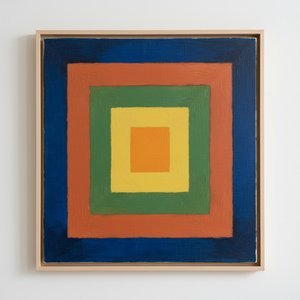
Josef Albers: A Homage to Color Interaction & the Foundations of Visual Perception
Explore Josef Albers's groundbreaking color theory & the 'Homage to the Square' series. Discover how his work revolutionized visual perception and influenced modern art movements like Minimalism & Op Art. Learn about his Bauhaus roots & lasting legacy.

Beyond the Lens: Photography's Enduring Influence on Modern & Contemporary Art
Explore photography's pivotal role in shaping modern & contemporary art. Discover key movements, influential artists like Stieglitz, and expert collecting advice from OriginalUniqueArt.

埃尔·格列柯25幅杰作:探索艺术大师的信仰与火焰
探索埃尔·格列柯25幅杰作,领略这位西班牙画家巴洛克风格的宗教绘画魅力。从《圣塞巴斯蒂安》到《沉思者》,感受信仰与艺术的交融。OriginalUniqueArt.com提供高品质油画复制品,为您的家居装饰增添经典之美!探索完整系列作品。

Pictorialism: A Search for Artistic Photography's Soul – Aesthetics, Techniques & Legacy
Explore the captivating world of Pictorialism – a pivotal movement that transformed photography into fine art. Discover key artists like Stieglitz & Käsebier, techniques, and collecting tips from experts.