
 效果预览
效果预览
 切换至版画销售渠道
 分享
分享 分享
分享
 详情
详情

 下载
下载
 相似作品
相似作品 X射线
X射线 幻灯片播放
幻灯片播放 统计数据
统计数据

 展开详情
展开详情
每份数字图像订单均包含
专业数字图像交付,品质保障
选择 OriginalUniqueArt.com,您获得的不仅仅是一张图像——您收到的是经过专业级增强、精雕细琢的数字艺术作品,并享有满意保证。以下是您的订单中自动包含的所有内容:

邮件快速送达
您的高分辨率数字图像文件将在下单后 72 小时内通过电子邮件发送给您 —— 即可立即使用。

AI 增强型数字文件
您的艺术品经过专业优化,结合先进的 AI 技术与人工修饰,确保呈现极致的细节、清晰度与色彩准确度。

终身免费重发服务
不小心删除了文件或找不到了?没关系——我们将随时为您免费重发。

无需进口费用,始终如一
即刻拥有您的艺术作品,无需支付任何关税、税费或运费——数字下载始终免税。

色彩精准保证
我们通过专业工具与色彩管理技术,确保您的数字图像尽可能真实地还原原作色彩。

100天满意保证
如果您对所购数字图像不满意,我们将在100天内为您进行修改或提供100%的全额退款——无需任何理由。

100% 退款保证
不满意?在收到数字文件后的100天内,您可以申请全额退款——无需任何理由。

批量订单优惠
购买 3 张图片可享 10% 折扣 - 购买 5 张可享 15% 折扣 - 购买 10+ 张可享 20% 折扣。非常适合创意项目、画廊和机构使用。
Understanding the Artist's Vision
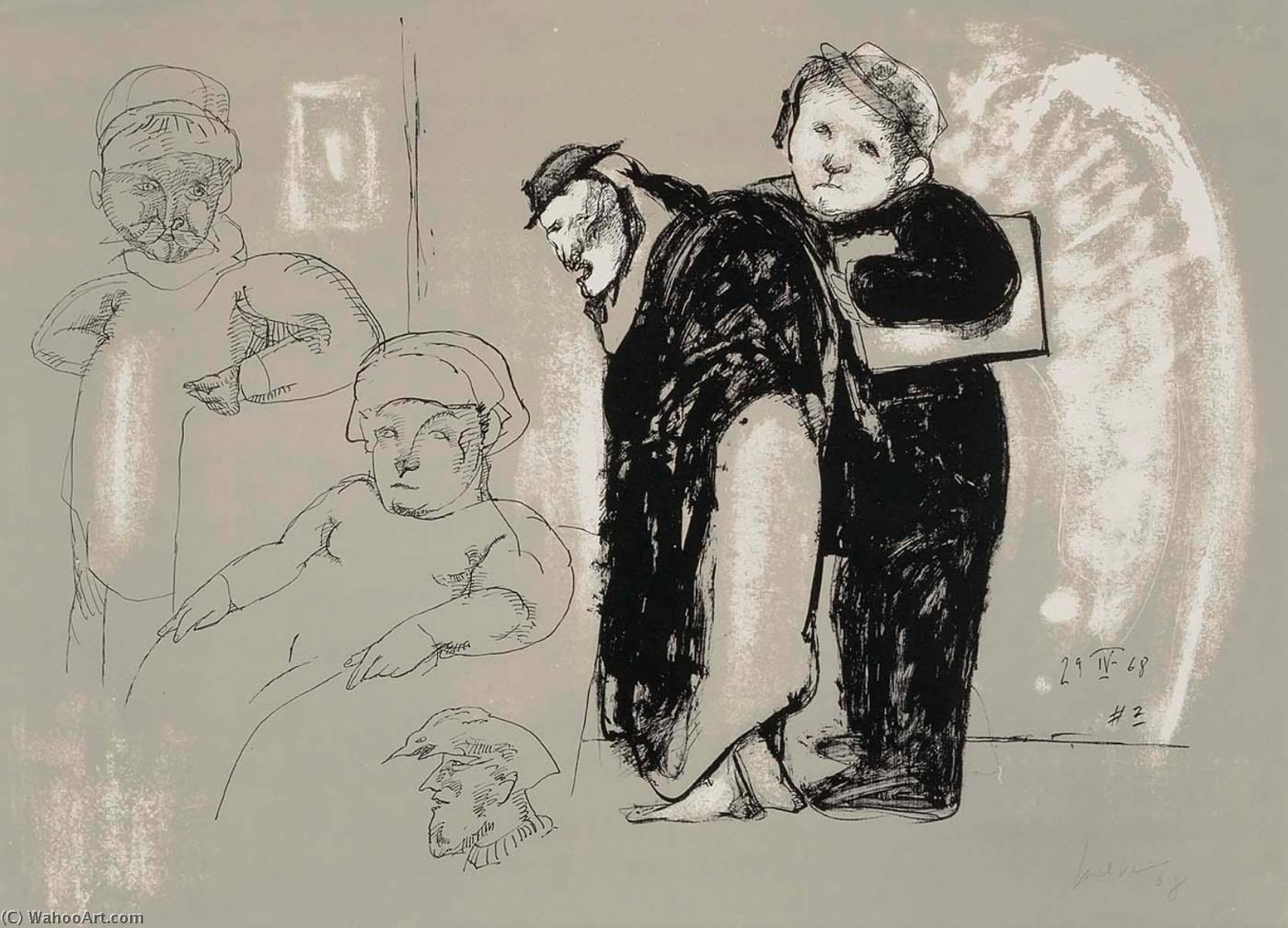
Jose Luis Cuevas was a Mexican artist known for his rebellious personality and dark humor, which is reflected in his artwork. Interior features three main figures in the foreground, with one man standing on another man's shoulders while holding onto a third person. The overall composition of the painting creates a sense of depth and intrigue, leaving the viewer to ponder the relationships between the characters. Key Elements of the painting include the use of lithography, which adds a layer of complexity to the artwork. The Smithsonian American Art Museum has an extensive collection of Jose Luis Cuevas' works, including Wanted, Dreams of Rasputin, and History of Crime. These pieces showcase the artist's ability to experiment with different techniques and themes.Exploring the Artistic Style
Jose Luis Cuevas' artistic style is characterized by his use of bold lines, vibrant colors, and a mix of realism and surrealism. His artwork often features everyday people in unusual situations, which adds to the sense of intrigue and mystery. As seen in Interior, the artist's use of lithography creates a sense of texture and depth, drawing the viewer into the world of the painting.- Visit https://OriginalUniqueArt.com to explore more artworks by Jose Luis Cuevas and other renowned artists.
- Discover the Smithsonian American Art Museum's collection of Jose Luis Cuevas' works, including Wanted, Dreams of Rasputin, and History of Crime.
- Learn more about the artist's life and work on Wikipedia: https://en.wikipedia.org/wiki/Jos%C3%A9_Luis_Cuevas
In conclusion, Interior by Jose Luis Cuevas is a fascinating piece that showcases the artist's unique style and technique. As a professional expert in Art and salesman at https://OriginalUniqueArt.com, I highly recommend exploring more of the artist's works and discovering the world of handmade oil paintings reproductions.
艺术家简介
特立独行的灵魂:何塞·路易斯·库埃瓦斯的一生与艺术
1934年出生于墨西哥城的何塞·路易斯·库埃瓦斯(José Luis Cuevas),是墨西哥艺术史上举足轻重的关键人物。他以一种无畏的姿态,挑战了数十年来定义国家艺术身份的壁画运动(Muralism)的统治地位。他的反叛并非仅仅源于风格上的差异,而是对那些宏大作品中所蕴含的社会与政治叙事进行的深刻质疑。库埃瓦斯的早年生活伴随着家族纸笔厂的机器轰鸣声,这种环境既带来了创作的灵感,也伴随着身体的脆弱。童年时的一场疾病迫使他经历了长期的闭门隔离,正是在这段时光里,他发现了对素描与版画持久的热爱——这些技艺随后在墨西哥城学院(Mexico City College)接受了洛拉·库埃特(Lola Cueto)的悉心指导。这段孤独的岁月成为了他艺术生命的奠基石,培养出一种极其个人化的艺术视野,使其作品始终优先关注内心世界的探索,而非宏大的宣言。尽管他曾短暂就读于声名显赫的“拉埃斯梅拉达”国家绘画、雕塑与版画学院,但健康问题最终促使他选择了一条独立的道路:年仅十四岁时便建立了自己的工作室,并将自我教育作为艺术发展的核心模式。打破传统:决裂一代
库埃瓦斯成为了“决裂一代”(Generación de la Ruptura)的领军人物。这一艺术家群体拒绝了由迭戈·里维拉(Diego Rivera)、何塞·克莱门特·奥罗斯科(José Clemente Orozco)和戴维·阿尔法罗·西凯罗斯(David Alfaro Siqueiros)等大师所主导的那种带有强烈民族主义色彩和社会教化意味的壁画风格。当那些艺术大师试图在宏大的尺度上描绘墨西哥的历史与抗争时,库埃瓦斯及其同辈人却转向了内心,去探索疏离感、存在主义焦虑以及人类经验中阴暗的一面。他的作品以扭曲的人物、破碎的形式和一种刻意营造的不安美学为特征,反映出对主流意识形态的深刻幻灭。他并不热衷于歌颂集体身份,而是专注于个体的心理图景,经常描绘那些被内心动荡所折磨或被困于压抑环境中的人物。这种自觉的转向标志着墨西哥艺术的一个重要转折点,为更大规模的实验性和个人表达铺平了道路。1953年,他的早期作品在墨西哥城的Prisse画廊展出,此后不久,他便开始在国际舞台上崭露头角。争议性的远见者:主题与技法
库埃瓦斯的艺术产出极其丰富,涵盖了绘画、素描、版画、雕塑及文学创作。然而,贯穿其整个作品集的始终有一条主线:对人类状况及其复杂性与不完美性的毫不退缩的探索。他频繁描绘暴力、衰败与道德腐败的场景,挑战观众去面对关于自身与社会的残酷真相。他的自画像多达数百幅,具有极强的启示意义,以一种原始且往往是残酷诚实的方式,展现了他自身的焦虑、脆弱与痴迷。他在技法上博采众长,在版画、石版画及综合材料运用方面都展现了大师级的造诣。他以精湛的素描功底和仅凭极简手段创造震撼图像的能力而闻名。随着时间的推移,他的风格不断演变,融合了表现主义、超现实主义和抽象艺术的元素,但始终保持着鲜明的个人色彩与辨识度。他不惧怕争议,经常利用令人震惊的意象和挑衅性的言论来挑战传统规范并引发辩论。传承与何塞·路易斯·库埃瓦斯博物馆
在整个职业生涯中,何塞·路夷斯·库埃瓦斯始终是一位坚守独立且直言不讳的人物,对于那些他认为为了政治或商业利益而背弃艺术诚信的人,他从不吝于批评。这种不妥协的立场为他赢得了崇拜者,也招致了反对者,从而巩固了他作为艺术界“特立独行者”的地位。1982年,他代表墨西哥参加威尼斯双年展,进一步提升了他的国际地位。或许他最持久的遗产便是建立于1992年墨西哥城历史中心的何塞·路易斯·库埃瓦斯博物馆。馆内收藏了大量他的个人作品,以及他多年来搜集的珍贵前哥伦布时期文物和欧洲杰作。这座博物馆见证了他博大的艺术品味以及对卓越艺术的不懈追求。直到201着去世前,他一直保持着创作与展览,留下了一份宏大且具影响力的遗产,至今仍在激励并挑战着观众。他对墨西哥艺术的影响是无可辩驳的;他将一代艺术家从传统的束缚中解放出来,鼓励他们拥抱自己独特的声量,即便这些声音在当时显得不适或不受欢迎。他永远是艺术自由与思想独立的有力象征。
何塞·路易斯·库埃瓦斯
1934 - 2017 , 墨西哥
基本信息
- Artistic Movement Or Style: 断裂一代 (Generación de la Ruptura)
- Date Of Birth: 1934年2月26日
- Date Of Death: 2017年7月3日
- Full Name: 何塞·路易斯·库埃瓦斯 (José Luis Cuevas)
- Nationality: 墨西哥
- Notable Artworks:
- 室内 (Interior)
- 拉斯普廷 (Rasputin)
- 角色阵容 (Cast of Characters)
- Place Of Birth: 墨西哥,墨西哥城