

 实景预览
实景预览
 发送
发送 分享
分享
 详情
详情 指南
指南

 下载图片
下载图片
 相似作品
相似作品 X射线
X射线 幻灯片播放
幻灯片播放 统计数据
统计数据Self-Portrait
 Oil On Canvas
- WallArt
- Northern Renaissance
 1519
1519 38.0 x 27.0 cm
 普拉多博物馆
 阅读全文
阅读全文
艺术微喷/版画
博物馆级艺术微喷或帆布版画,制作高效,并提供多种饰面选择。 ( 订购此收藏品的纯手工复刻画作 切换至数字图像销售渠道)




P118B ¥10

P118H ¥10

P118W ¥10

P438Z ¥10

P508JH ¥12

P508YH ¥12

P805H ¥10

P805Z ¥10

P919BZ ¥10

P919G ¥10

P919XJ ¥10

P959ZH ¥10

P968JZ ¥12

W106C ¥8

W218G ¥10

W218JH ¥8

W218Y ¥10

W307PJ ¥10

W316G ¥10

W316PJ ¥8

W316Y ¥10

W398PJ ¥8

W4111J ¥10

W500HY ¥15

W500JH ¥15

W692G ¥12

W849H ¥8

W940BG ¥15

W953PJ ¥8




您可以从与原作比例一致的预设尺寸中进行选择。

请输入您所需的宽度和高度,以适配您的画框或墙面。由于印刷品只能进行裁剪,无法超出原图尺寸,因此若比例不一致,画面的一部分将会被裁切。在正式印刷之前,我们会为您发送一份数字效果图供您确认。本页面显示的图片并非最终裁剪后的效果——只有效果图才能展示真实的裁剪情况。


 玻璃选项仅适用于110厘米以下的尺寸。

Self-Portrait
艺术微喷/版画
复刻品尺寸说明
-


总计金额
¥ 537
A Window into the Soul: Exploring Joos van Cleve’s Self-Portrait
Joos van Cleve's 1519 “Self-Portrait” isn’t merely a depiction of an individual; it’s a carefully constructed invitation into the artist’s world, a moment captured with remarkable intimacy and a subtle yet profound sense of contemplation. Housed within the Museo Thyssen-Bornemisza in Madrid, this oil on panel painting stands as a pivotal example of Northern Renaissance art, bridging the gap between the formality of early Netherlandish portraiture and the burgeoning individualism of the era. More than just a likeness, it’s a testament to van Cleve's skill in capturing not only physical appearance but also an underlying emotional state – a quiet introspection that draws the viewer into a silent dialogue.

The Renaissance in Miniature: Style and Technique
Van Cleve’s approach is a masterful synthesis of established traditions and emerging influences. The painting adheres to the conventions of his time – a relatively formal pose, a focus on detail, and an emphasis on achieving a believable likeness. However, within this framework, he introduces subtle innovations that elevate the work beyond mere representation. Note the careful modeling of the face, achieved through masterful use of light and shadow; the folds in his dark robe are rendered with remarkable precision, suggesting both texture and volume. The background, a solid field of muted blue, serves to isolate the figure, intensifying the focus on his expression and posture. This deliberate simplicity is characteristic of van Cleve’s style – he prioritized clarity and directness over elaborate ornamentation.
The use of oil paint itself was revolutionary at this time, allowing for a greater level of detail and luminosity than previous mediums. Van Cleve expertly exploited the medium's capabilities, creating subtle gradations of tone and color that contribute to the painting’s overall depth and realism. The palette is restrained – primarily dark browns, blues, and whites – but skillfully deployed to create a harmonious and balanced composition.
Symbolism and Introspection: Decoding the Portrait
The most striking element of the Self-Portrait is undoubtedly the small pink flower held delicately in van Cleve’s right hand. While its precise meaning remains open to interpretation, it's widely believed to symbolize innocence, purity, and perhaps even a quiet contemplation of life itself. This gesture—a simple offering—suggests a moment of reflection, inviting the viewer to share in the artist’s inner world. The neutral expression on his face – neither overtly joyful nor sorrowful – further enhances this sense of introspection. He isn't presenting himself as a triumphant figure or a celebrated personality; instead, he offers a glimpse into his private thoughts and feelings.
A Legacy of Innovation: Context and Influence
Joos van Cleve’s Self-Portrait is not an isolated work but rather part of a broader artistic movement—the rise of self-portraiture in the Renaissance. Artists like Raphael and Hans Holbein had already begun to explore this genre, recognizing its potential for revealing both personal identity and artistic skill. Van Cleve's painting stands as a crucial link between these early experiments and the more elaborate and psychologically complex self-portraits that would emerge in subsequent centuries. His work demonstrates a willingness to experiment with new techniques and approaches, solidifying his place as a key figure in the development of Renaissance art. The Museo Thyssen-Bornemisza provides an exceptional setting for viewing this important piece, allowing visitors to appreciate its historical significance and artistic merit within a broader context of European painting.
问答详情
在哪里可以购买到 尤斯·范·克莱夫 的《Self-Portrait》 的数字图像?
您可以在 数字图像 页面直接购买 “Self-Portrait” 的 高分辨率数字图像下载。
馆藏于 普拉多博物馆 的 尤斯·范·克莱夫 的《Self-Portrait》 是否可以进行合法复制?
《Self-Portrait》的原作收藏于普拉多博物馆,该作品属于属于公有领域 —— 其版权已过期。
尤斯·范·克莱夫 的《Self-Portrait》 的画面方向是怎样的?
尤斯·范·克莱夫 的《Self-Portrait》 是一幅 Portrait 构图的作品。在选择打印尺寸之前,建议先确认其比例。
艺术家简介
安特卫普的大师:约斯·范·克莱夫的生平与传奇
在十六世纪安特卫普那繁忙且充满商业气息的心脏地带,一场视觉叙事的新纪元正随着约斯·范·克莱夫的画笔缓缓展开。这位佛兰德文艺复兴时期的艺术大师约出生于1485年左右的德国克雷费尔德,他不仅是一位技艺精湛的画家,更是一位连接两个世界的远见卓识者。他的艺术生涯从1511年左右开始繁荣,一直延续至1540年逝世,这在艺术史上代表了一个深刻的转折点:尼德兰大师们那细致入微、追求极致细节的传统,与意大利文艺复兴时期涌现出的宏大且富有氛围感的创新精神在此交汇。凝视范·克莱夫的作品,仿佛是在见证一场北欧触手可及的写实主义与南欧理想化优雅之间的细腻舞步。
他的天才根基奠定于他在扬·约斯特指导下的早年岁月。这段严苛的学徒生涯带给他的远不止技术上的精进,更让他沉浸在晚期哥特式艺术那庄严宏伟的传统之中。他早期最重要的经历之一是协助约斯特完成卡尔卡尔尼教堂高祭坛的创作,这一项目要求艺术家必须深刻理解宏大尺度与精神厚重感。通过这项工作,范·克莱夫掌握了颜料调配中复杂的炼金术以及极其考究的色层叠加技法——正是这些技术,使他日后能够赋予肖像画一种栩栩如生的光泽,并为宗教场景注入一种触手可及的神圣感。
北方细节与意大利优雅的融合
真正让约斯·范·克莱夫在同时代艺术家中脱颖而出的,是他那永不满足、勇于实验的精神。当那个时代的许多艺术家仍受困于当地行会僵化的风格教条时,范·克丽夫却将目光投向了远方的地平线。他成为了佛兰德风格主义的先驱,这种风格以对色彩非凡的敏感度以及构图中人物之间卓越的统一感为特征。或许他对北方文艺复兴最持久的贡献在于对风景画的革命性运用。他不再使用静态或象征性的背景,而是引入了开阔且富有氛围感的远景,为画中人物注入了生命力,在人类个体与自然世界之间创造出一种深度与连续感。
这种风格的演变深受意大利新兴艺术潮流的影响。通过融合意式透视法的元素以及更具流动性、韵律感的解剖学处理方式,他将传统的佛兰德肖像画转化为了某种在心理层面更为复杂的表达。他的画中人物不再仅仅是地位的象征;他们拥有了内在的精神世界和情感共鸣,邀请观者进入一场无声的对话。这种通过细微的面部表情和优雅的手势来传达深邃人类情感的能力,至今仍是他最受赞誉的成就之一。
历史意义与艺术巅峰
约斯·范·克莱夫的遗产已深深铭刻在安特卫普黄金时代的肌理之中。作为这座城市艺术共同体的核心人物,他的工作室成为了创新的灯塔,影响了后世一代又一代的画家。他通过完美融合以下元素,确保了其在欧洲艺术史上留下了持久的影响:
- 技术造诣: 完美运用尼德兰式的透明色层技法,实现了无与伦比的质感与光影效果。
- 构图创新: 融入宏大的全景式风景,扩展了宗教与世俗绘画叙事的空间维度。
- 心理深度: 实现从纯粹的象征性表现向更具人文主义、情感化的人物刻画的转变。
- 文化融合: 成功地将北欧艺术的严谨精确与意大利文艺复兴的优雅律动结合在一起。
尽管他的生命止于1540年,但他艺术创作的回响仍在持续震荡。约斯·范·克莱夫并非仅仅追随时代的潮流,他参与了潮流的定义,留下了一系列足以证明艺术融合之变革力量的作品。他的画作至今仍是通往那个巨大文化转型时期的永恒窗口,捕捉到了中世纪世界开始消融在现代文明曙光中的那一瞬间。

尤斯·范·克莱夫
1485 - 1540 , 德国
快速概览
- Artistic Movement Or Style: 文艺复兴风格主义
- Artists Or Movements Influenced By This Artist: 意大利文艺复兴
- Artists Who Influenced This Artist: Jan Joest
- Date Of Birth: 约 1485 年
- Date Of Death: 1540 年
- Full Name: Joos van Cleve
- Nationality: 佛兰芒
- Notable Artworks:
- 东方三博士的朝拜 - 左翼
- 神圣家族
- 亨利八世肖像
- Place Of Birth: 德国克雷费尔德
相关文章

Early Netherlandish Masters: 10 Paintings That Revolutionized Art & Decor
Journey into the world of Early Netherlandish painting! Explore 10 masterpieces by Jan van Eyck, Rogier van der Weyden & more. Discover stunning detail, symbolism & Renaissance art for your home decor. Find museum-quality reproductions on OriginalUniqueArt.com

伦勃朗25幅杰作:光影大师的艺术传奇与家居臻选
探索伦勃朗25幅杰作,领略荷兰黄金时代光影大师的艺术传奇!从《夜巡》到自画像,深入了解巴洛克艺术、历史绘画与人物肖像背后的故事。OriginalUniqueArt.com提供高清艺术复制品及家居装饰灵感。立即探索完整系列!

Oil on Canvas: A Historical & Technical Exploration of a Timeless Artistic Medium
Explore the rich history & enduring techniques of oil painting on canvas. Discover the science behind its longevity, conservation practices, and contemporary relevance. Expert insights for art enthusiasts.

The Enduring Legacy of Oil on Canvas: Technique, History & Aesthetic Impact
Explore the rich history & techniques of oil painting – from Renaissance masters to Impressionism. Discover pigments, layering methods, and why this timeless medium endures. Expert insights for artists & art enthusiasts.
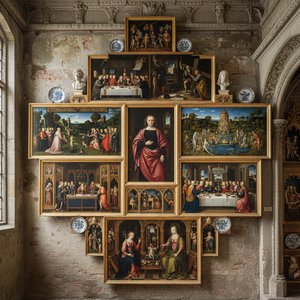
Early Netherlandish Masters: 10 Paintings That Revolutionized Art & Decor
Journey into the Early Netherlandish Renaissance! Explore 10 iconic paintings by Jan van Eyck, Rogier van der Weyden & more. Discover stunning detail, symbolism, and oil painting techniques. Find museum-quality art reproductions for your home at OriginalUniqueArt.com.
